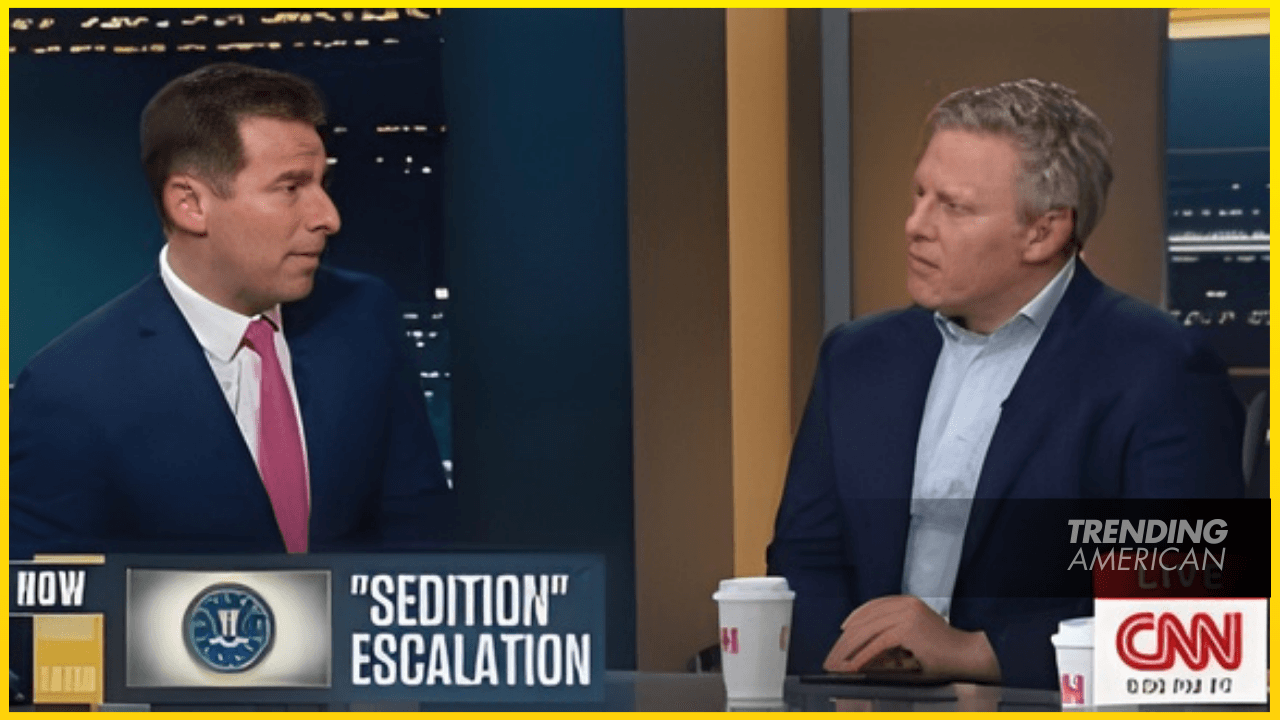
In a CNN segment on The Source, CNN Senior Legal Analyst Elie Honig pushed back against Donald Trump’s claim that Democratic lawmakers conspired to commit sedition, saying the accusation is not even close to a crime. The commentary followed a video released last week in which six Democratic lawmakers urged members of the armed forces and intelligence agencies to refuse illegal orders. The six are veterans of the armed forces or the CIA: Sen. Mark Kelly (D-Ariz.), Sen. Elissa Slotkin (D-Mich.), Rep. Jason Crow (D-Colo.), Rep. Chris Deluzio (D-Pa.), Rep. Maggie Goodlander (D-N.H.), and Rep. Chrissy Houlahan (D-Pa.). Trump blasted them on Truth Social, calling for arrests and trials and characterizing their actions as “SEDITIOUS BEHAVIOR AT THE HIGHEST LEVEL.”
During Tuesday’s The Source, CNN host Kaitlan Collins asked Honig what the legal objective would be if investigators interviewed the lawmakers. Honig, a former federal prosecutor, answered that there is no crime involved. “Legally, none that I can think of. No legitimate objective. Let me be clear here. There is no crime,” he said, emphasizing that the video falls squarely within protected political speech under the First Amendment.

Honig highlighted two key protections that shield lawmakers’ public speech: the First Amendment’s political speech standard and the Speech and Debate Clause, which insulates members of Congress from prosecution for comments made in the course of their official duties. He stressed that even if investigators were to question the lawmakers, those protections would generally apply, making a sedition charge unlikely.
The legal analysis suggested that while the message may be politically controversial or inflammatory, the law does not support a seditious conspiracy claim against the six lawmakers. “It’s right down the middle of First Amendment political speech,” Honig said, and when Trump mentions seditious conspiracy, he’s “so far out of line, it’s hard to describe.”
Beyond the legal debate, Honig acknowledged that the video could send a troubling message to members of the military, but stressed that the existence of an investigation by the FBI does not transform the protected speech into a crime. Mediaite’s recap of the CNN appearance notes that the discussion centered on the boundaries between political speech and illegal activity, as well as how the law treats such expressions in the era of high-profile political conflict.
Disclosure: We may earn a commission when you make a purchase through the ads.