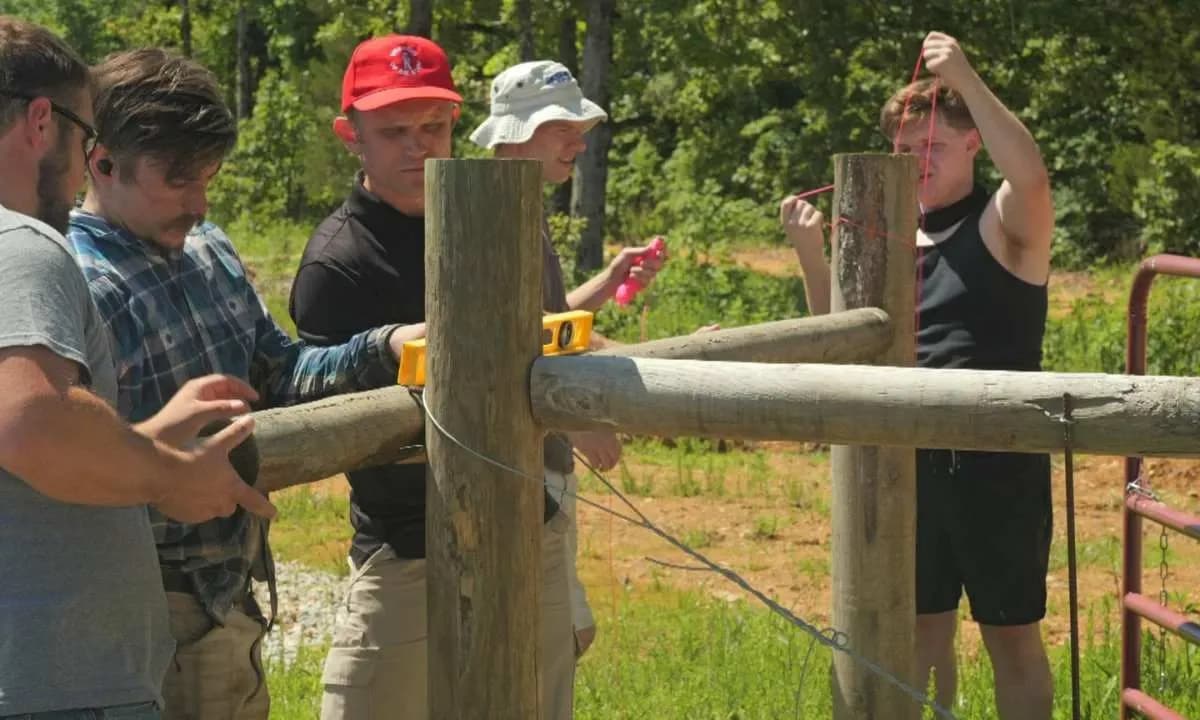
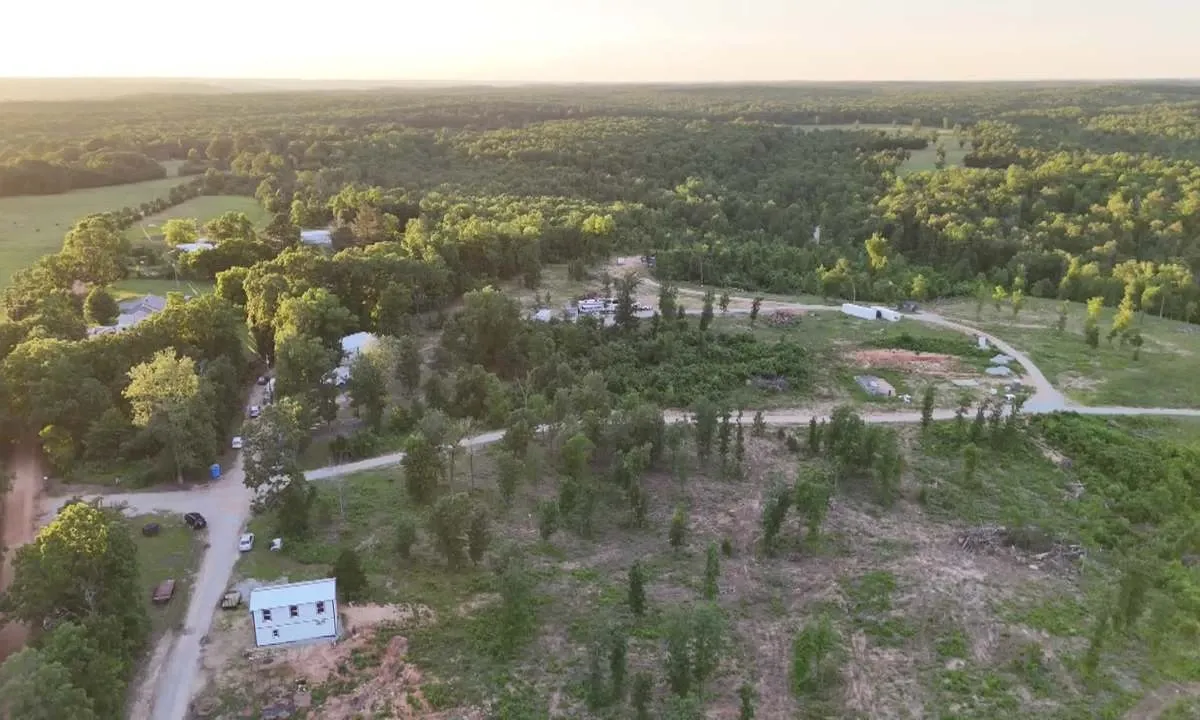
In the quiet, wooded hills of the Ozarks in Arkansas, a controversial community has been slowly taking shape. It calls itself Return to the Land (RTTL), and its members openly describe it as a “whites-only” settlement. Spread across 160 acres, the group has already built cabins, roads, wells, a schoolhouse, and a community center. Around 40 people live there now, while hundreds more across the world have bought memberships.
Make Your Story Impossible To IgnoreShine a light on hard truths. Turn your research or statement into real impact and reach newsrooms in minutes.
Publish Your Press Release Fast online distribution • Simple submission • No newsroom gatekeepersThe group’s leader is Eric Orwoll, a blond-haired man with blue eyes who has been the public face of RTTL. He has said in his videos: “You want a white nation? Build a white town. It can be done. We’re doing it.” He often refers to the settlement as a “fortress for the white race.”
Life Inside the Settlement
The compound sits deep in remote Arkansas, near the tiny town of Ravenden, population just over 400. To reach it, you travel down a dirt road, across a stream, and up into the hills. The land was chosen because it was cheap, the building regulations are loose, and the surrounding county is over 90% white.
Living here is not easy. The summers are scorching, ticks burrow into the skin, and life is rough compared to the outside world. Still, members like David and Caitlin, who recently married after joining, say they see it as a chance to live with “like-minded” neighbors.
“Do people really think we should never be able to choose our neighbors?”
As Caitlin put it.
Evenings often see members sharing goat’s milk and meals outside or gathering in the makeshift schoolhouse filled with pianos and shelves of philosophy books, especially those on Neoplatonism, one of Orwoll’s personal passions.
Beliefs and Membership Rules
Despite its homestead-style appearance, RTTL is not just a back-to-the-land project. It is tied to a broader ethnonationalist movement that is active online and seeks to build communities defined by ancestry.
Membership is strictly controlled. Anyone interested must fill out a questionnaire about ancestry and social beliefs, then go through interviews and video checks to verify ethnicity. Followers of “non-European religions” like Islam are banned, as are gay people and those who don’t conform to “traditional European values.” Jewish people are also excluded.
To formalize its structure, the group operates as a Private Membership Association (PMA). Members can buy shares in the community’s Limited Liability Company (LLC), which translate into parcels of land they can live on. RTTL believes this legal setup makes it exempt from equality and housing laws.
The Leaders and Their Networks
Eric Orwoll does not yet live full-time inside RTTL. He says his homestead is not ready for his four children, so he lives about 15 minutes away. His past has drawn attention: researchers uncovered videos of him in adult films during his 20s, which he later admitted to and denounced as part of what he calls a “nihilist” phase before embracing traditional values.
Orwoll’s right-hand man is Peter Csere, RTTL’s secretary. Csere has a controversial history too, facing allegations of fraud and a criminal investigation in Ecuador for a stabbing incident, which he claims was self-defense. Online, Csere has referred to Nazis as “based,” though later said he was “trolling.”
Both Orwoll and Csere maintain strong ties with international far-right networks. Orwoll has praised Ku Klux Klan leader David Duke, spoken about the possibility of a “second Hitler,” and collaborated with extremists like Thomas Sewell, a neo-Nazi in Australia. He has also been a guest at white nationalist events in the U.S. and maintains connections with figures like Nick Fuentes, Jared Taylor, and leaders of Patriot Front.
Their Telegram groups and social media accounts often contain Nazi references, including the number 1488—a combination of a white supremacist slogan (“14 words”) and the Nazi salute code (“88”).
Funding and Expansion
Return to the Land has raised significant money to support its growth. According to the Anti-Defamation League (ADL), the group has earned about $330,000 from land sales and more than $185,000 in donations through Christian crowdfunding site GiveSendGo. Some donations have even carried white supremacist slogans.
The group says it has spent over $63,000 on legal research to defend its model, expecting lawsuits but hoping that winning one could set legal precedent in their favor. Orwoll now works full time on RTTL, traveling across the U.S. to promote it.
Expansion is already underway. Projects are planned in Missouri and elsewhere, modeled partly after the South African whites-only town of Orania and influenced by ideas from Balaji Srinivasan’s book The Network State. Orwoll has written online about building a network of small “white cities” that exchange workers and students.
The Legal and Political Debate
The legality of RTTL remains unsettled. The Fair Housing Act of 1968 prohibits racial and religious discrimination in housing, yet Orwoll insists RTTL’s PMA structure shields it. Arkansas Attorney General Tim Griffin has said he has found “nothing illegal” so far, though civil rights groups strongly disagree. The U.S. Department of Justice has been alerted to the situation.
Civil rights organizations, including the ADL, have condemned RTTL as a dangerous revival of segregation. “We urge Arkansas officials to act swiftly to ensure that Northeast Arkansas remains a welcoming and inclusive community,” one ADL statement read.
Politically, RTTL members feel emboldened. Orwoll has said this is the most favorable climate for their goals, praising the Trump administration’s stance on immigration and diversity programs. Researchers warn that such rhetoric feeds directly into the growth of racist separatist movements.
A Movement Beyond Arkansas
Though it presents itself as a peaceful retreat for families, RTTL reflects a larger trend of extremist groups turning online networks into real-world communities. Its careful use of terms like “common ancestry” masks a more radical ideology rooted in white supremacy, antisemitism, and exclusion.
At its core, Return to the Land is more than just cabins in the Ozarks—it is part of an organized attempt to carve out segregated enclaves, supported by global far-right influencers, and presented under the guise of private association rights.
The question many are left asking is not just whether RTTL is legal, but what it represents: a modern rebranding of old segregation, positioned to grow in the shadows of America’s backroads and the corners of the internet.
Disclosure: We may earn a commission when you make a purchase through the ads.