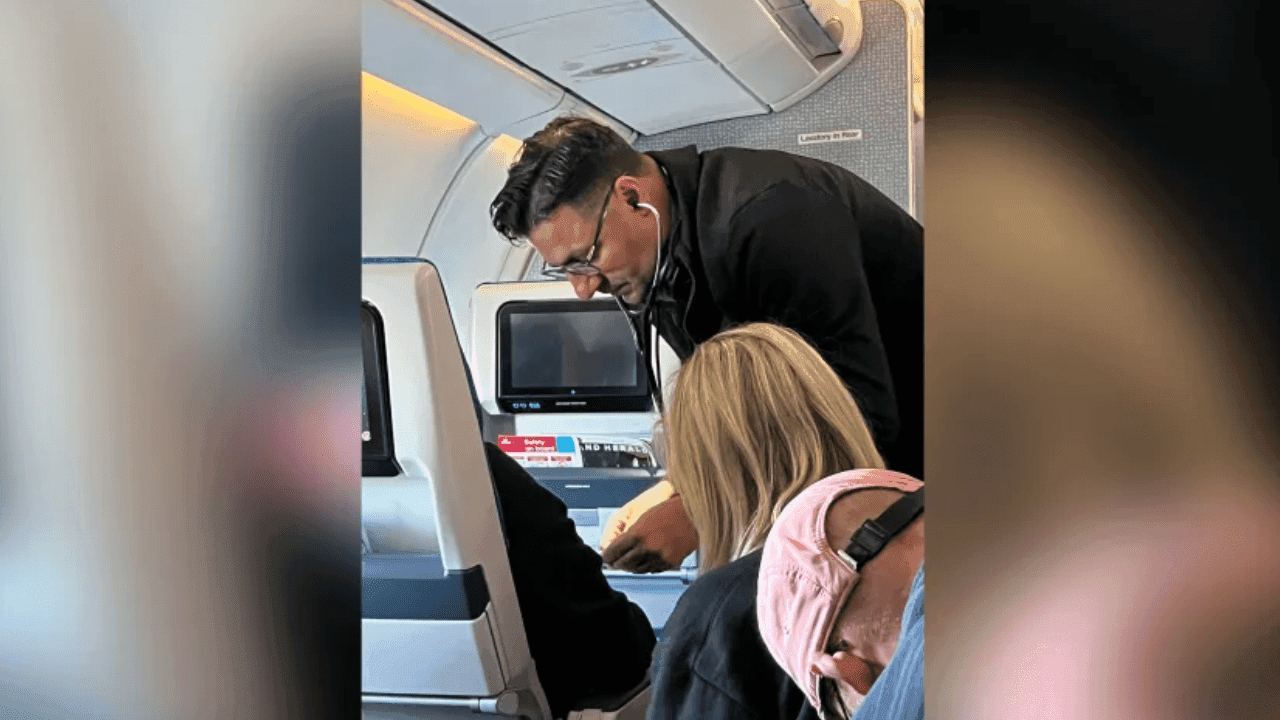
In the skies above the Atlantic, an ordinary flight turned into an extraordinary story of life-saving heroism and innovation. Amidst the hum of the airplane engines and the soft rustle of passengers settling into their seats, an uncanny event drew attention.
A man sitting in the middle aisle, unidentifiable at first, exhibited sudden signs of severe discomfort. Krys Benoit, a frequent flyer, recalls, “I looked over and saw this man visibly struggling, clutching at his chest with a pale face.” The passenger was potentially facing a life-threatening situation – symptoms of a heart attack. However, fate intertwined paths with an onboard cardiologist, Dr. Laura Madrid. With nerves of steel, she moved swiftly, her training and instincts guiding her through the high-pressure situation.
Utilizing a pocket-sized medical device no larger than a smartphone, she assessed the patient’s condition. Such advanced medical equipment is rarely seen outside of hospital settings, yet here it was, acting as a beacon of hope amidst panic. Leveraging this technology alongside her expertise, Dr. Madrid stabilized the gentleman until the plane could make an emergency landing. As the aircraft descended towards the nearest airport, the cabin crew had swiftly coordinated with ground teams, ensuring medical staff awaited upon arrival.
The incident served as a glaring reminder of the crucial role innovation plays in healthcare, especially in unpredictable environments. With portable diagnostic tools becoming more prevalent, the realms of emergency response are ever-expanding. The impact is profound, not just for the grateful passenger whose life was saved but for the medical community, which continuously seeks new ways to extend care beyond conventional boundaries.
Stories of survival, like this remarkable in-flight rescue, echo the bravery and brilliance thriving under pressure. “It’s incredible how technology paired with expertise can come together in ways we never imagined, ” Dr. Madrid later commented. “In scenarios where minutes count, it’s imperative to have the right tools.” While such incidents highlight the importance of being prepared, they also celebrate the compassionate and skilled individuals who step up when duty calls. The consequences reach beyond today – shaping the future where critical care is more accessible, even miles above the ground.