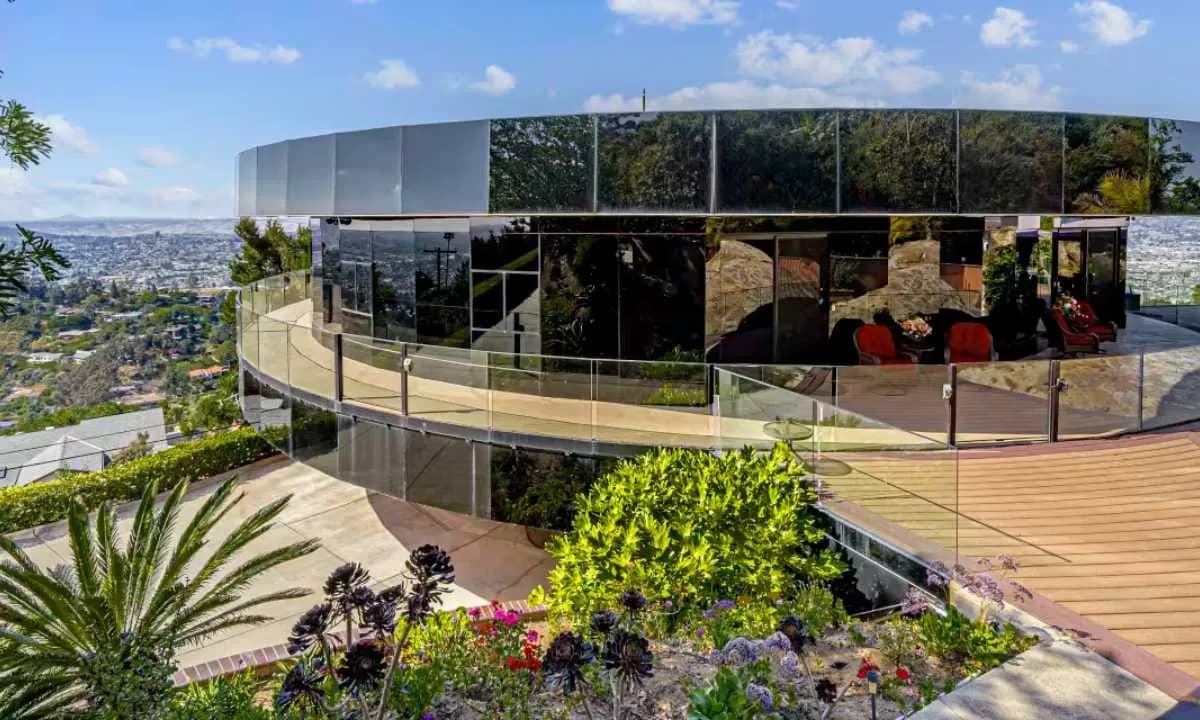
When Al and Janet Johnstone bought a scenic plot of land at the top of Mount Helix in La Mesa, California, their plan was simple. It was to build a nice round house to enjoy the beautiful views of San Diego. But one offhand comment changed everything.
As the couple discussed which room should face which view, Al blurted out, “Why don’t we rotate it?” Janet said “yes” almost instantly. And from that moment, the idea took a wild turn—literally. With no formal background in homebuilding or architecture, Al became the architect, engineer, and general contractor. It was even the laborer behind what would soon become one of the most talked-about houses in Southern California. San Diego’s only fully rotating home.
Now known locally and online as The Rotating House, this circular structure has become a minor celebrity. It was featured on HGTV’s Offbeat America, covered by CNN, and even filmed by YouTuber Tom Scott. The reputation soon drew attention from architecture lovers and curious minds around the world. And it’s now officially on the market—for $5.3 million.
So what makes this home so different from anything else?
For starters, the entire second floor rotates. That’s 3,700 square feet of living space, plus a 1,400-square-foot rotating deck, all mounted on a system that glides on a steel track powered by a one-and-a-half horsepower motor. The platform can rotate in either direction and at different speeds—completing a full turn in just 33 minutes or taking as long as 24 hours, depending on the owner’s preference.
The most surprising part? Everything rotates with it. Not just the floors and walls, but even the sinks, toilets, electrical sockets, and gas and water lines. That’s all possible because Al designed and patented a special slip ring mechanism. It is a device that allows the rotating sections to stay connected to normal utility systems without using holding tanks or unwinding wires. In Al’s words, “Nothing needs to unwind.” The only maintenance? Lubricating the bearings once every five years.
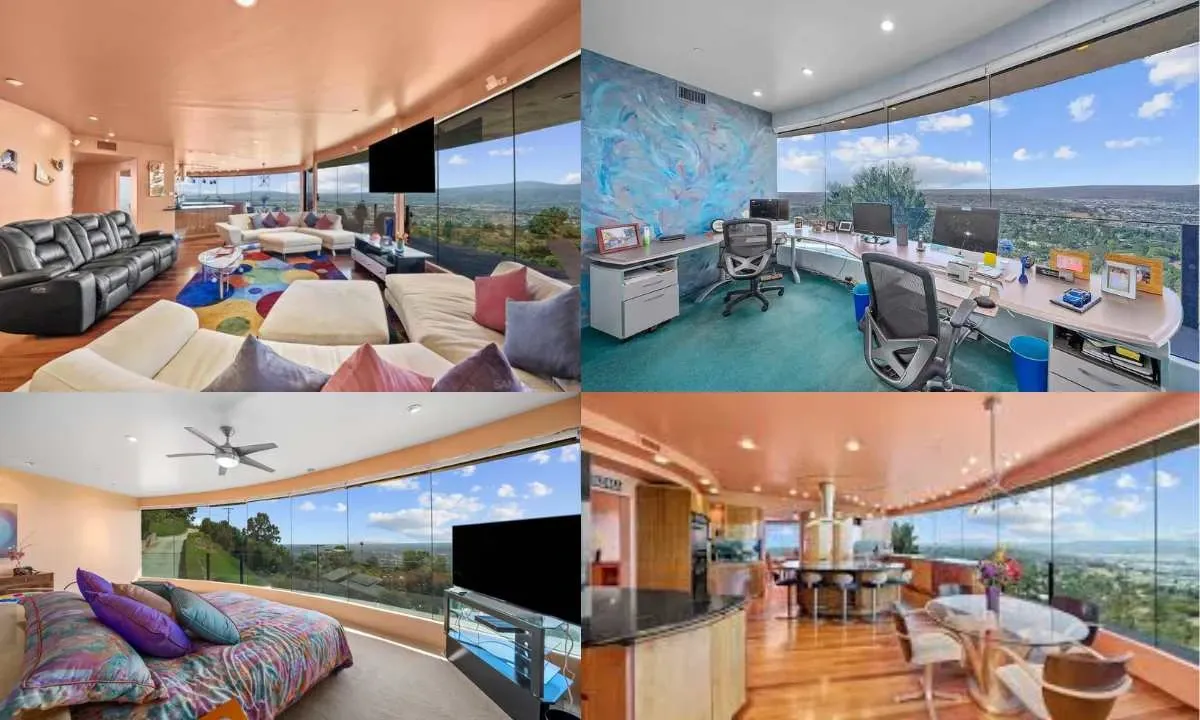
Inside, the home spans two floors and features four bedrooms, three and a half bathrooms, and floor-to-ceiling windows offering a 200-degree panoramic view. On a clear day, you can see the Pacific Ocean, downtown San Diego, the Coronado Bridge, Cowles Mountain, Mount Palomar, and even the Cuyamaca Mountains—all from your living room, bedroom, or kitchen. And thanks to the rotating design, any room can have the best view at any time.
The first floor is fixed and includes a 2,100-square-foot space with a workbench area, a recreation room or granny flat, a full bath, and a kitchenette. It also includes a two-car garage with a turntable that can rotate cars 180 degrees, making parking as futuristic as the house itself.
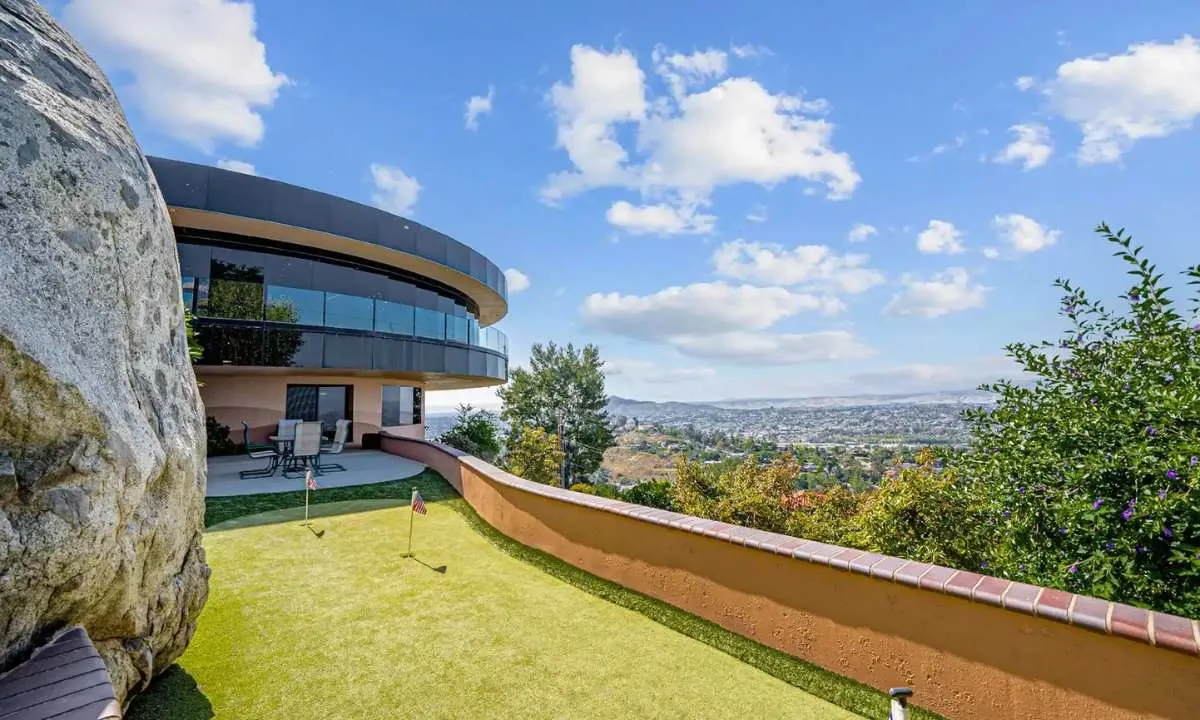
Outside, the home sits on a private 25,264-square-foot lot that includes 11 mature fruit trees, smart home tech, 43 solar panels, security systems, earthquake and fire protection, and top-of-the-line appliances.
What started as a quirky idea quickly became a local legend and a case study in creative engineering. Al, with help from hired engineers to ensure structural integrity, turned his vision into a functioning reality. It proved that even the most unusual ideas can become practical, livable, and even luxurious.
There are other rotating homes around the world—like the Girasole House in Australia or the D’Angelo House in Snow Creek. However, California—San Diego’s rotating home remains one of the most well-known and beloved, especially in its community.
In the end, this house isn’t just about spinning floors or fancy tech. It’s about challenging the ordinary. It’s about asking, Why wake up to the same view every morning… when you don’t have to?
And for someone willing to spend $5.3 million, that dream could come true—with a twist.