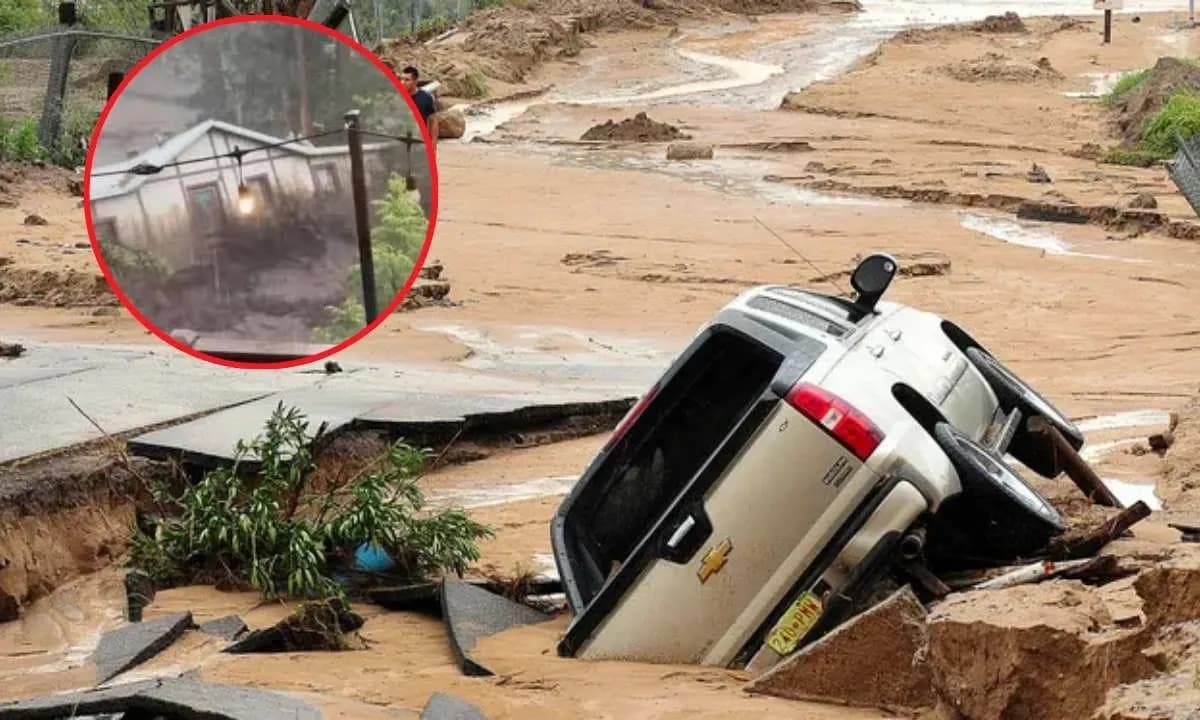
It happened again. The people of Ruidoso, a quiet mountain village in southern New Mexico, faced another terrifying wave of flash flooding on Thursday. In just moments, muddy waters surged through the area, tearing through roads and neighborhoods, and even ripping a mobile home off its foundation. The sudden floodwaters caught many off guard—forcing emergency rescues and quick evacuations.
This wasn’t just another rainy day. It was part of a bigger, ongoing problem that’s been building all summer. Ruidoso has been hit hard by frequent afternoon thunderstorms, but there’s a key reason why the water keeps getting worse. The hills and mountains surrounding the village were burned by past wildfires, leaving the land bare and unable to absorb water. Without trees and vegetation to slow the rain, everything runs straight downhill—and fast.
At least five people had to be rescued on Thursday after they became trapped in the rushing water. Local officials said that 14 others were evacuated from their homes as the Rio Ruidoso River suddenly rose over 12 feet (3.81 meters). Videos posted by residents showed a frightening scene—walls of brown, debris-filled water surging through roads and creeks, lifting debris and snapping trees. A trailer could be seen being carried downstream like it weighed nothing.
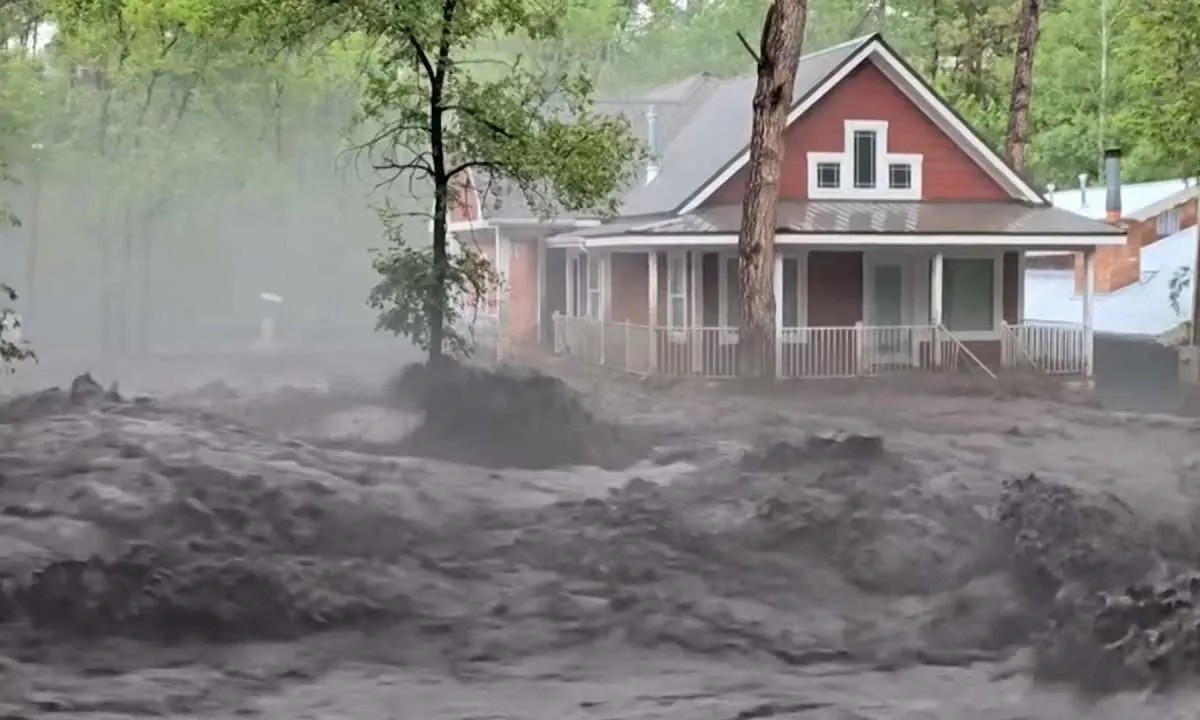
Authorities responded quickly. Roads were closed to keep drivers out of danger. Rescue teams worked fast to reach stranded people before the waters grew stronger. By the afternoon, floodwaters began to slowly go down. Fortunately, no injuries or deaths were reported this time. But for Ruidoso, the damage and fear keep piling up.
Just two weeks earlier, the same region was hit by a deadly flood that claimed three lives and destroyed or damaged hundreds of homes. That disaster led to both state and federal disaster declarations. The recent flood didn’t reach those same record levels, but the 12.5-foot rise was still serious enough to trigger major alarms.
Flash flood warnings have become routine for the area during this summer’s monsoon season, which usually lasts from mid-June to the end of September. This season brings moisture from the Pacific Ocean, Gulf of California, and Gulf of Mexico. For places like Ruidoso, this means daily storms that can dump heavy rain in a short time—especially dangerous when the ground can’t handle it.
The National Weather Service in Albuquerque called the situation life-threatening. They warned that areas around the South Fork Fire burn scar were especially dangerous. That scarred land, with unstable soil, has led to repeated debris flows. On Thursday, the same area experienced severe runoff, flooding creeks and streams, washing out driveways, and making many roads impassable.
In response, shelters were opened to house those who had to flee. Emergency crews filled and handed out sandbags to protect homes still in harm’s way. Even as water levels dropped later in the day, the sense of unease remained. The burn scars from the South Fork Fire and other past blazes have created a ticking time bomb every time it rains.
It’s not just Ruidoso. Other parts of New Mexico are struggling too. Just days earlier, in Doña Ana County, rescue teams had to evacuate 20 people and their pets during another flood emergency. Fifteen people were taken to shelters. The threat is widespread.
All of this is happening while questions are being raised about the future of federal disaster aid. Some officials have suggested that FEMA—the Federal Emergency Management Agency—should be phased out, leaving disaster response up to the states. Yet, the White House recently announced that federal support will continue for now, including for states like New Mexico, Michigan, and West Virginia, which have all faced major disasters this year.
For now, the people of Ruidoso are left to wait—watching the skies and hoping the next storm won’t be worse than the last. The floods have shown how wildfire damage doesn’t stop once the fire is out. The scars remain, and with every storm, the risks grow. Ruidoso’s story is no longer just about one flood. It’s about a community trying to survive the long-term impact of fire, rain, and everything that follows.