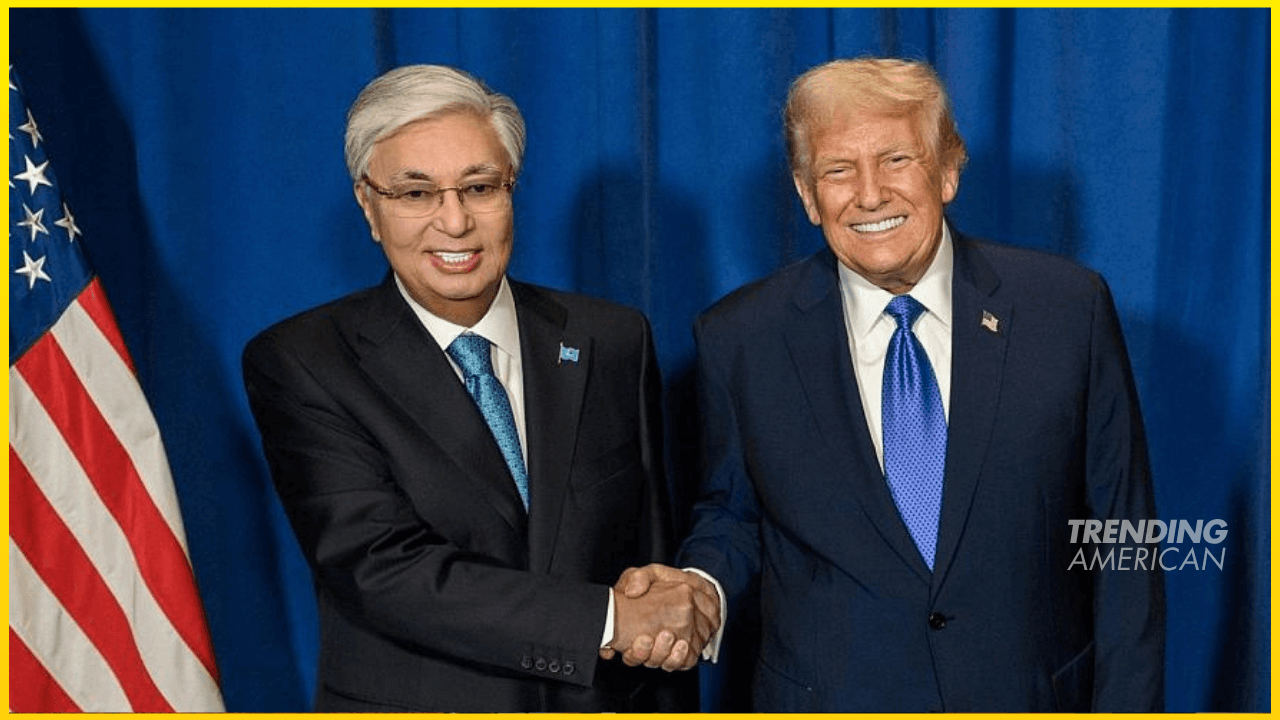
ASTANA — In Washington, D.C., at the historic White House, Kazakhstan’s President Kassym-Jomart Tokayev and U.S. President Donald Trump have made waves with a landmark $17 billion agreement. Meeting on November 6th, 2025, the leaders aimed at cementing economic and strategic ties, with Israeli Prime Minister Benjamin Netanyahu joining via joint call to discuss peace.
The heart of these discussions centered on three pivotal achievements: the formal joining of Kazakhstan to the Abraham Accords, which promise to foster peace in the Middle East, and the signing of an ambitious memorandum on critical minerals cooperation.
With Trump lauding Tokayev’s initiatives as transformative for regional security, the event has been described as a major stride toward a cooperative future in global diplomacy. Not merely a gesture, these agreements stand as tangible commitments directing the compass towards prosperity and stability. As Tokayev himself noted, aligning the U.S. as a steadfast economic and technological partner could set an exemplar path for other nations.
Together, both Presidents underscored a joint vision; to extend the legacy of the Trump Route for International Peace and Prosperity (TRIPP), an initiative they’ve both strongly endorsed. Kazakhstan’s joining of the Abraham Accords marks a move aligning global forces toward dialogue over discord, support of international law, and a new epoch of partnerships.
Far beyond their bilateral implications, the agreements cast rippling stones into the pond of geopolitical relations — a bid to catalyze peace through economic unity. In these times of uncertainty, such cooperative efforts whisper the possibility of a diversified and harmonious future.