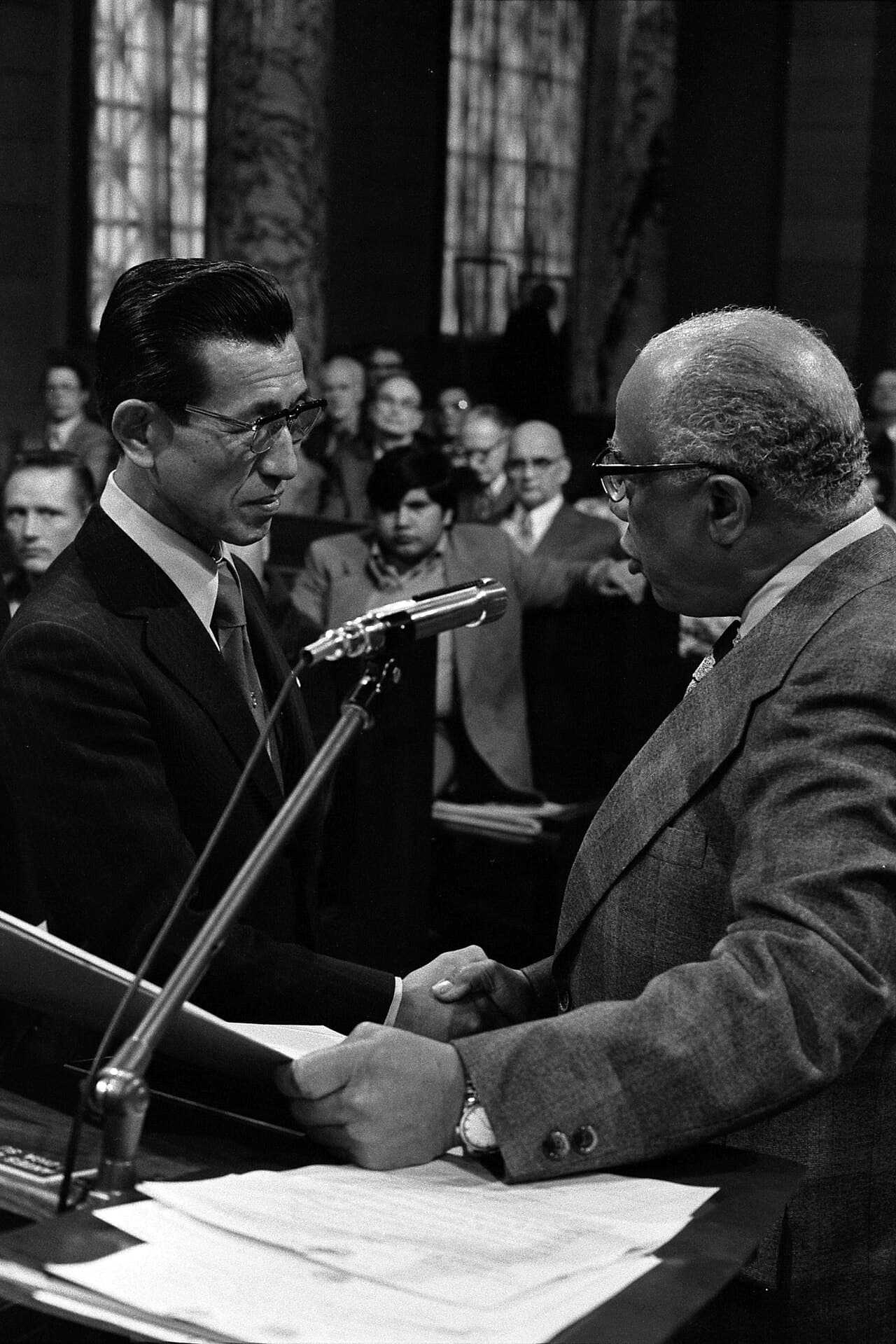
World War II ended in 1945. Hiroo Onoda remained armed on a Philippine island until 1974.
For nearly 29 years after Japan's surrender, the Japanese officer rejected attempts to convince him that the fighting was over. His endurance became famous around the world. For people on Lubang Island, those same decades also meant fear, damaged livelihoods and deaths.
Orders he would not abandon
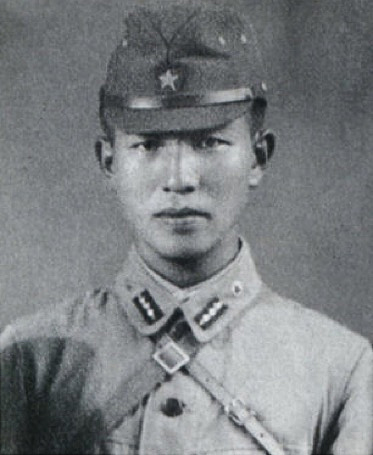
Onoda was sent to Lubang in 1944. His assignment was to conduct guerrilla warfare, and his orders forbade surrender.
In a 2010 interview with Australia's ABC, he described his duty as an intelligence officer as continuing the fight rather than dying.
When leaflets and search parties announced Japan's surrender, he dismissed them as enemy trickery. Appeals from family members also failed to bring him out.
He and his companions survived on food such as coconuts and bananas, and by taking cattle. This was an armed holdout, sustained partly at the expense of people living on the island.
His companions did not simply disappear
Onoda remained hidden with three other soldiers, but their paths eventually separated.
A study by historian Hitoshi Nagai at Hiroshima Peace Institute, published in its October 2019 newsletter, records that Yuichi Akatsu left the group and surrendered in 1950.
Shoichi Shimada was killed in an encounter with Philippine troops in 1954. Kinshichi Kozuka died in a gunfight with the Philippine Constabulary in October 1972, after he and Onoda were reported burning farmers' harvested rice.
Onoda was then alone.
The people living beyond the jungle
Accounts of the holdout often focus on survival. Lubang's residents had another story to tell.
Nagai's research describes people afraid to farm in the mountains and repeated demands for authorities to find the remaining soldiers. People and animals were killed during the years after the war.
Reports commonly put the Filipino death toll associated with Onoda and his companions at around 30. That figure should not be treated as a tally personally established for Onoda alone.
SBS's reporting on filmmaker Mia Stewart's family gives the loss a human face. Her great-uncle Emilio Viaña was fatally shot while farming in 1951; the family attributes his death to Onoda. Stewart described how the killing disrupted the lives and education of his children.
The order that finally ended the holdout
In February 1974, Japanese traveler Norio Suzuki found Onoda. But meeting Suzuki alone was not enough: Onoda wanted orders from his former commander, Yoshimi Taniguchi.
Taniguchi came to Lubang. On the evening of March 9, he released Onoda from military duty, according to Nagai's account.
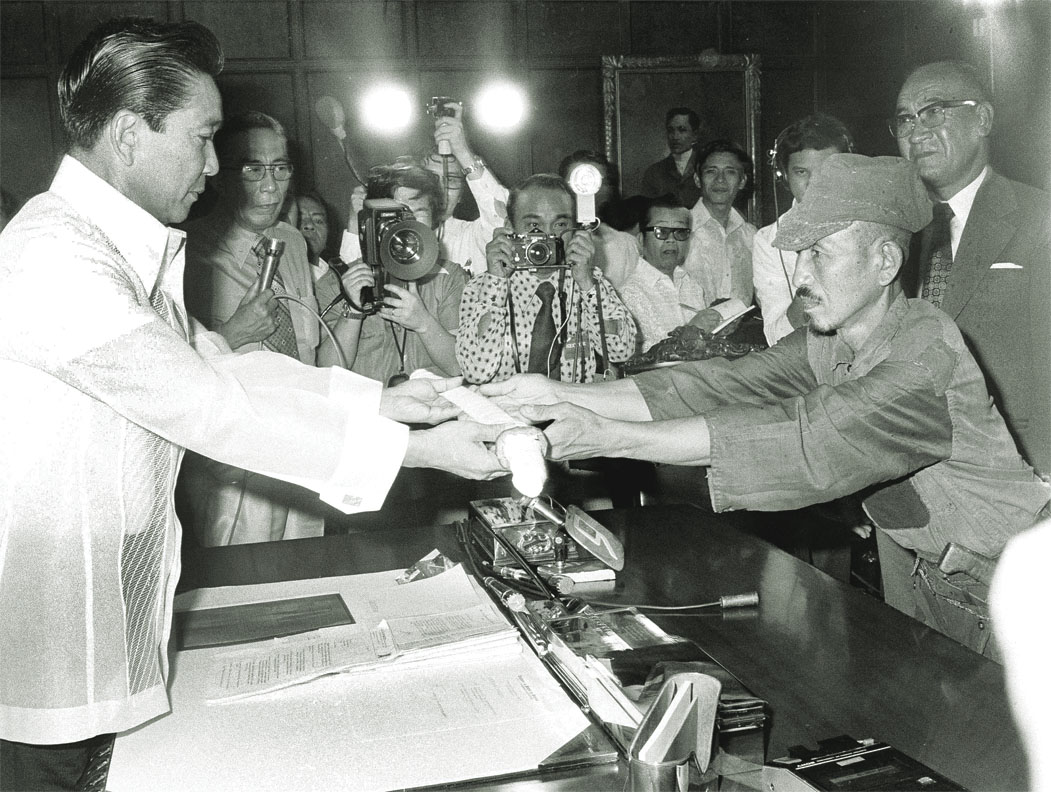
The surrender involved several stages, rather than one single ceremony. A photograph reproduced by the U.S. National Archives shows Onoda offering his sword to President Ferdinand Marcos on March 11. Onoda returned to Japan on March 12.
Remembering more than survival
Marcos pardoned Onoda, who received a warm welcome in Japan. He died in 2014 at 91.
His years on Lubang are remarkable, but endurance is only part of the history. Understanding the story also means remembering the islanders whose lives were threatened long after peace had officially returned.
A war can end on paper while its violence continues in ordinary people's fields, homes and memories.
Image credits: Onoda with Gilbert Lindsay, Christine Maple / Los Angeles Times, CC BY 4.0; young Onoda, unknown photographer, public domain; Onoda and Marcos, Malacañang Palace, public domain. Archival images via Wikimedia Commons.


