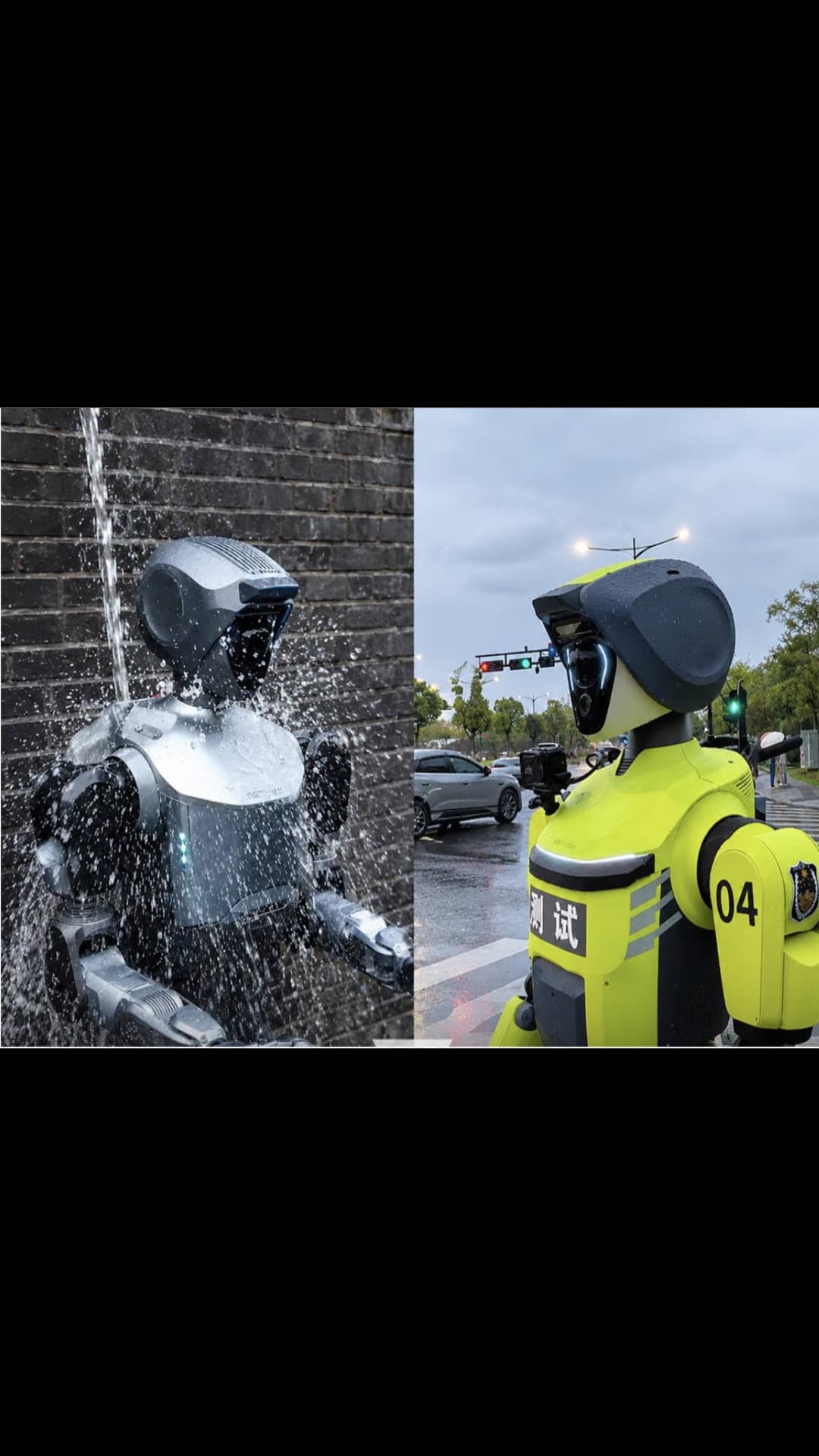
Humanoid robots have been tested at real intersections in Hangzhou, China, using gestures and spoken reminders to support traffic management.
The October 2026 trials involved DEEP Robotics’ DR02 platform in Xihu District. Xinhua’s October 9 report described outdoor tests intended to assess the machines’ performance in rain and changing traffic conditions.
Testing beyond a demonstration stage
According to that report, the robots could adjust their position and guidance movements while navigating around people and vehicles. These were tests of how the equipment handled an active street environment.
The DR02’s IP66 protection rating addresses dust and powerful water jets. That rating describes resistance to particular environmental exposure; it does not establish unlimited reliability in every kind of severe weather.
The city’s November 2 report on the Hangzhou Marathon subsequently described Hangxing No. 2, based on the DR02, working in a patrol arrangement around Huanglong Sports Center. Reported tasks included intersection monitoring, traffic reminders and answering public inquiries.
Working alongside human officers
Hangzhou’s wider traffic-robot program predates the October trials. A September city report described upgrades to a 15-robot squad, including navigation and Chinese- and English-language public assistance.
That wider program should not be confused with a claim that all of its machines are identical DR02 units. The reports describe related deployments and development stages.
The practical question is whether robots can reliably take on repetitive guidance tasks while officers handle situations requiring human judgment. The public reporting establishes field deployment and trials, rather than proof that humanoids can replace traffic police.