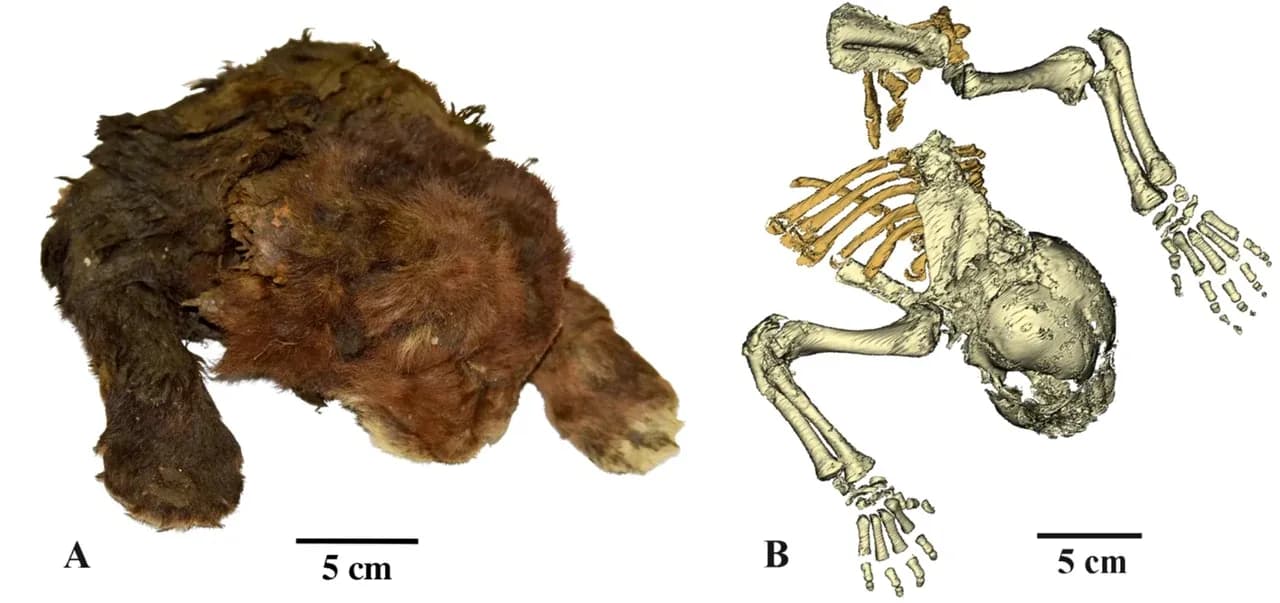
For most extinct predators, scientists must imagine the living animal around a skeleton. A tiny saber-toothed cat preserved in Siberian permafrost offered something far rarer: skin, fur and the shape of a face.
The cub belonged to Homotherium latidens, an extinct saber-toothed cat. Its remains came from the Badyarikha River area in northeastern Yakutia, Russia.
A kitten preserved for thousands of years
A 2024 Scientific Reports study described the mummy. The animal was only about three weeks old when it died. Calibrated dating places it roughly 35,000 to 37,000 years in the past.
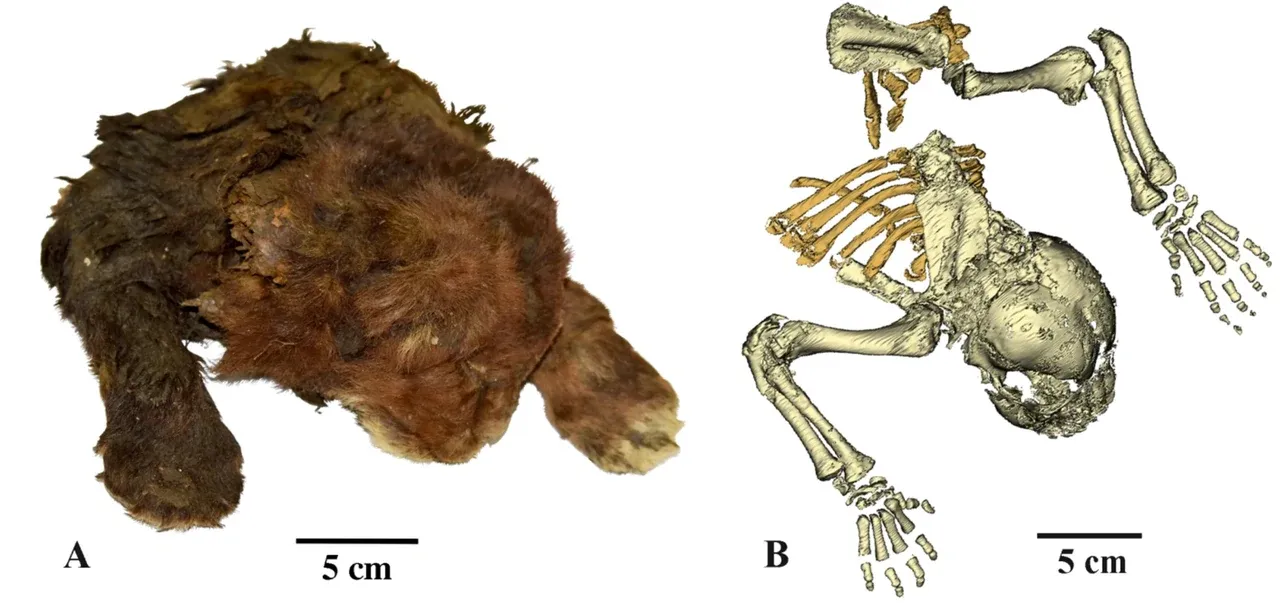
The surviving front of the body preserved soft tissues that ordinary fossils rarely retain. Researchers could examine the head, neck and forelimbs directly and use CT scanning to study bones inside.
Why the small details matter
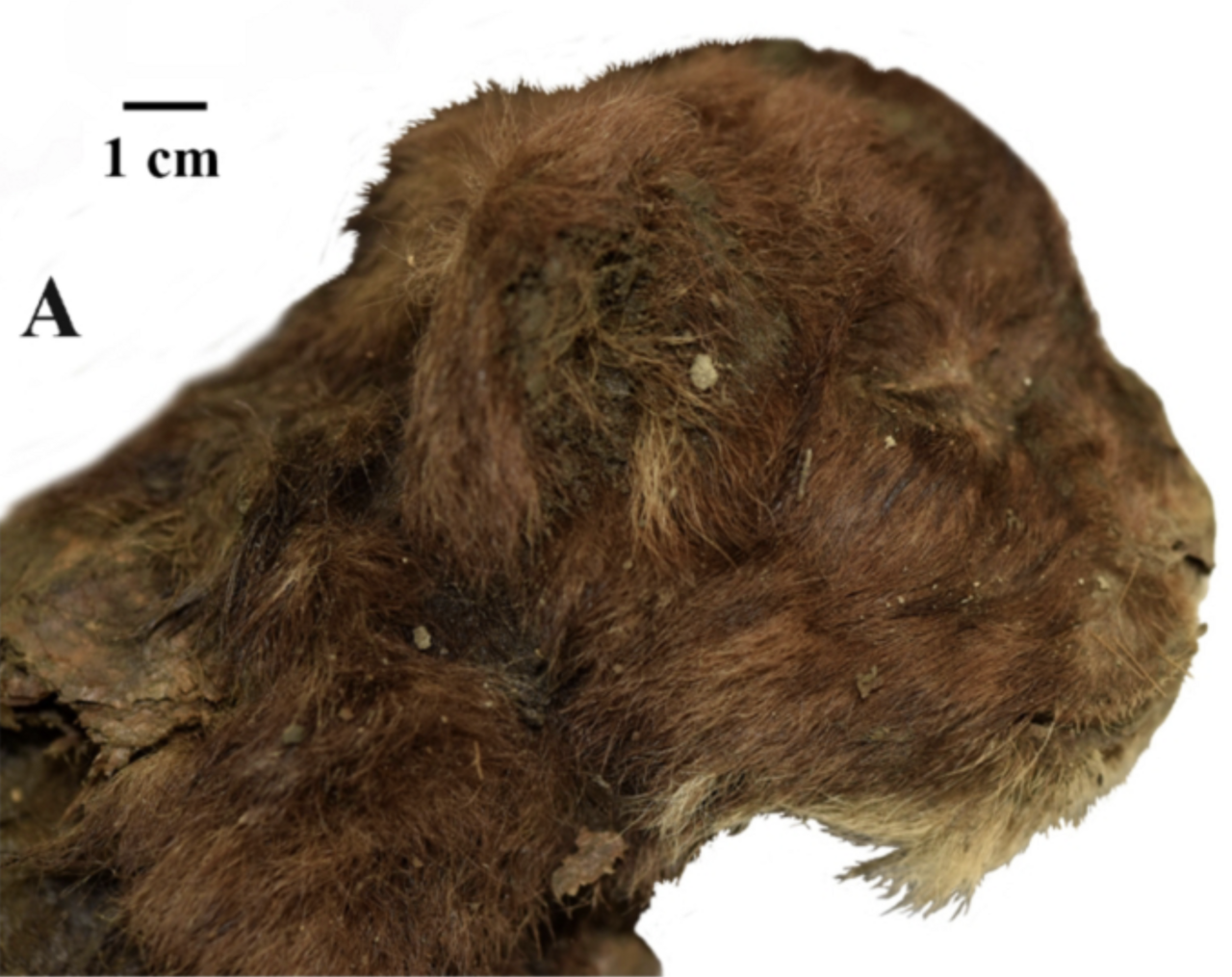
Compared with a modern lion cub of similar age, the specimen had a different muzzle shape, small ears, a thick neck and elongated forelimbs. Its paws and preserved coat added further information about its appearance.
These observations are more valuable than a dramatic reconstruction alone. They let researchers test ideas about an extinct animal against physical evidence.
A discovery, not a complete portrait of the species
The Russian Academy of Sciences' announcement emphasized the rarity of a mummified saber-toothed cat. The find opens a new window on a group usually known through fossil remains.
Still, this was one very young individual. It cannot by itself reveal every feature of an adult, explain exactly how the species hunted or establish the circumstances of the cub's death.
The discovery's wonder comes from what actually survived. After tens of thousands of years, a fragile small body still carries evidence that bones alone could not provide. It turns an Ice Age predator from a familiar outline of teeth into an animal with a face.
Photograph credits
- Photograph 1: A. V. Lopatin, M. V. Sotnikova, A. I. Klimovsky, A. V. Lavrov, A. V. Protopopov, D. O. Gimranov & E. V. Parkhomchuk, CC BY 4.0. Resized; captions identify contextual images.
- Photograph 2: A. V. Lopatin, M. V. Sotnikova, A. I. Klimovsky, A. V. Lavrov, A. V. Protopopov, D. O. Gimranov & E. V. Parkhomchuk, CC BY 4.0. Resized; captions identify contextual images.

