A park built around rock music barely had time for an encore.
Freestyle Music Park, near Myrtle Beach, South Carolina, operated for one season in 2009 after the failure of Hard Rock Park in 2008. Years of vacancy followed, but the rides were later sold and the property moved toward industrial redevelopment. It is not an intact abandoned theme park available for visitors.
Its short life makes the story striking. Here was a major attraction with new coasters, ambitious theming and a famous name, yet almost no time to build a tradition.
Hard Rock Park’s expensive opening act
Hard Rock Park opened in April 2008. The project paired amusement rides with rock music, including attractions named for Led Zeppelin and the Eagles.
Associated Press reporting published by Pollstar described an investment of about $400 million and an inaugural season that fell far below expectations.
The setting offered a large potential audience: Myrtle Beach already drew vacationers to beaches, hotels and entertainment. But the existence of tourists did not guarantee enough paying visitors for a new park.
According to that contemporary report, management also faced a shortage of promotional money and a worsening credit market. The wider financial crisis made a difficult opening year harder to rescue.
It is tempting to explain the failure through one bad decision. The record points instead to several pressures arriving together: weak attendance, limited cash and a business that needed far more revenue than it was generating.
Bankruptcy arrived in the first season
A federal court opinion records the park’s September 24, 2008 closure and bankruptcy filings by operating entities.
The bankruptcy later converted to liquidation proceedings. In February 2009, a judge approved a $25 million sale to FPI-MB Entertainment.
The gap between the original investment and the sale price tells part of the story. Buildings and rides had been constructed, but the business behind them had lost much of its value.
The transaction also involved intellectual-property questions. Buying the physical attractions did not simply guarantee unrestricted use of every licensed name and creative element.
That is one reason the park’s second season looked different on paper. The place needed a new identity as well as a new financial start.
A brief return as Freestyle Music Park
The new owners reopened the attraction as Freestyle Music Park in 2009. Music remained central, but the Hard Rock identity was gone.
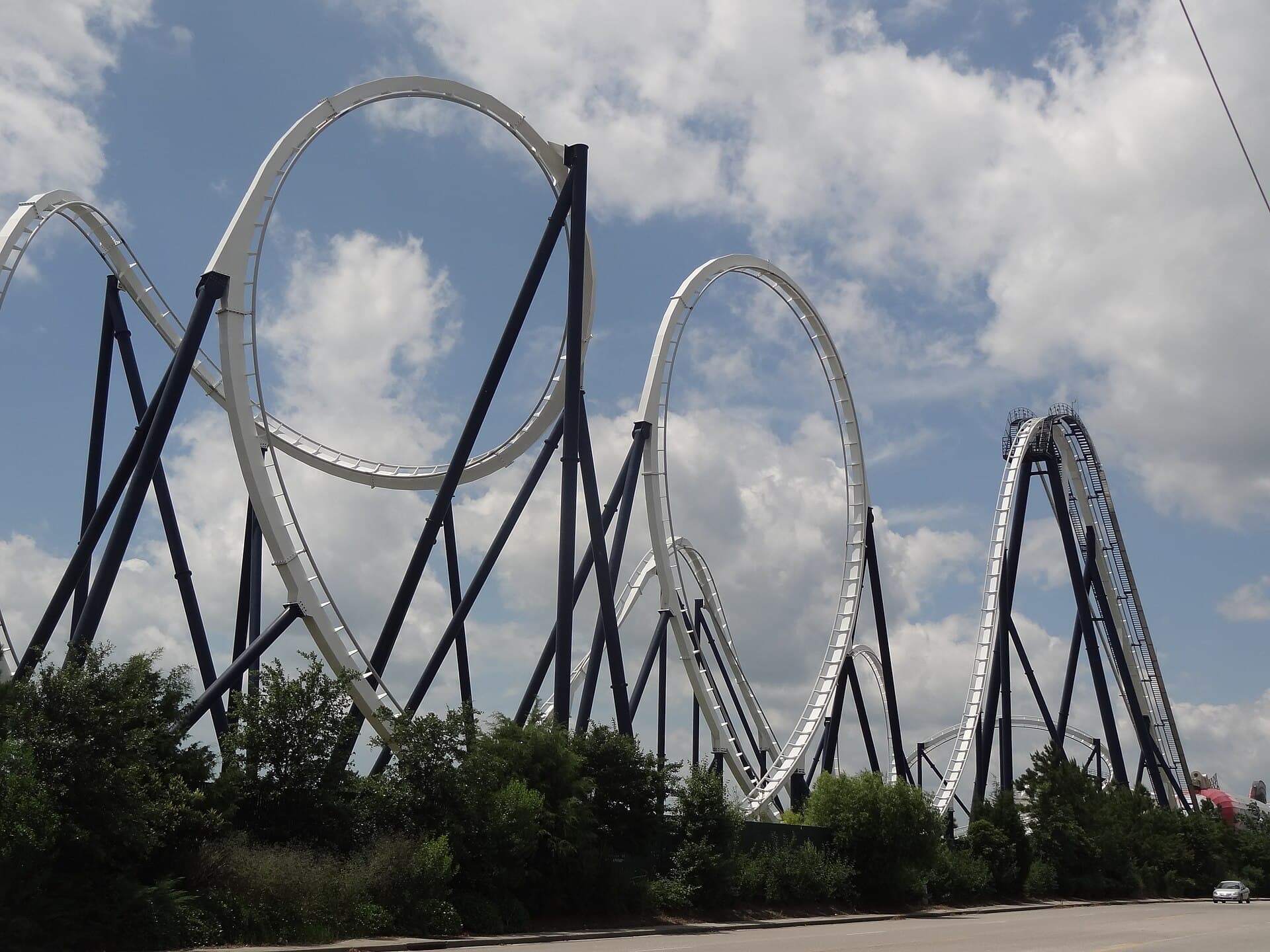
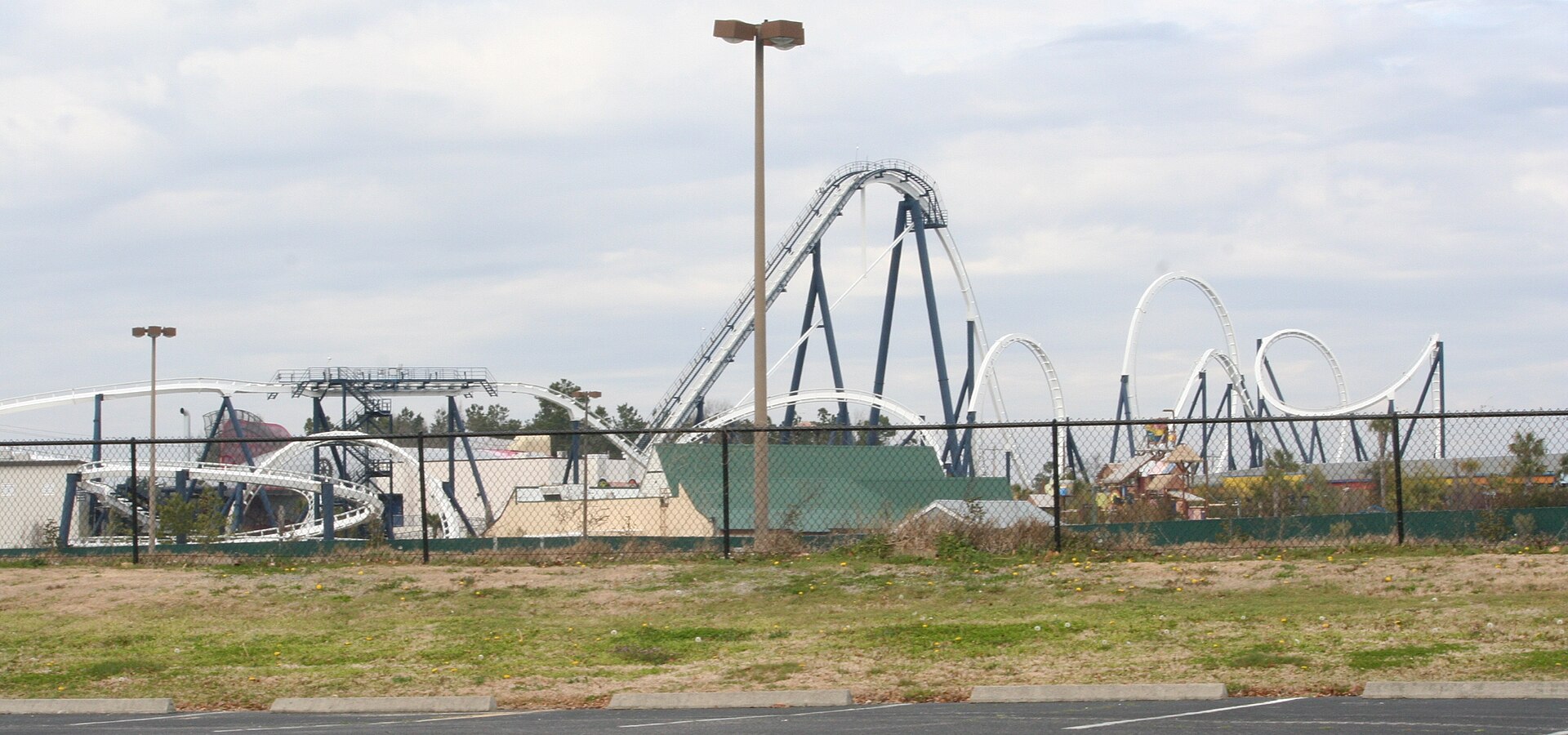
The major looping coaster became known as Time Machine. It is the ride pictured in both archival photographs here, from two different viewpoints in 2013.
Those pictures show tall white track above dark supports. They also show how quickly an impressive piece of engineering can become disconnected from its original business plan.
WMBF’s later ownership reporting confirms that Freestyle closed in the same year it opened. The attempted restart did not create a lasting attraction.
The long silence after 2009
Vacancy lasted much longer than either operating season. Photographs of empty paths and stationary coasters spread online, giving the site a second identity as an abandoned place.
But the landscape was not permanent. The Sun News’ retrospective reporting notes that ride sales began in 2013, with many attractions going to Vietnam.
A coaster can have a life after its original park. Track and vehicles can move, while buildings and place names remain behind.
That creates a different kind of loss from simple destruction. The machines may survive, yet the experience of visiting them together in one setting disappears.
The dated photographs in this article preserve that former arrangement. They do not establish what a traveler would find at the property now.
From entertainment land to a new use
The property changed hands again in late 2018. Former Myrtle Beach mayor John Rhodes was associated with the purchasing company.
In WMBF’s 2019 report, the new direction was explicitly toward a use other than another theme park.
Demolition and redevelopment followed. By 2022, The Sun News was reporting permit plans for a FedEx facility on the former property.
A subsequent October 2022 report described a proposed investment of nearly $64 million and a county tax agreement.
These records show why old exploration guides are misleading. They describe a stage in the site’s history, not a preserved attraction waiting behind a gate.
How to explore the story today
There is no public Freestyle Music Park tour to plan from the sources cited here. Do not enter private or working redevelopment property to search for former rides.
Instead, compare photographs from the Hard Rock and Freestyle periods. Look at names, signs and dates. They reveal how much changed within only two years.
The park’s story is also a reminder that impressive construction and a strong concept are only a beginning. A destination needs enough people to return, enough money to maintain it, and enough time to become part of their lives.
Freestyle never received much of that time. Its most unusual legacy is the contrast between the scale of what was built and the brevity of the summers it offered.
Frequently asked questions
When did Freestyle Music Park operate?
It operated in 2009, following Hard Rock Park’s 2008 season.
Was it the same property as Hard Rock Park?
Yes. Freestyle was the renamed attraction under new ownership.
Are the roller coasters still there?
The major rides were sold and removed. Do not treat archival photographs as current conditions.
Can you visit the abandoned park?
It is not a public abandoned-park attraction. Respect private-property boundaries and current uses.
Image credits
Featured image: Martin Lewison (CC BY-SA 2.0), via Wikimedia Commons. The former Led Zeppelin–The Ride, later Time Machine, at Freestyle Music Park in June 2013, before removal.

Body image: Mike Kalasnik (CC BY-SA 2.0), via Wikimedia Commons.
