Newly released Forest Service records have renewed interest in Bigfoot, but their contents do not confirm that the creature exists. They preserve older claims and the investigators' reasons for doubting them.
The files include a 1982 examination of large impressions in the Mill Creek watershed of Umatilla National Forest. Some details looked difficult to imitate. Other observations pointed away from a large, two-legged animal.
The documents concern older reports
FOX 12's report, carried by Gray News, described records released on October 15, 2026. They included the 1982 investigation, an older Montana account and a 2003 newspaper article.
Their release is a recent event. The observations described inside them are historical, not evidence that a federal team discovered a new animal in 2026.
Mill Creek’s containment dam near Walla Walla. Illustrative regional photo, not evidence from the investigation. Photo: Bobjgalindo, CC BY-SA 4.0. Resized; JPEG conversion. Image adaptation shared under the same CC BY-SA 4.0 license.

A natural-looking impression was not a positive identification
KIRO 7's reading of the footprint report described wildlife biologist Rodney L. Johnson's assessment.
He noted detail that would have been hard to reproduce. But he also concluded the tracks had been made by something other than a two-footed being weighing more than 300 pounds, and considered signs that material had been rocked to form impressions.
Selecting only the observation about natural-looking detail changes the meaning of that assessment. The difficulty of making a mark is not the same as identifying what made it.
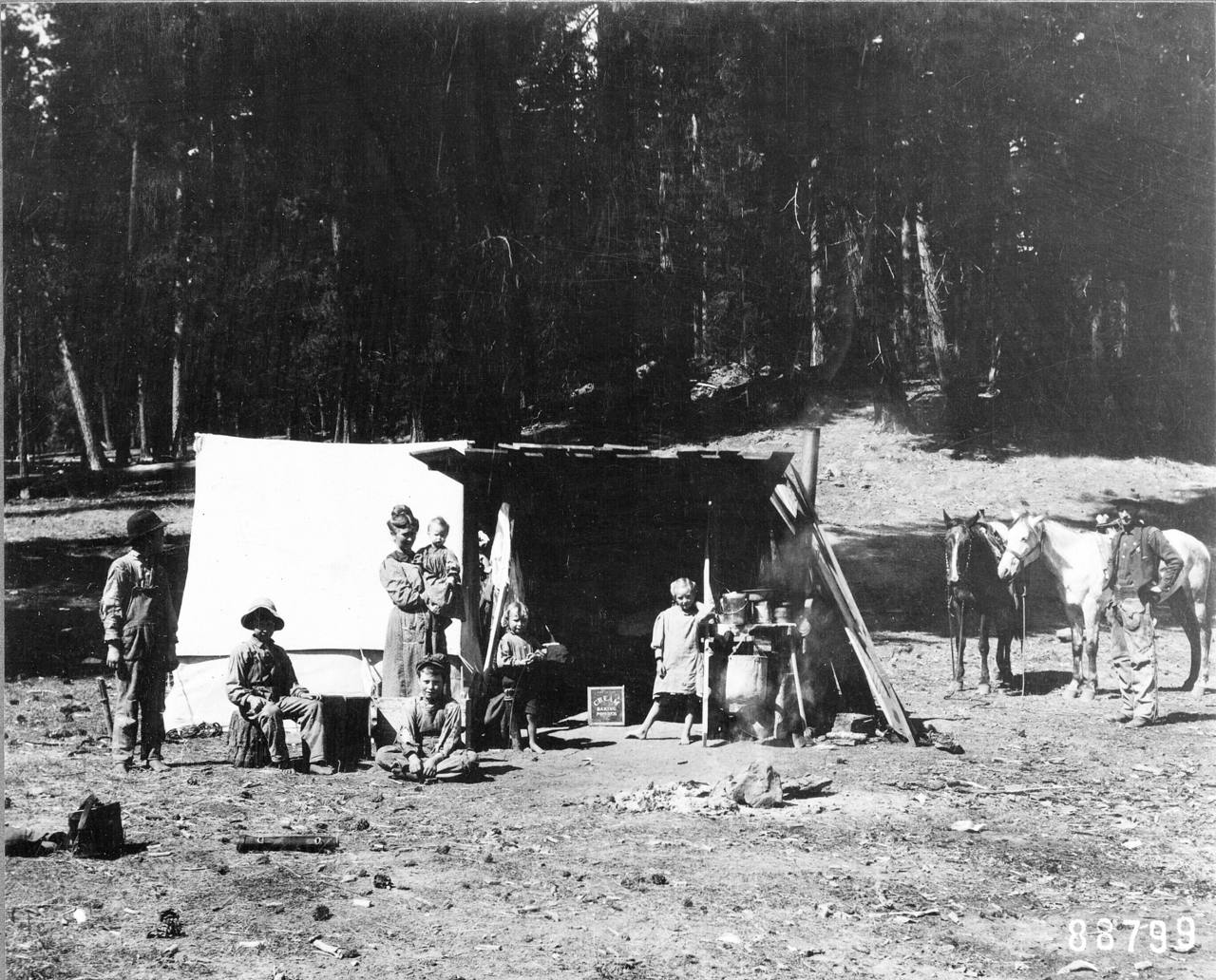
A ranger’s family at Bull Prairie Ranger Station in Umatilla National Forest in 1909. Historical forest photo, not the 1982 investigation. Photo: Forest Service Photography, Public domain. Resized; JPEG conversion.

Another investigator called the tracks a hoax
Further reporting on the released records described Border Patrol tracker Joel Hardin's stronger conclusion: that the tracks represented an attempted hoax.
The Forest Service's original file is available for readers to inspect alongside the reporting. It is a record of an investigation, not an official declaration that every claim inside it was true.
The release adds documentation to a long-running public story. It does not remove the investigators' doubts or supply the confirmation that the most enthusiastic viral captions suggest.
Featured image: Mill Creek Lake near Walla Walla, Washington. Illustrative regional photo, not the location of the 1982 tracks. Photo: PinchyCC, CC BY 4.0. Resized and fitted to a 16:9 canvas.
