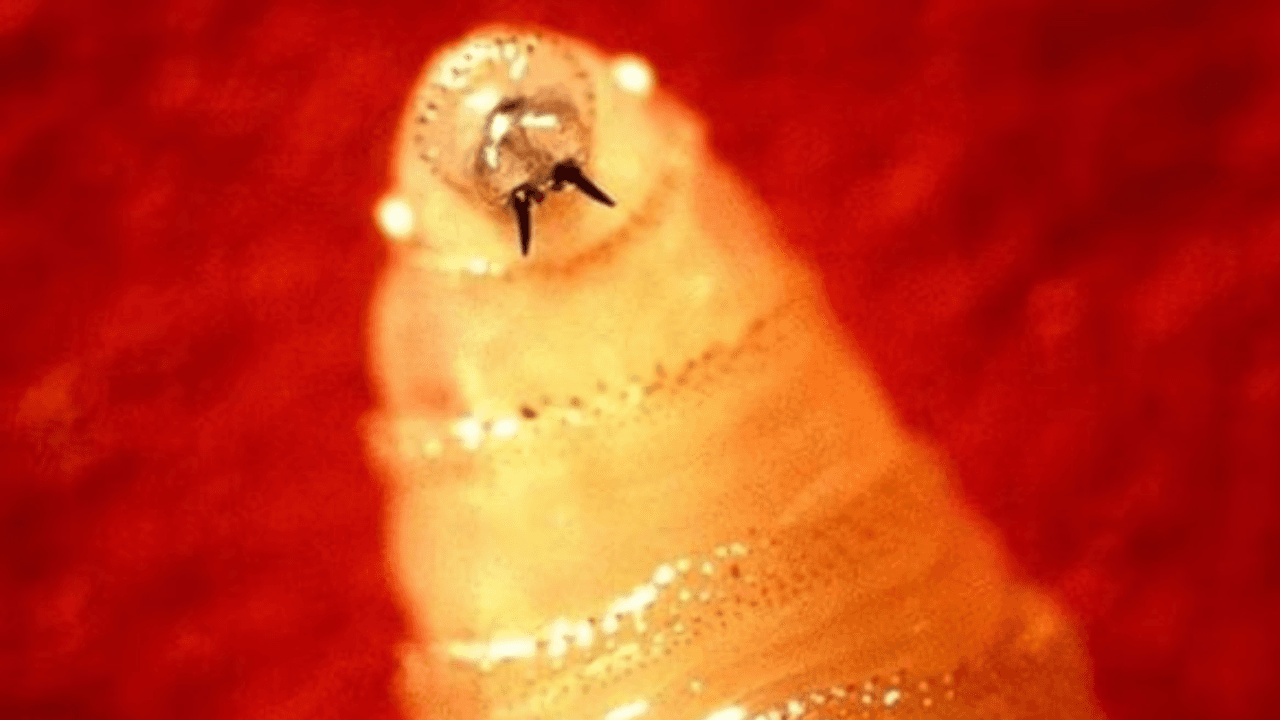
A human case of the flesh-eating screwworm parasite has been confirmed in the United States for the first time. Health officials in Maryland identified the infection in a person who had recently returned from Guatemala, where an outbreak began last year. The parasite, if untreated, is often fatal.
What Happened
The Maryland patient was diagnosed within the past week, according to Reuters. State officials confirmed the case and said treatment and prevention measures were quickly put in place. Beth Thompson, South Dakota’s state veterinarian, said she was notified of the case last week. The Centers for Disease Control and Prevention (CDC) and the Maryland Department of Health have not yet released public statements.
What is the Screwworm Parasite
The screwworm is a parasitic fly that lays eggs in wounds of warm-blooded animals. Once hatched, hundreds of larvae burrow into living tissue with sharp mouths, eating flesh as they grow. If untreated, the infection can lead to death. According to the U.S. Department of Agriculture, treatment requires removing larvae and disinfecting wounds. Early treatment usually prevents long-term damage.
Impact on Livestock and Economy
The screwworm is notorious for devastating cattle and wildlife populations. The U.S. imports more than a million cattle each year from Mexico, raising fears that the outbreak could spread. Experts warn Texas, the nation’s largest cattle producer, could face losses of up to $1.8 billion in livestock deaths, labor, and medical costs if the parasite spreads unchecked.
Why It Matters
This confirmed case is expected to raise concerns in the beef and cattle industry, which is already dealing with record-high prices due to tight supplies. While the infected person in Maryland has been treated, public health experts are closely watching for any additional cases. The detection highlights the urgent need for monitoring, prevention, and education to protect both human health and the livestock industry.