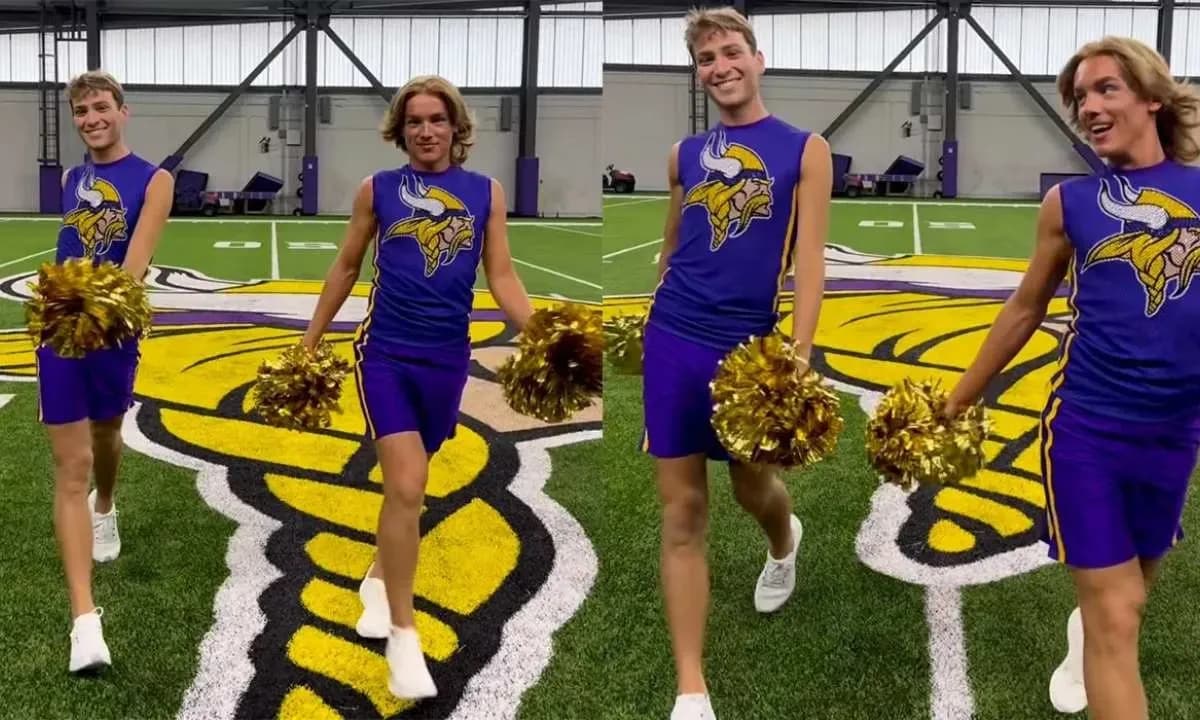
The 2025 NFL season hasn’t even started yet, but the sidelines are already at the center of a heated debate. The Minnesota Vikings just made history by adding two male cheerleaders, Blaize Shiek and Louie Conn, to their squad. They were chosen out of 54 finalists, joining a growing trend of inclusivity in the NFL. But their presence has ignited a culture war, dividing fans across the country.
This isn’t actually the first time men have been part of cheerleading. In fact, when the sport began in the late 19th century, it was a male-dominated activity. It wasn’t until the 1950s and 1960s that NFL teams shifted toward all-female dance squads, which soon became the standard. Decades later, the landscape started to change again.
In 2018, the Los Angeles Rams and New Orleans Saints introduced dancing male cheerleaders, breaking open the door for others to follow. By 2025, nearly a third of NFL teams now have male cheerleaders, including the Rams, Ravens, Patriots, Titans, 49ers, Eagles, Commanders, Seahawks, Buccaneers, and Saints.
The Vikings’ announcement, however, has triggered an unusually strong reaction online. Supporters see it as progress and a step toward inclusivity, while critics are calling it the end of football tradition.
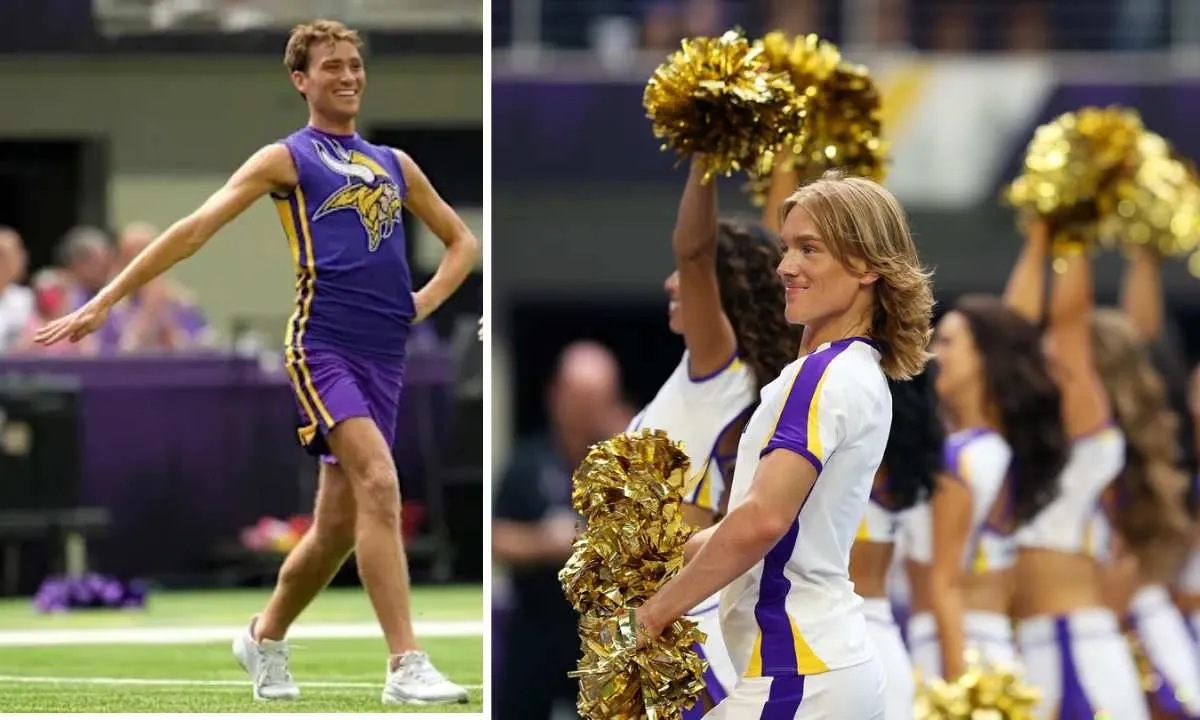
Some fans have even claimed they will boycott games altogether.
“I’ve been a Vikings fan all my life… sigh. I need a new team now.”
Actor Kevin Sorbo, a lifelong Vikings fan, posted to his millions of followers.
Others, though, mocked the outrage. Author Zach W. Lambert compared the critics to “the biggest babies on earth,” saying they’re making more noise than a newborn elephant. Conservative commentator Tomi Lahren shrugged at the uproar, saying it’s “inconsequential” and that people shouldn’t be outraged about everything.
But not everyone is dismissive. Republican Senator Tommy Tuberville, a former college football coach, took to a podcast to voice his disapproval. He argued that having male cheerleaders is part of a larger attempt to “take the men out of men’s sports” and warned it could be a “huge problem” if the trend spreads to southern NFL teams.
He even suggested it was tied to “socialism” and fears over masculinity being watered down. Ironically, at least three southern teams — the Saints, Buccaneers, and Titans — already have male cheerleaders.
For Blaize Shiek and Louie Conn, the criticism hasn’t just been political; they’ve also faced direct homophobic and hateful comments online. Still, the two haven’t backed down. In a cheeky Instagram post after the backlash, they shared a picture in uniform with the caption: “wait… did someone say our name?”
The Vikings organization is standing firmly behind them. In an email shared with Newsweek, the team emphasized that every cheerleader, male or female, went through the same rigorous audition process and was chosen for talent, passion, and dedication.
“We support all our cheerleaders and are proud of the role they play as ambassadors of the organization,”
the statement read.
What makes this debate even more striking is that male cheerleaders aren’t unusual outside the NFL. From college campuses to popular culture, men have long been part of cheerleading. Movies like Bring It On and TV shows like Glee and One Tree Hill have featured male cheerleaders, showing them as integral to the sport. Even U.S. history has examples: former presidents Ronald Reagan and George W. Bush were both cheerleaders in their youth.
But as with many issues today, the debate has become a flash point in the wider online culture wars. The NFL has already faced criticism over its Super Bowl halftime shows, the use of pride flags, and the singing of “Lift Every Voice and Sing,” often called the Black national anthem. Now, two men holding pom-poms on the sidelines have become the latest lightning rod.
Former NFL defensive end R.K. Russell, who came out as bisexual in 2019, sees the backlash as less about football and more about control. In an op-ed, he argued that the outrage isn’t about performance but about who gets to be visible in sports. “The outrage over male cheerleaders isn’t about sports. It’s about control: over masculinity, over image, and over who gets to be seen and celebrated on the global stage of the NFL,” he wrote.
As the season opener approaches on September 4, the story is far from over. The Vikings will play their first home game on September 14 against the Atlanta Falcons, where Shiek and Conn will take their spots on the sidelines. Whether fans cheer or jeer, their presence will mark a turning point.
Male cheerleaders are no longer just a quirky footnote in NFL history. They’re now part of the game-day experience — and their inclusion has sparked one of the most unexpected battles in football’s ongoing culture war.