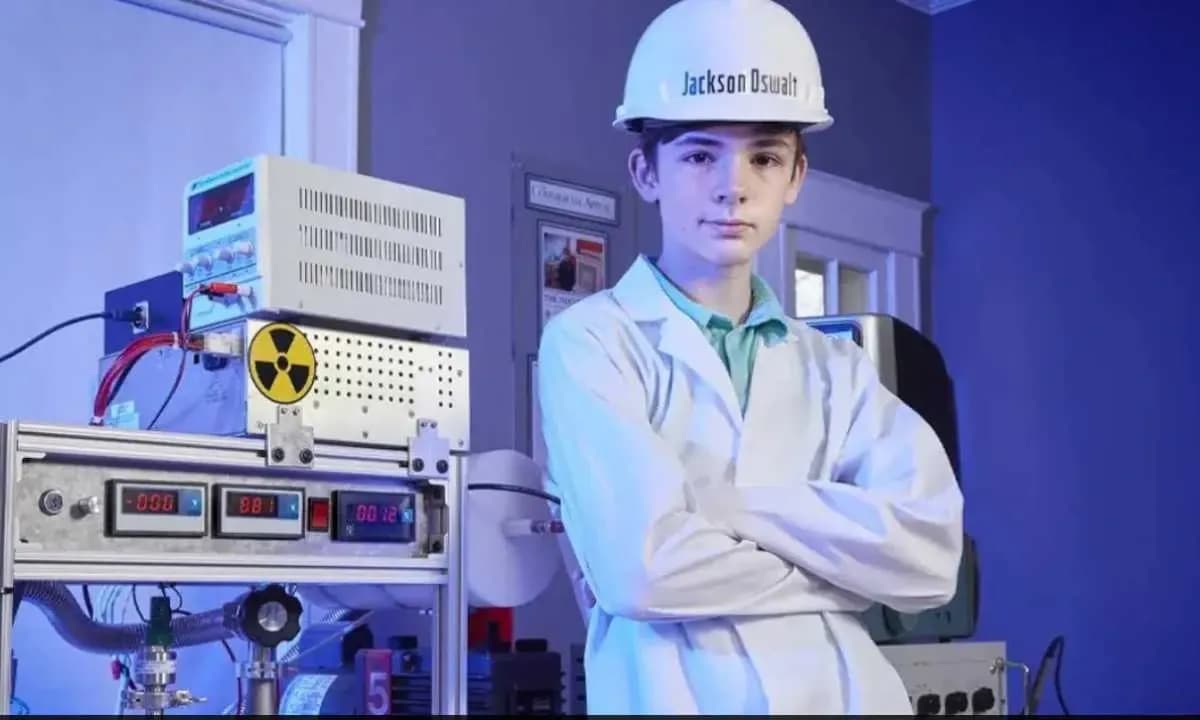
In a quiet neighborhood of Memphis, Tennessee, a boy named Jackson Oswalt transformed his room into something beyond any child’s wildest dreams: a nuclear fusion reactor. By the time he turned thirteen, he had made history, becoming the youngest person ever to achieve nuclear fusion—a process many adults in labs around the world have struggled with.
Jackson’s journey began when he was just a curious eight-year-old, captivated by science and technology. Inspired by a TED talk by nuclear fusion prodigy Taylor Wilson, he decided that he, too, wanted to change the world. With a blend of ingenuity and a bit of help from his supportive parents, he took on the challenge that most would deem impossible.
By scavenging through eBay and other online platforms, Jackson pieced together the components needed for his reactor. With tools scattered across his playroom, he rigorously immersed himself in the sciences, absorbing information from books and videos. In March 2018, just days before his thirteenth birthday, his hard work paid off. He achieved nuclear fusion, successfully fusing deuterium atoms, and made it official with certification from renowned enthusiasts.
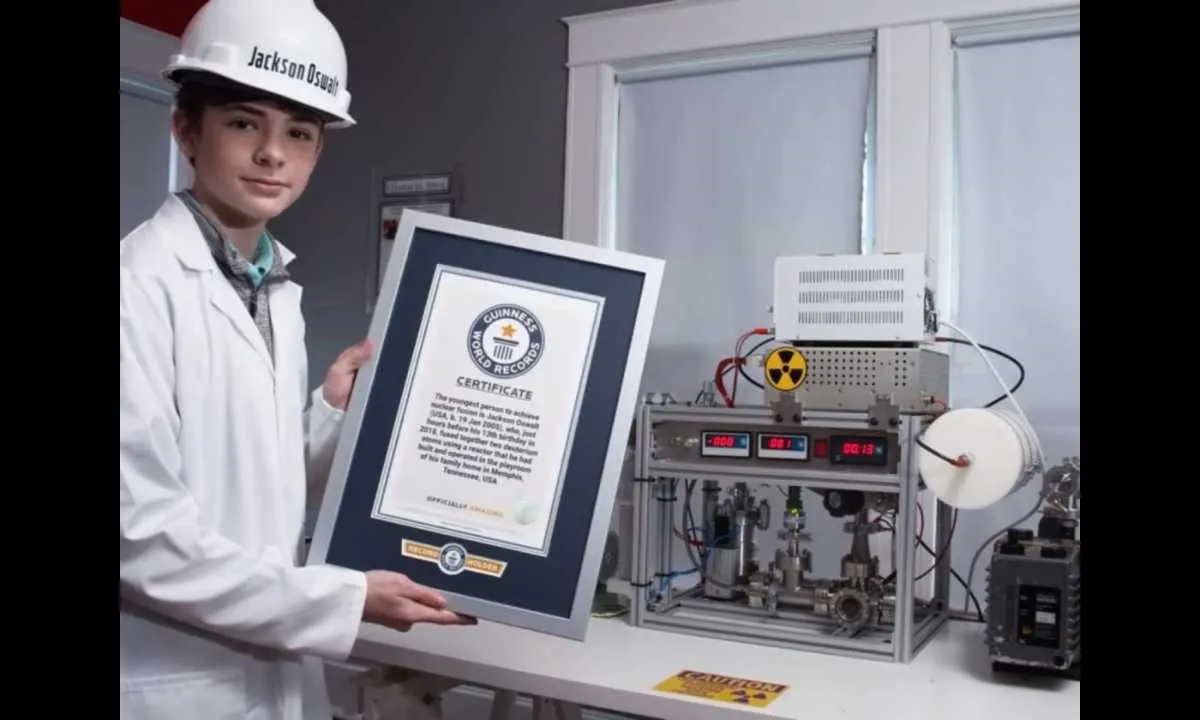
However, what should have been a proud moment for Jackson quickly became a cause for concern. His achievement didn’t go unnoticed. Local authorities were alerted, and before long, the FBI was knocking on his family’s door. Were they there to discuss a scientific breakthrough or investigate a nuclear threat?
The answer was simple: safety precautions. Fears of unregulated nuclear experiments led officials to ensure that Jackson’s setup wasn’t hazardous. ‘I really just wanted to build something cool,’ Jackson recalled, shaking his head in disbelief. The FBI was satisfied with his compliance and assured that no dangerous radiations were lurking in his basement.
But the extraordinary didn’t end there. Jackson’s story captivated the media, sparking conversations across the nation about youth in science and the extraordinary capabilities of a curious mind. Schools began using his story as an inspiration, showcasing that innovation knows no age. Teachers and peers alike celebrated his genius, and he became a local hero.
As he settled back into his routine, Jackson found himself at the helm of something unexpectedly bigger. Media appearances and speaking engagements flooded in, offering him platforms to talk about his masterpiece. He shared his passion for science and encouraged other kids to explore their curiosities, no matter how unconventional.
Yet, with fame came questions about safety and ethics. Parents were concerned, educational institutions were reviewing their curriculum, and some critics voiced worries about children dabbling in advanced sciences without proper oversight. Jackson stood firm, advocating for STEM education and the importance of experimentation, while promoting safe practices. ‘I just wanted to learn and create something cool,’ he insisted, spotlighting how curiosity could drive amazing results.
Now, at fourteen, Jackson continues to pursue his passions. He talks about venturing into artificial intelligence and space exploration. And while he has goals that extend far beyond the confines of his childhood bedroom, he carries with him the lesson that innovation can sprout from the simplest of ideas. His story shows that no age is too young for a dream, and sometimes, those who are bold enough to chase them can indeed set records.
Reflecting on his journey, Jackson wishes to inspire others. As he put it simply, ‘It all started with just wanting to know how things worked.’ That single spark of curiosity can ignite the most remarkable discoveries. So, what curiosities are you exploring today, and how far could they take you?