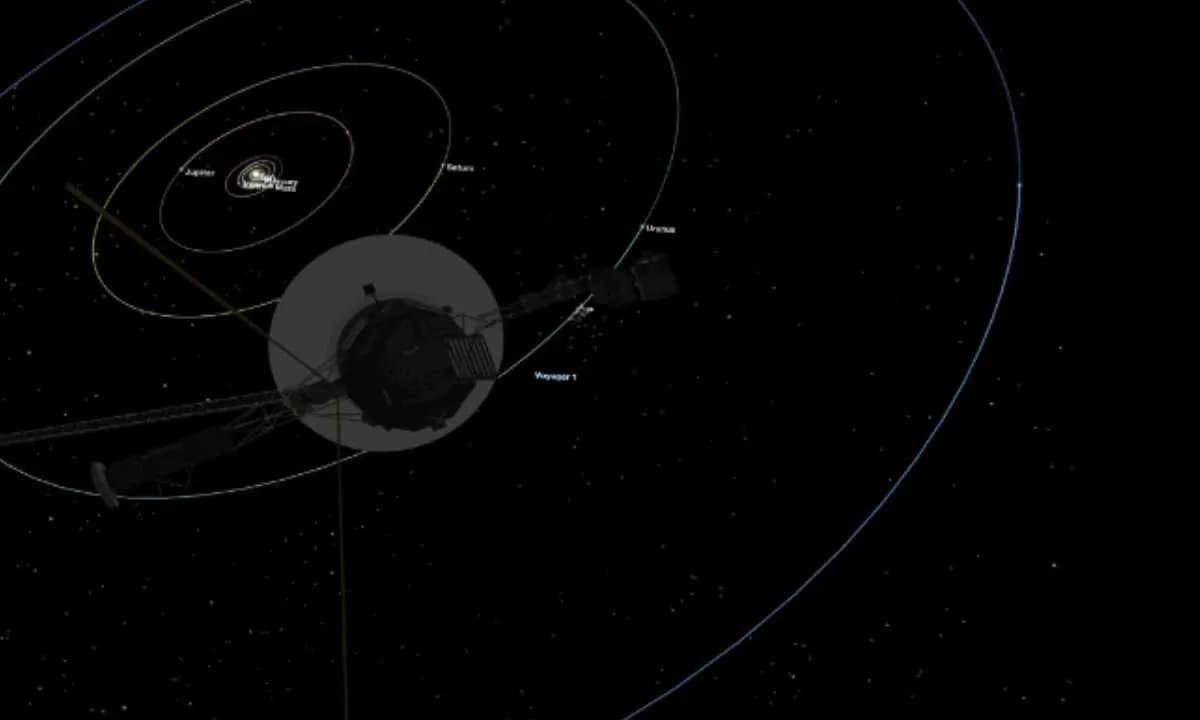
Launched on September 5, 1977, NASA’s Voyager 1 is the most distant human-made object from Earth. It is currently over 15.5 billion miles from Earth. It’s a pioneering probe that has explored planets, and even crossed into interstellar space. Voyager carries a special message: the “Golden Record.” The record is a time capsule of Earth’s sounds, images, and greetings to any extraterrestrial beings it may encounter.
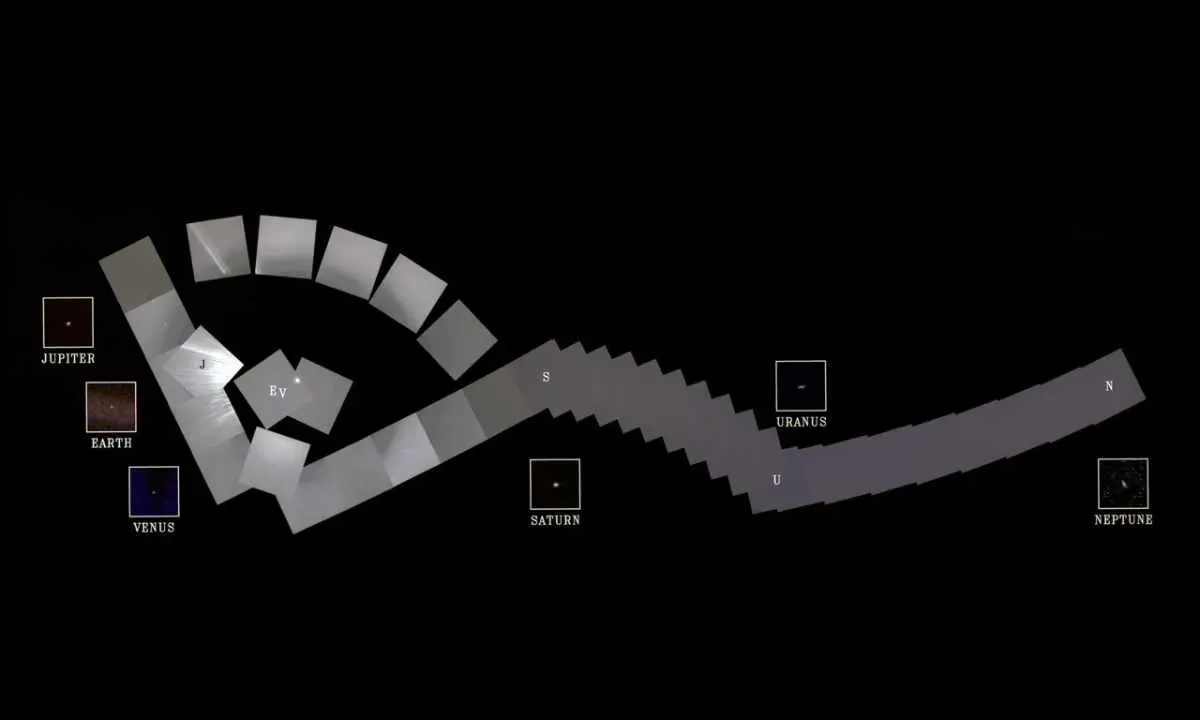
Among its many milestones, Voyager 1 gave us the iconic “Family Portrait.” It is a picture of our Solar System in 1990, capturing Earth as the famous “Pale Blue Dot.” This mission has not only revolutionized space exploration but is also a reminder of humanity’s place in the universe. Let’s have a closer look at where it is now and what its time capsule has.
The Last Family Photo: A Perspective on Our Place in the Universe
In February 1990, from a staggering 3.7 billion miles away, Voyager 1 turned its camera back towards the Sun to capture a final glimpse of the Solar System. This historic moment, known as the “Family Portrait,” included images of six planets: Neptune, Uranus, Saturn, Jupiter, Venus, and Earth.
Earth appeared as a tiny crescent—a “pale blue dot” floating in a sunbeam. Carl Sagan, reflecting on the image, famously said:
“That’s here. That’s home. That’s us.”
While Neptune and Uranus appeared slightly elongated due to the spacecraft’s motion, Mars was obscured by sunlight, Mercury was too close to the Sun, and Pluto was too distant and dim to be captured. This portrait remains a singular achievement in space exploration, giving us a humbling perspective on our fragile existence in the vast cosmos.
Voyager 1’s Journey: From the Outer Planets to Interstellar Space
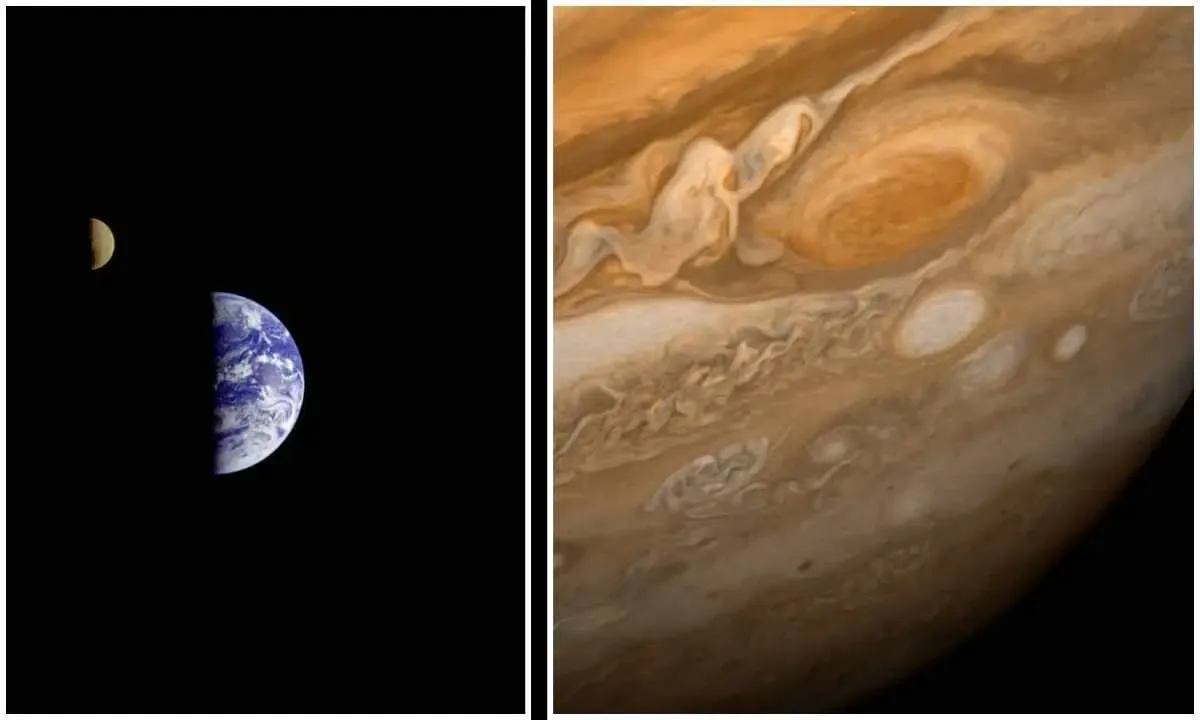
Voyager 1 began its journey in 1977, originally tasked with studying Jupiter, Saturn, and their moons. During its flybys, it provided groundbreaking data on planetary weather, magnetic fields, rings, and even the thick atmosphere of Saturn’s largest moon, Titan.
In August 2012, Voyager 1 crossed the heliopause—the boundary where the Sun’s influence ends—and became the first human-made object to enter interstellar space. This milestone was confirmed by increased cosmic rays and plasma density measurements.
As of December 2024, Voyager 1 is 15.5 billion miles away from Earth in the constellation Ophiuchus. Communication signals take over 22 hours to travel each way between the spacecraft and NASA’s Deep Space Network.
The Golden Record: Humanity’s Message to the Stars
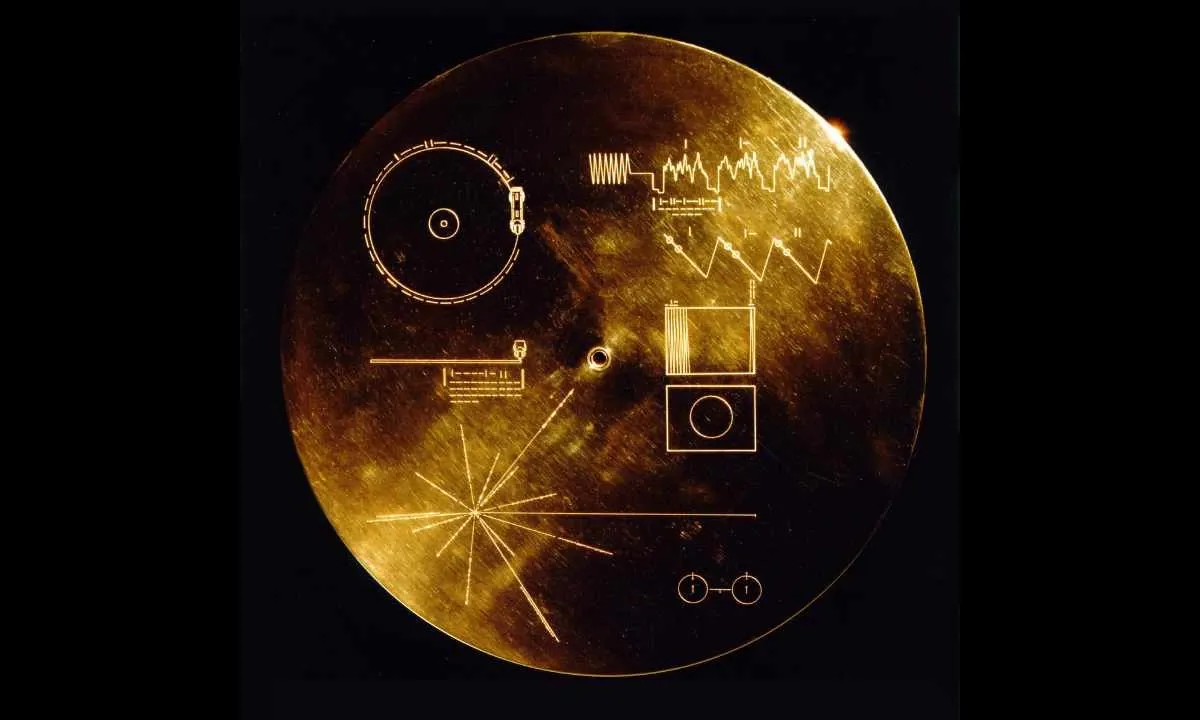
Voyager 1 carries a unique artifact. It is the Golden Record, a 12-inch, gold-plated copper disk. But it’s much more than that. The record is designed to represent the diversity of life and culture on Earth. Created under the guidance of Carl Sagan and his team, the record includes:
- Greetings in 55 languages.
- Natural sounds like thunder, wind, and whale calls.
- Music from various cultures, including classical and folk tunes.
- Images depicting Earth’s landscapes, humans, and life forms.
Sagan described the record as a “bottle into the cosmic ocean,” symbolizing hope and curiosity. Instructions on decoding the record are etched into its cover, alongside a radioactive uranium-238 clock to help any future discoverers determine its launch date.
The Science Behind the Voyager Mission
Voyager 1’s mission has evolved over decades, transitioning from planetary exploration to interstellar research.
- Planetary Flybys (1977–1989):
Voyager 1 provided detailed studies of Jupiter and Saturn, along with their moons. It also revealed new insights about their weather, magnetic fields, and rings. - Heliosphere Exploration:
The spacecraft crossed the termination shock in 2004, entered the heliosheath, and finally reached interstellar space in 2012. - Interstellar Studies (Post-2012):
Voyager 1 now measures magnetic fields, cosmic particles, and plasma waves in interstellar space. It gives incredible insights into the vast, uncharted regions beyond the Sun’s influence.
NASA’s Deep Space Network ensures continuous communication, enabling us to receive valuable data from this distant probe.
The Future of Voyager 1: A Silent Witness to the Cosmos
As Voyager 1’s power supply diminishes, NASA has been prioritizing essential systems to extend its mission. In 2017, engineers reactivated its trajectory correction thrusters, allowing the spacecraft to maintain its antenna alignment with Earth.
- Expected Lifespan:
Voyager 1 is anticipated to send scientific data until 2025, with its systems potentially lasting until 2036.
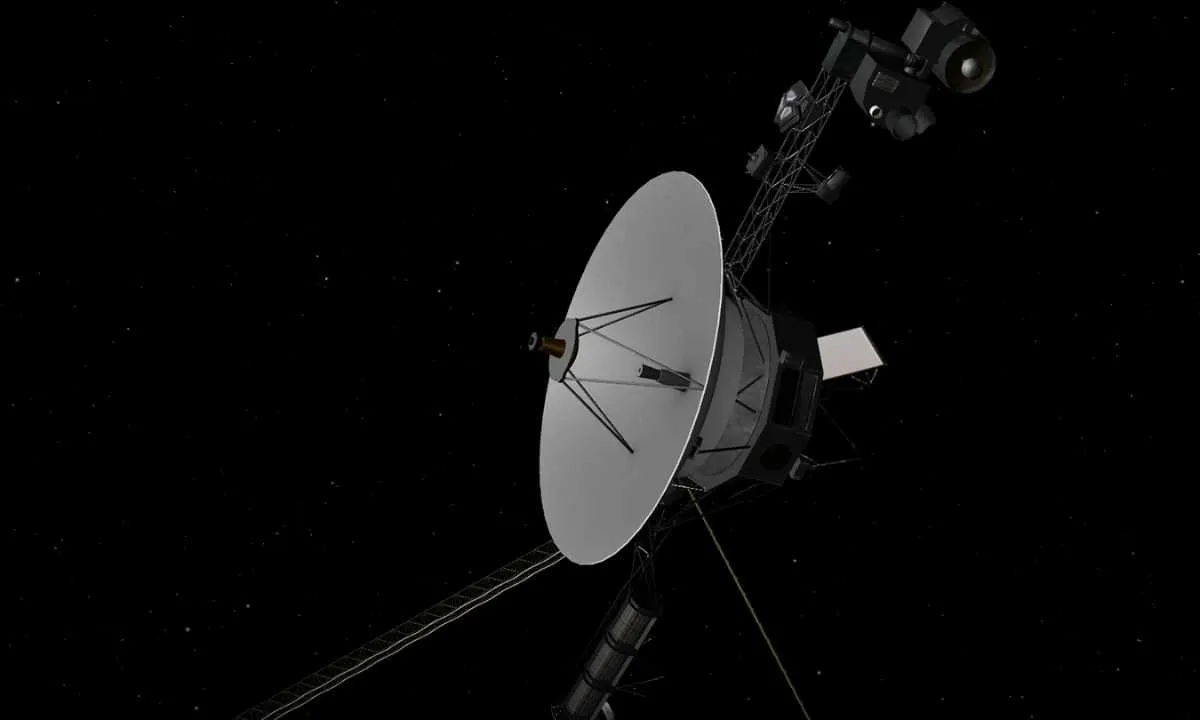
Despite its limitations, Voyager 1 will continue its silent journey through space, carrying humanity’s message across the stars—a testament to our curiosity and ingenuity.
Conclusion
Voyager 1’s mission is a remarkable chapter in humanity’s quest to understand the universe. The Family Portrait and Golden Record are enduring symbols of exploration and unity, reminding us of our shared responsibility to cherish and preserve our “Pale Blue Dot.”
As Voyager 1 drifts farther into the cosmos, it inspires us to continue seeking answers about the universe and our place within it, igniting a sense of wonder for generations to come.
Also read,