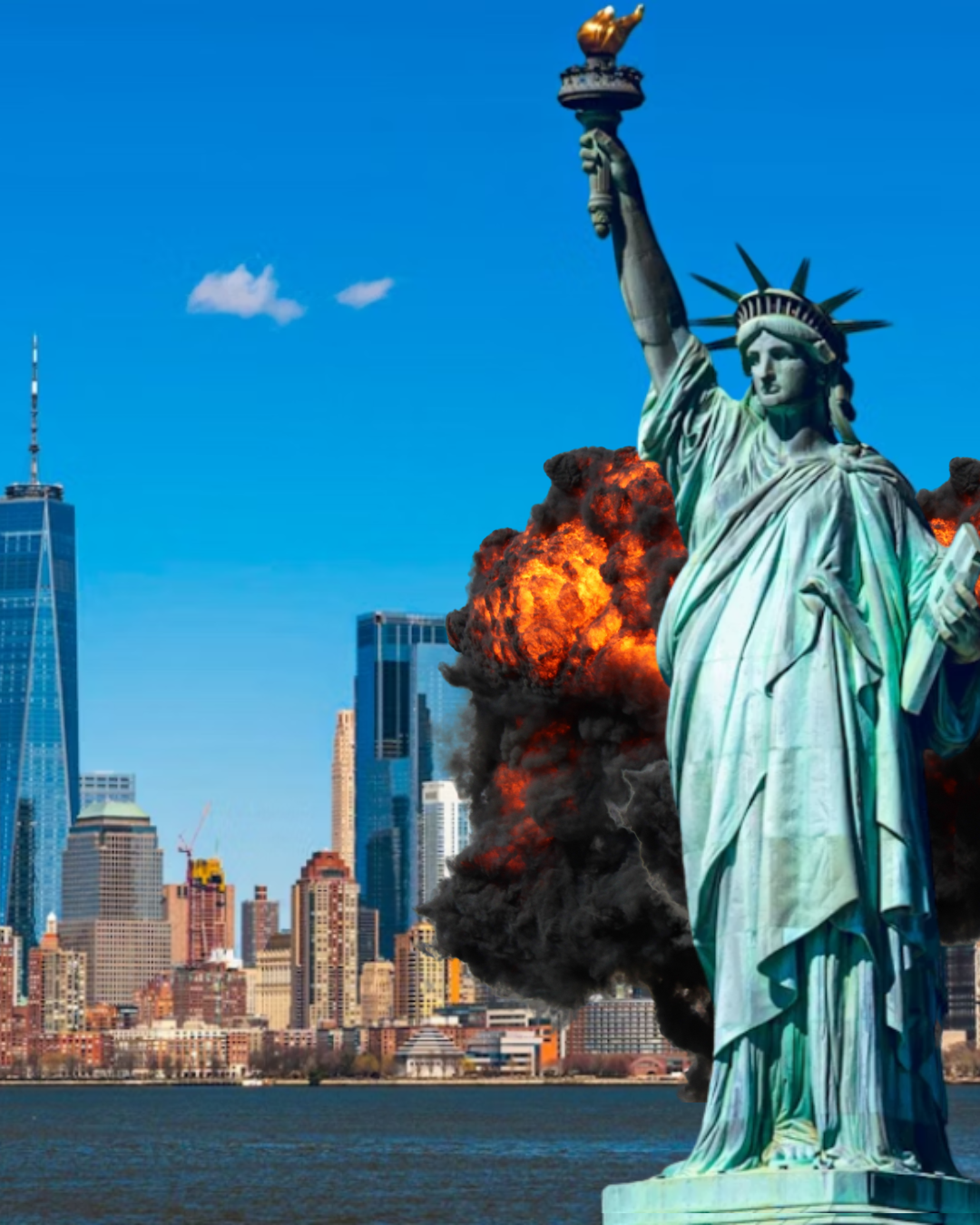
As global tensions rise amid international conflicts and nuclear threats, nuclear historian Professor Alex Wellerstein has outlined a sobering list of 15 U.S. cities that could be the first hit if WWIII breaks out and not all are major metropolises.
According to Wellerstein, if a global nuclear conflict were triggered by a nation like Russia or China, targets would focus on disabling U.S. retaliation capacity, especially military bases and command centers. In contrast, a rogue state might aim for symbolic or heavily populated cities instead.
Here’s the expert’s full list — including the reasons each location might be in the crosshairs
Military and Strategic Targets
These cities host vital U.S. nuclear or defense infrastructure:
- Great Falls, Montana – Near Malmstrom AFB, controls nuclear silos
- Cheyenne, Wyoming – Home to Francis E. Warren AFB, a missile command site
- Ogden & Clearfield, Utah – Close to Hill AFB, a nuclear weapons hub
- Shreveport, Louisiana – Hosts B-52 bombers capable of nuclear strikes
- Honolulu, Hawaii – Vital U.S. naval and air military base in the Pacific
- Omaha, Nebraska – Houses Offutt AFB, a Cold War strategic stronghold
- Colorado Springs, Colorado – Home to NORAD, vital for airspace defense
- Albuquerque, New Mexico – Site of Kirtland AFB, with a major nuclear arsenal
- Washington, D.C. – Political and military command center of the U.S.
- Seattle, Washington – Near Naval Base Kitsap, houses nuclear submarines
Symbolic and High-Density Urban Targets
These major cities could be targeted for psychological impact or population damage:
- San Francisco, California – Tech hub with 873,965 residents
- Houston, Texas – One of the largest cities, 2.3 million people
- Chicago, Illinois – Metro population over 9.6 million
- Los Angeles, California – Home to Hollywood, with 3.8 million people
- New York City, New York – The most populous U.S. city, with 8.8 million
Expert Insight
Wellerstein warns that rural or lesser-known cities like Great Falls and Cheyenne are not safe havens — they may be first-wave targets due to their proximity to U.S. nuclear command centers.
“If the adversary is Russia, disabling our ability to retaliate would be their first move,” Wellerstein explained to the Daily Mail. “In contrast, rogue states might aim for densely packed civilian centers.”