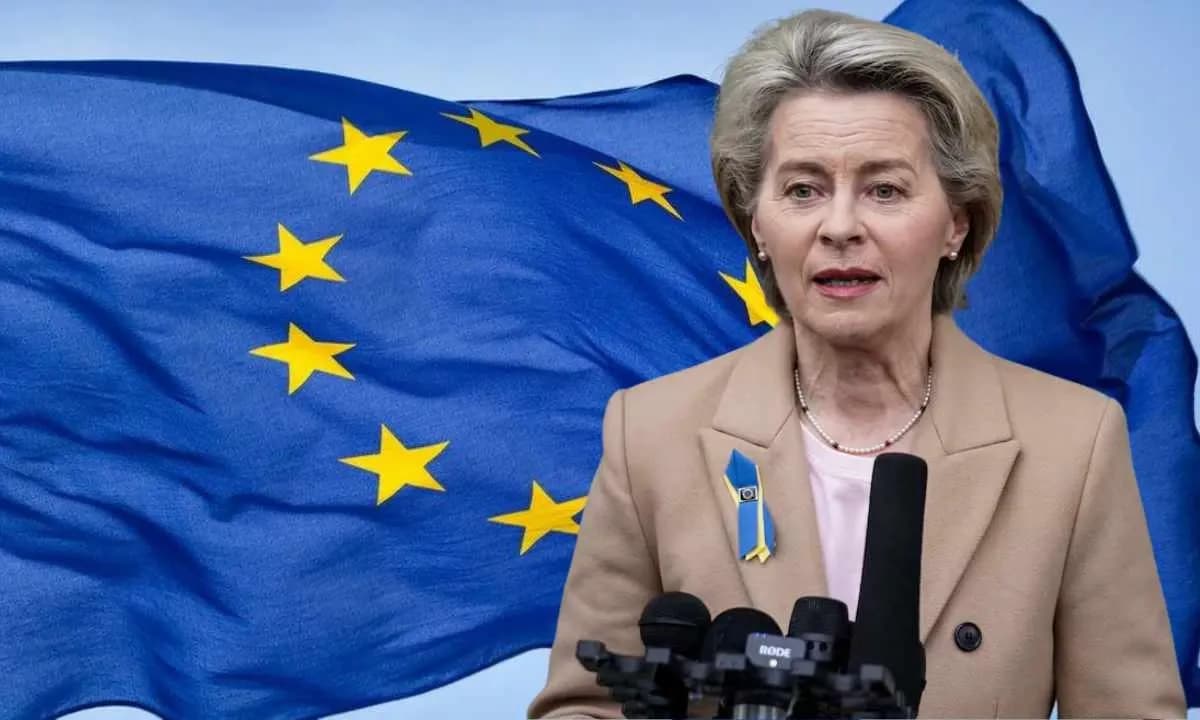
In a groundbreaking move reflecting skyrocketing global tensions, the European Union has rolled out a strategy urging households across its member states to assemble a 72-hour emergency kit. This initiative comes amid rising uncertainties and geopolitical tensions, marking a pivotal step for ensuring citizens’ safety across the continent.
The proposed plan, named the ‘Union Preparedness Strategy, ‘ emerged from a summit in Brussels, where leaders highlighted the increasing risk of crises such as armed conflicts, natural disasters, and health pandemics.
Ursula von der Leyen, President of the European Commission, underscored this necessity by stating, ‘Europe faces unpredictable times; preparation is key.’
She emphasized this during a poignant speech at a Danish military academy. The document recommends that each household maintain a self-sufficient kit for at least 72 hours. This kit should include essentials such as drinking water, non-perishable food, basic medical supplies, and a flashlight with batteries.
Von der Leyen highlighted the need for European households to brace for potential emergencies, reflecting lessons learned during recent global crises. This includes the COVID-19 pandemic and various climate-related disasters.
As per the strategy, March 26, 2025, will be designated as European Preparation Day to further reinforce public awareness about personal and communal resilience in the face of emerging threats. Reflecting on past inefficiencies, a European Commission report identified fragmented disaster readiness efforts within member states.
This has led to this unified push, demanding improved cooperation and resource sharing. The EU’s call has resonated with countries like France, Sweden, and Belgium, which have been running parallel awareness campaigns. In particular, Sweden has issued preparedness manuals urging citizens to be proactive in gathering necessary resources.
These advancements are seen as a step forward in the EU’s vision of a more coordinated response to crises, signaling a shift from individual nation efforts towards a collective continental approach. France’s recent initiative, which urged citizens to compile emergency supplies, underscored the necessity of such self-reliance amid changing global scenarios.
The preparedness drive follows public anxieties over geopolitical shifts and natural calamities, prompting an urgency for readiness. The recommended kit contents are built on pragmatic lessons from past emergencies. As von der Leyen advised, ‘Our future depends on our preparedness today.’
The EU’s initiative is about empowering individuals to ensure safety without reliance on governmental intervention for the critical initial hours post-disaster.