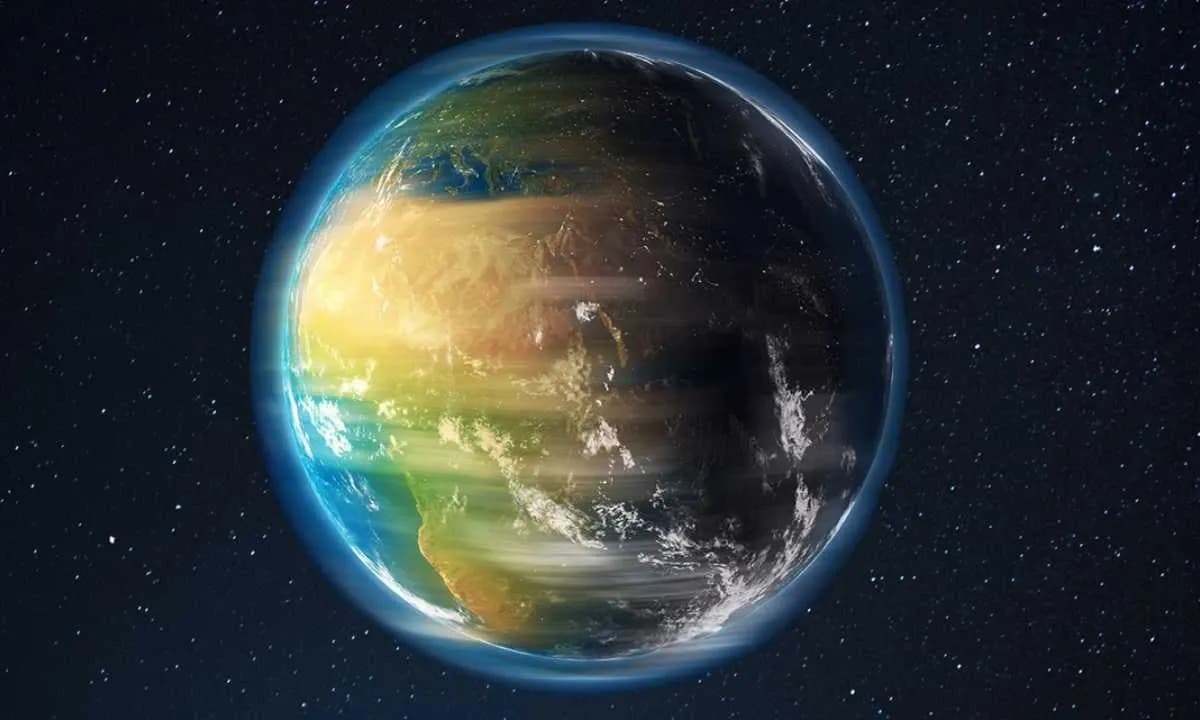
In the coming summer of 2025, something odd will happen—something you likely won’t notice but that scientists around the world are watching very closely. On three specific days—July 9, July 22, and August 5—Earth is expected to spin just a little faster than usual. Not fast enough for you to feel dizzy, but fast enough to make those days milliseconds shorter than the standard 24 hours.
According to a new report by Timeanddate.com, August 5 is predicted to be the shortest of them all, coming in about 1.51 milliseconds shorter than an average day. That’s quicker than the blink of an eye, but in the world of geophysics and timekeeping, it’s a big deal. In fact, it’s part of a strange trend that’s been happening since 2020—and scientists still don’t fully understand why.
To make sense of this, let’s start with something simple: Earth doesn’t spin at a perfectly constant rate. On average, it completes one full rotation every 86,400 seconds—that’s the 24-hour day we all plan our lives around. But this spin can speed up or slow down by tiny amounts due to natural forces both on and inside the planet. Historically, Earth’s rotation has been slowing down, thanks mostly to the Moon’s gravitational pull, which acts like a brake. Because of this slowdown, we’ve added 27 leap seconds since 1972 to keep our atomic clocks aligned with the actual day.
But that trend flipped around 2020. Suddenly, Earth started spinning faster. In 2024, it set a new record when, on July 5, the planet completed its rotation 1.66 milliseconds faster than the standard 24 hours—the shortest day ever recorded since atomic clocks began tracking this in 1960.
So, what’s causing this unexpected acceleration?
Well, there are several possibilities, but no clear answer yet. Some scientists believe the Earth’s molten iron core is shifting, affecting the speed of rotation. Others point to glacial melting, which moves massive amounts of water from the poles toward the oceans, subtly changing the planet’s balance and spin. Climate phenomena like El Niño and La Niña, which move air and ocean mass around the globe, are also suspects. There’s even the Moon’s position—on those three fastest days in 2025, the Moon will be farthest from Earth’s equator, which may slightly affect the rotational speed.
But the strange part is: these usual suspects still don’t fully explain what’s happening. “Nobody expected this,” said Leonid Zotov, an expert in Earth’s rotation at Moscow State University. He co-authored a study in 2022 that tried to explore these recent changes. “Most scientists believe it is something inside the Earth. Ocean and atmospheric models don’t explain this huge acceleration.”
This mystery has made people who deal with timekeeping especially alert. Physicists, like Judah Levine at the National Institute of Standards and Technology, admit they never predicted this change. “The assumption was that Earth would continue to slow down,” Levine explained. But now, if this acceleration continues, we might have to subtract a leap second in 2029. That’s right—a negative leap second. For the first time ever, clocks around the world might have to skip a second, jumping straight from 23:59:58 to midnight. That might sound simple, but in a world where GPS systems, financial markets, and the internet depend on ultra-precise timing, removing a second is a huge technical challenge.
Some experts even say we may stop using leap seconds entirely by 2035, letting atomic clocks tick on their own while astronomers track the difference between real time and Earth’s time. It’s a topic that’s expected to come up in major global meetings, like the World Radiocommunication Conference in 2026.
For now, you won’t notice these faster days. They won’t steal your sleep or cut your lunch break short. But behind the scenes, Earth’s rotation is reminding us that even the things we think are constant—like the length of a day—can change in ways we still don’t fully understand. One thing is certain: the only constant is change. And Earth, once again, is keeping us on our toes.
Also read,