In the lush forests of Hawaii, something unusual is happening. Drones, typically associated with surveillance and warfare, are now being used for a far more positive and surprising purpose: to save the island’s endangered birds. Hawaii, once a paradise of vibrant songbirds known as honeycreepers, now faces an extinction crisis, largely due to a deadly invader: mosquitoes.
For years, mosquitoes have been decimating Hawaii’s native bird population by transmitting avian malaria, a disease that is lethal to these birds. Before mosquitoes arrived on the islands, honeycreepers were abundant, with more than 50 species once gracing the skies. Today, only 17 species remain, many of which are on the brink of extinction.
The mosquitoes were not native to Hawaii. They were introduced by accident in 1826 when a whaling ship unknowingly brought them to the islands. The tropical climate proved to be a perfect breeding ground, allowing these insects to proliferate. While the mosquitoes were a nuisance to humans, they posed a much greater threat to the native wildlife, especially the honeycreepers, which had no natural defenses against mosquito-borne diseases. The arrival of these mosquitoes triggered a chain reaction of bird extinctions, with some species disappearing almost overnight.
As the mosquitoes spread across the islands, the honeycreepers retreated to higher elevations, hoping to escape the dangers below. However, as climate change has warmed the planet, these insects are now able to invade these higher altitudes, pushing the birds to the brink. As temperatures rise, the mosquitoes march up the mountains, and the birds are running out of places to hide.
Faced with this devastating scenario, scientists have come up with an innovative and somewhat unconventional solution. They’re using drones to drop thousands of mosquitoes over the islands, but not just any mosquitoes—lab-reared, non-biting male mosquitoes.
These mosquitoes have been genetically engineered to carry a strain of bacteria called Wolbachia, which prevents their eggs from hatching when they mate with wild females. The aim is to gradually reduce the mosquito population by rendering them infertile, effectively slowing the spread of the diseases that are killing the honeycreepers.
This project, known as “Birds, Not Mosquitoes,” is a collaborative effort between state, federal, and nonprofit organizations. Since its launch in November 2023, more than 40 million mosquitoes have been released across honeycreeper habitats in Maui and Kaua‘i.
Most of the releases have been conducted using helicopters, which can carry a large number of mosquitoes, but this method has its limitations. Helicopters are expensive to operate and can only be deployed in favorable weather conditions, which in Hawaii’s mountainous regions, is not always reliable.
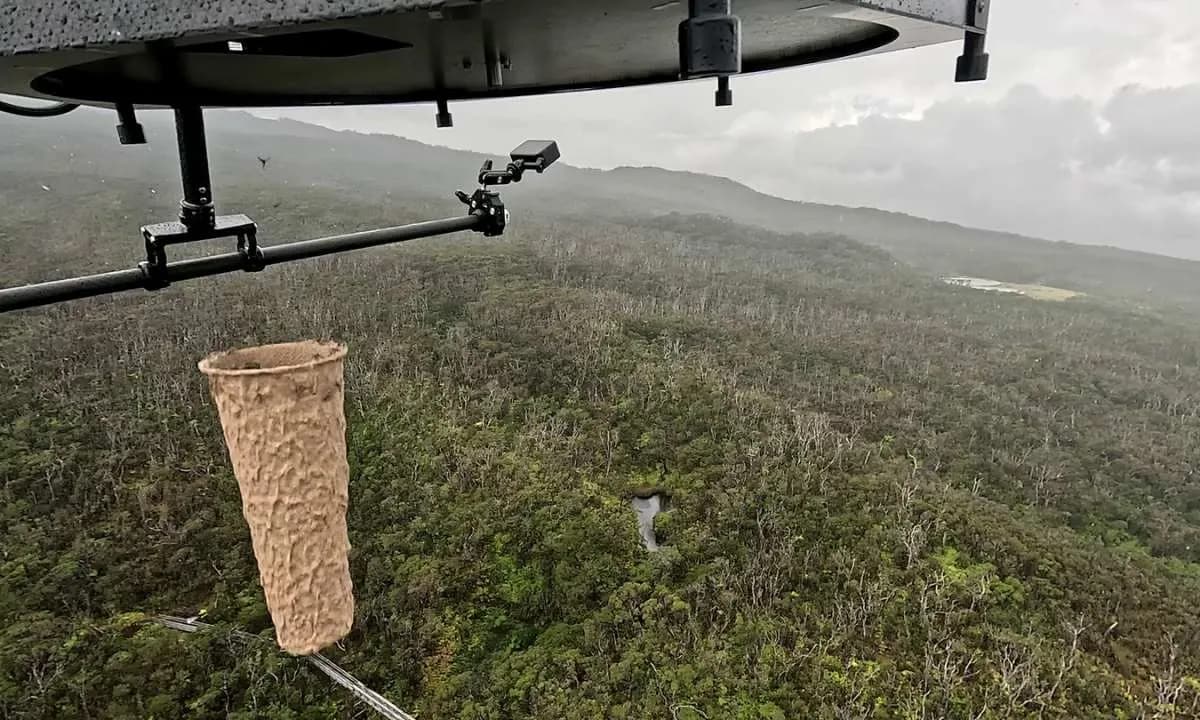
Enter drones. The team began experimenting with eight-foot-long drones in April 2024, which, while smaller and able to carry fewer mosquitoes (23,000 compared to the 250,000 that helicopters can carry), offer significant advantages. Drones are much cheaper, can be deployed on short notice, and don’t require a human pilot, making them safer and more flexible. They’re particularly useful in Hawaii’s remote and unpredictable weather conditions, where traditional methods have sometimes been rendered ineffective.
Each mosquito drop is carefully planned. The mosquitoes are transported in small, biodegradable pods made from sterilized paper pulp. Each pod contains about 1,000 mosquitoes, which are kept in a temperature-controlled environment during transport. Once dropped, the pods break down, allowing the mosquitoes to take flight and begin their work.
The mosquitoes are part of a broader effort to save the honeycreepers and prevent further extinctions. The Wolbachia-infected mosquitoes are part of a technique called the “incompatible insect technique” (IIT), which has been used globally to control mosquito populations that spread diseases like malaria and Zika.
In Hawaii, however, the focus is not on protecting humans but on saving the island’s unique bird species. The IIT method has already been successful in places like Florida, California, and China, but Hawaii’s case is different due to the nature of the mosquitoes and their role in the island’s ecosystem.
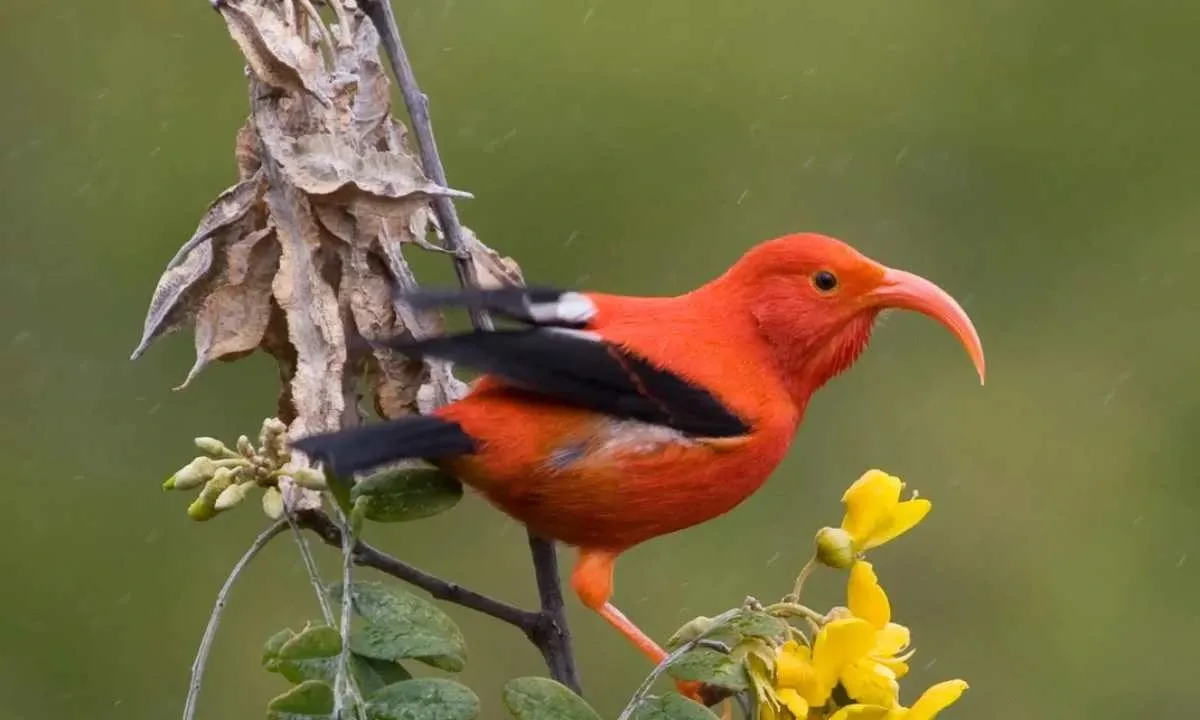
The project’s success is critical. Many of Hawaii’s remaining honeycreeper species, including the ‘ākohekohe (crested honeycreeper), kiwikiu (Maui parrotbill), and ʻakekeʻe (Kauaʻi ‘ākepa), are dangerously close to extinction. Last year, the ‘akikiki (Kaua‘i creeper) was declared functionally extinct in the wild, highlighting the urgency of the situation. Without the mosquito population being controlled, these birds could soon follow the same fate.
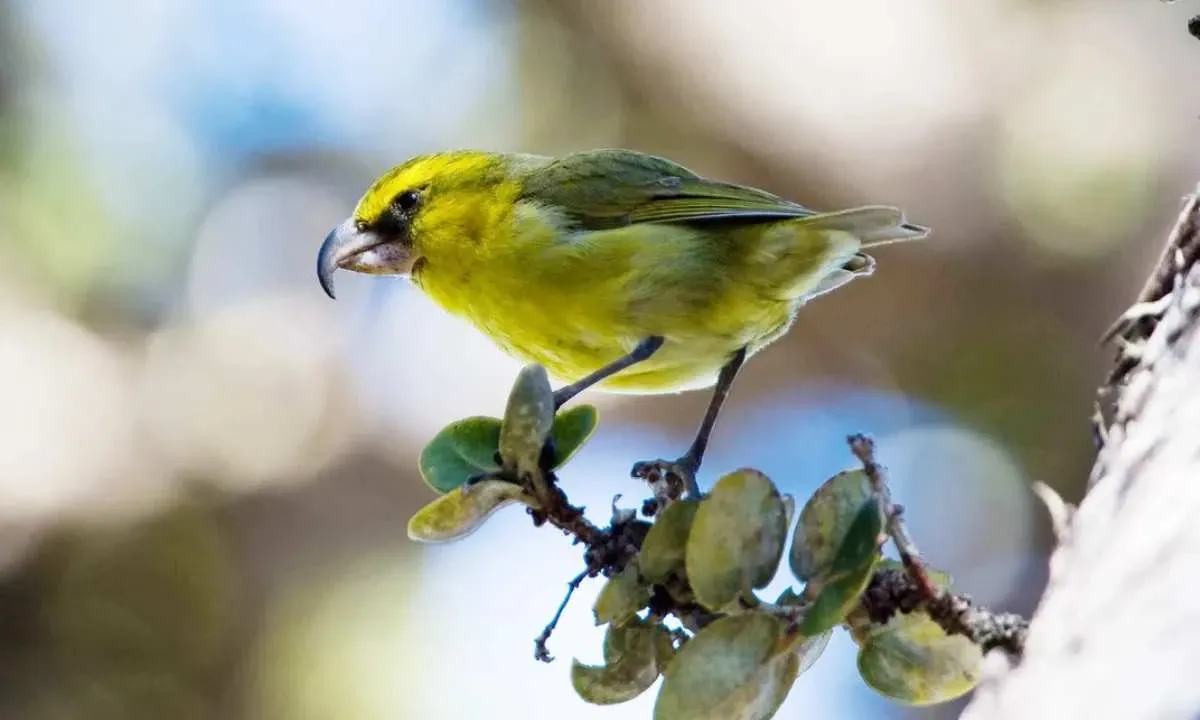
However, the scientists are not only dealing with mosquitoes. Habitat destruction and predation by invasive species, such as rats, also threaten the honeycreepers. But mosquito-borne diseases are by far the most significant obstacle. Some species of honeycreepers die after just one bite from an infected mosquito, which makes the need for mosquito control urgent.
The drone-assisted mosquito drops offer hope, but they are just one piece of the puzzle. Researchers are optimistic that by reducing mosquito populations, the honeycreepers will have a fighting chance to recover. With a safer environment, the birds might even develop some resistance to the diseases, just as one species of honeycreeper, the ‘amakihi, has shown early signs of resistance. The hope is that, with continued efforts, the honeycreepers will thrive once again, reestablishing their place in Hawaii’s fragile ecosystem.
The success of the drone drops will take time to assess. It may be a year or more before scientists can determine if the mosquitoes are effectively reducing the population of the disease-carrying insects. But the researchers are hopeful. If the project works, it could be a model for other regions facing similar ecological crises. The ultimate goal is to give these birds a chance to recover and ensure that their songs fill the air of Hawaii once again.
It’s a race against time. The window for saving these birds is rapidly closing, and the scientists involved are driven by the knowledge that if they don’t act now, the honeycreepers may soon be gone forever. The use of drones to release mosquitoes might seem strange or even unsettling to some, but for the scientists working in Hawaii, it represents a rare opportunity to make a real difference.
In the end, the drones dropping mosquitoes might just be the key to saving some of the most unique and beautiful birds on the planet. With innovative technology and a lot of determination, they may very well be able to save these creatures before it’s too late.