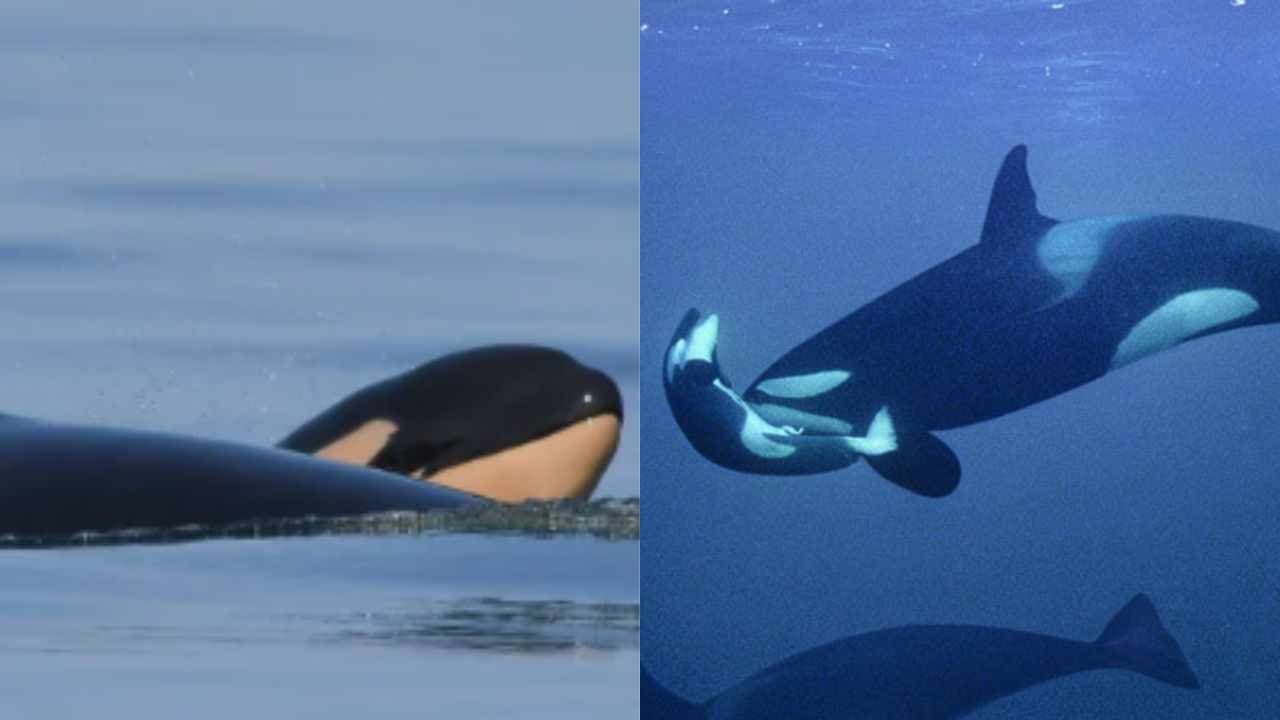
In the ocean’s depths, striking and emotional behavior has been observed among dolphins and whales. After her newborn calf died, an orca named Tahlequah carried its body for 17 days across the Pacific Northwest, revealing a profound depth of grief that moved observers worldwide. This extraordinary display highlighted the emotional complexity of orcas and their unique expressions of sorrow, challenging our understanding of marine life.
Orcas, known for their intricate social structures, have repeatedly shown signs of mourning behavior. Tahlequah’s journey, covering hundreds of miles, underscored not only her personal grief but also a social ritual in which her pod members stayed close, seeming to support her through her loss. Scientists believe that such actions demonstrate not only deep familial bonds but also possibly a shared acknowledgment of death within orca groups.
A similar instance of dolphin grief was observed when a mother dolphin was seen carrying her dead calf along the coast of China. For more than a week, the dolphin held the calf with her snout, lifting it to the surface for air as if trying to bring it back to life. This tragic yet touching scene drew local and global attention, as it highlighted the dolphin’s struggle to part with her young. Marine scientists suggest this behavior is a manifestation of grief, similar to the behaviors observed in orcas, where the mother is unwilling to let go, signifying a deep emotional attachment.
These cases are not isolated. Dolphins and whales frequently display prolonged mourning behaviors, especially mothers toward their calves. This suggests that grief in these species may be deeply ingrained, playing a role in social learning or even as a way of signaling changes within the group. Such prolonged mourning may allow younger dolphins and whales to observe and understand the reality of life and death, which could be essential in their social development.
“It is unbelievably sad. It reflects the very strong bonds these animals have, and as a parent, you can only imagine what kinds of emotional stress these animals must be under, having these events happen.”
Brad Hanson (A wildlife biologist at the Northwest Fisheries Science Center, stated)
The emotional landscapes of these marine mammals, as revealed through these acts of mourning, are only beginning to be understood. These behaviors challenge previous assumptions about animal emotion, urging us to view dolphins and whales not just as intelligent creatures but as beings capable of complex emotional responses.