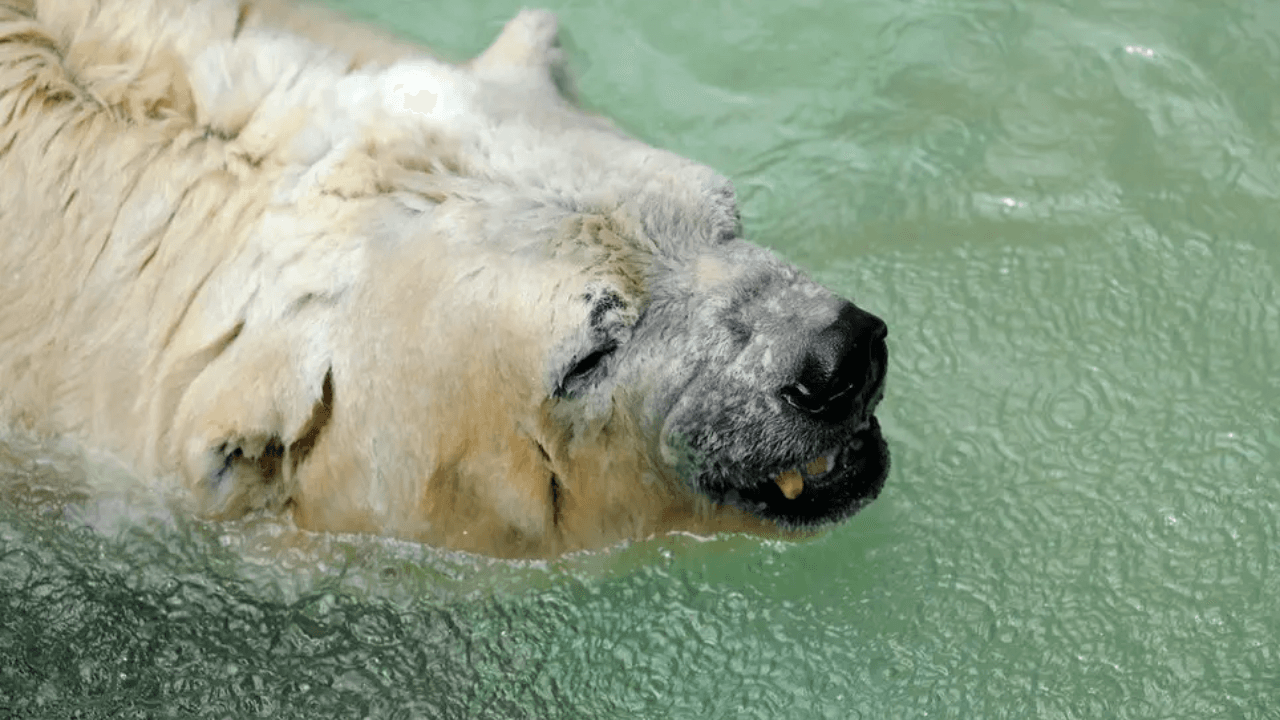
Polar bear Arturo, Argentina’s only polar bear and a symbol of global outrage over animal captivity, has died at age 30, officials at the Mendoza Zoo confirmed on Sunday. The zoo cited a “blood circulation imbalance” and general health decline as the cause of death.

A Life Far from the Arctic
Arturo was brought from the United States to Argentina when he was eight years old. He spent over two decades in the Mendoza Zoo, where temperatures often rose above 30°C (86°F)—a stark contrast to his natural Arctic habitat. Environmental groups, including Greenpeace, repeatedly called for his relocation to a colder climate, arguing that the conditions in Mendoza were unsuitable for a polar bear.
However, zoo officials denied requests to move him, saying Arturo was “too old” to be sedated and transported safely. They maintained that he was close to his caretakers and that moving him could have endangered his life.

Public Outcry and Global Concern
Arturo gained international attention in 2014 when thousands of people signed an online petition demanding that he be transferred to a Canadian sanctuary. Supporters dubbed him “the world’s saddest bear,” citing his visible distress and the loss of his partner, Pelusa, who died of cancer in 2012. Following her death, Arturo reportedly showed signs of depression, including lethargy and loss of appetite.
In his final days, Arturo suffered from failing eyesight, loss of smell, and significant weight loss. The zoo said a medical team was monitoring him and considering euthanasia to prevent suffering, but “nature took its course.”
Argentina’s Last Polar Bear
Arturo’s death marks the end of an era—he was the last polar bear in Argentina. The country’s previous polar bear, Winner, died in Buenos Aires in 2012 during a heat wave. Experts note that polar bears rarely live beyond 25 years, making Arturo’s 30-year lifespan unusually long despite the harsh conditions.
Zoo Controversy and Calls for Reform
The Mendoza Zoo, where Arturo lived, was closed to visitors last month after more than 60 animals died between December and May. Officials blamed bacterial outbreaks and overcrowding. Following Arturo’s death, the Argentine government reaffirmed plans to convert the zoo into an ecological park to promote better animal welfare standards.
For many, Arturo’s story serves as a tragic reminder of the consequences of keeping wild animals in captivity under unnatural conditions. His passing has reignited global discussions about animal rights, conservation ethics, and the responsibilities of modern zoos.
Disclosure: We may earn a commission when you make a purchase through the ads.