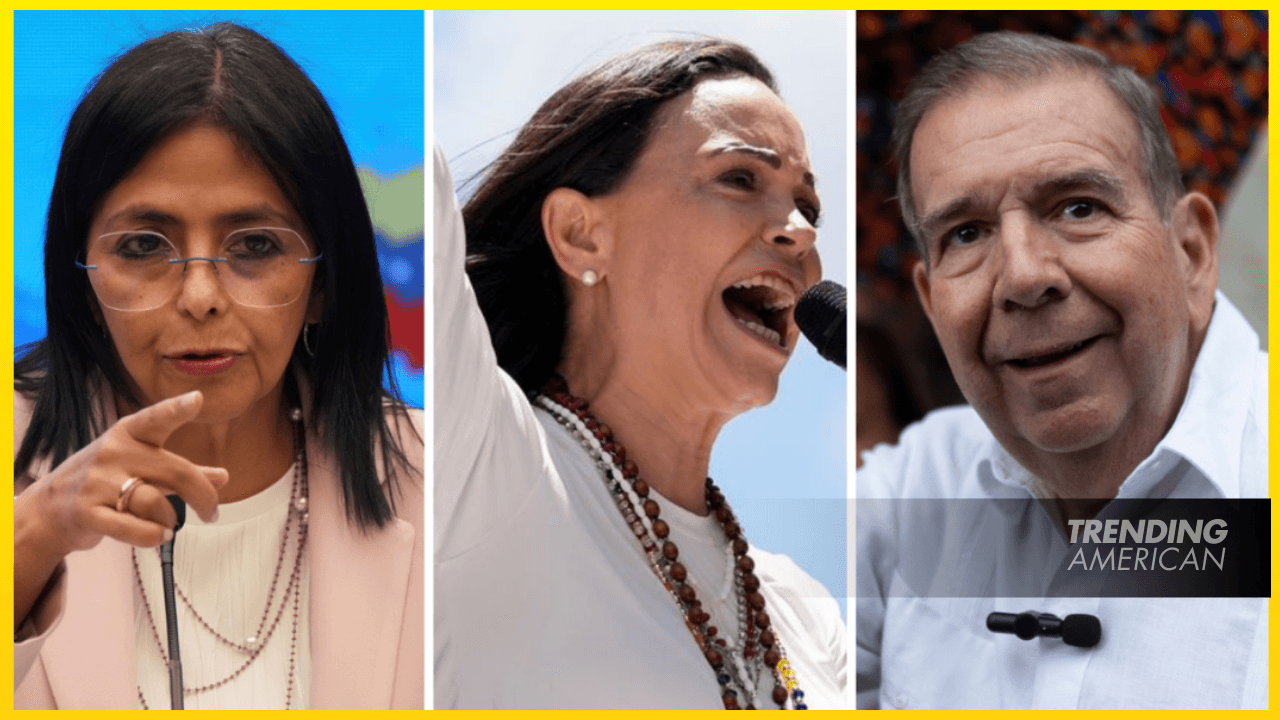
Delcy Rodríguez, a longtime Chávez-aligned official who has served as Venezuela’s vice president since 2018, was formally sworn in as interim president by the National Assembly on Sunday, in a move many diplomats described as an effort to stabilize governance after Nicolás Maduro’s overnight removal. The national capital’s chambers were the scene for Rodríguez’s oath, and the ceremony was attended by Maduro’s son and Rodríguez’s brother, who helped oversee proceedings.
Maduro’s abrupt disappearance and the subsequent transfer to New York reportedly left the opposition and much of the international community to gauge who would assume control. In New York, Maduro appeared before a judge and pleaded not guilty to charges brought by U.S. prosecutors, a development that further complicated Venezuela’s already fraught political landscape.
Rodríguez, who has long been aligned with Hugo Chávez’s political lineage, pledged to lead with peace and in accordance with international law, saying she would seek to restore stability while the judiciary handles Maduro’s case. The National Assembly’s move was framed as ensuring continuity of governance as the country faces a transition point, even though no elections date was announced amid the ongoing legal proceedings.
In the immediate aftermath, Maduro’s allies remained in government circles, and observers noted that Rodríguez’s administration would have to contend with a shift in external support and internal loyalties. Maduro’s son, who publicly backed Rodríguez during the transition, and Rodríguez’s brother, who helped supervise the oath, were cited by analysts as signs of the delicate balance of power among remaining factions. The report also notes that comments from U.S. officials and their international partners signaled expectations and warnings of consequences if policies don’t align with the aims announced in recent days.
What might come next remains uncertain. Several outlets described a possible transition period, followed by elections at an unspecified date, but none provided a firm timetable. For Rodríguez, the immediate objective is to stabilize institutions, maintain public order, and navigate a legal process that could redefine Venezuela’s political parameters in the months ahead.
Speculation about who else might seek to lead Venezuela in the coming months has already begun. Within Maduro’s circle, some aides and regional allies are reportedly preparing for possible leadership bids or leveraging influence to shape policy during the interim phase. Conversely, Rodríguez’s allies have been quick to frame her leadership as a bridge to a legitimate, law-governed transition, though observers caution that the power vacuum left by Maduro’s removal could give rise to new contenders from both sides of the spectrum. Reporters pointed to Maduro’s son backing Rodríguez as a signal of continued dynastic influence, while Bloomberg described a broader dynamic in which Rodríguez’s stance toward opponents—including potential rivals in the U.S.—could determine the pace and direction of Venezuela’s shift in leadership.
As Venezuela moves forward, the country’s institutions, its international partners, and its people will be watching closely for signs of stability, transparency, and a credible path toward elections. The immediate priority for Rodríguez remains clear: consolidate governance under the interim administration, address the judicial case against Maduro, and set conditions that reassure domestic actors and foreign partners that Venezuela is moving toward a lawful, peaceful resolution of the crisis.