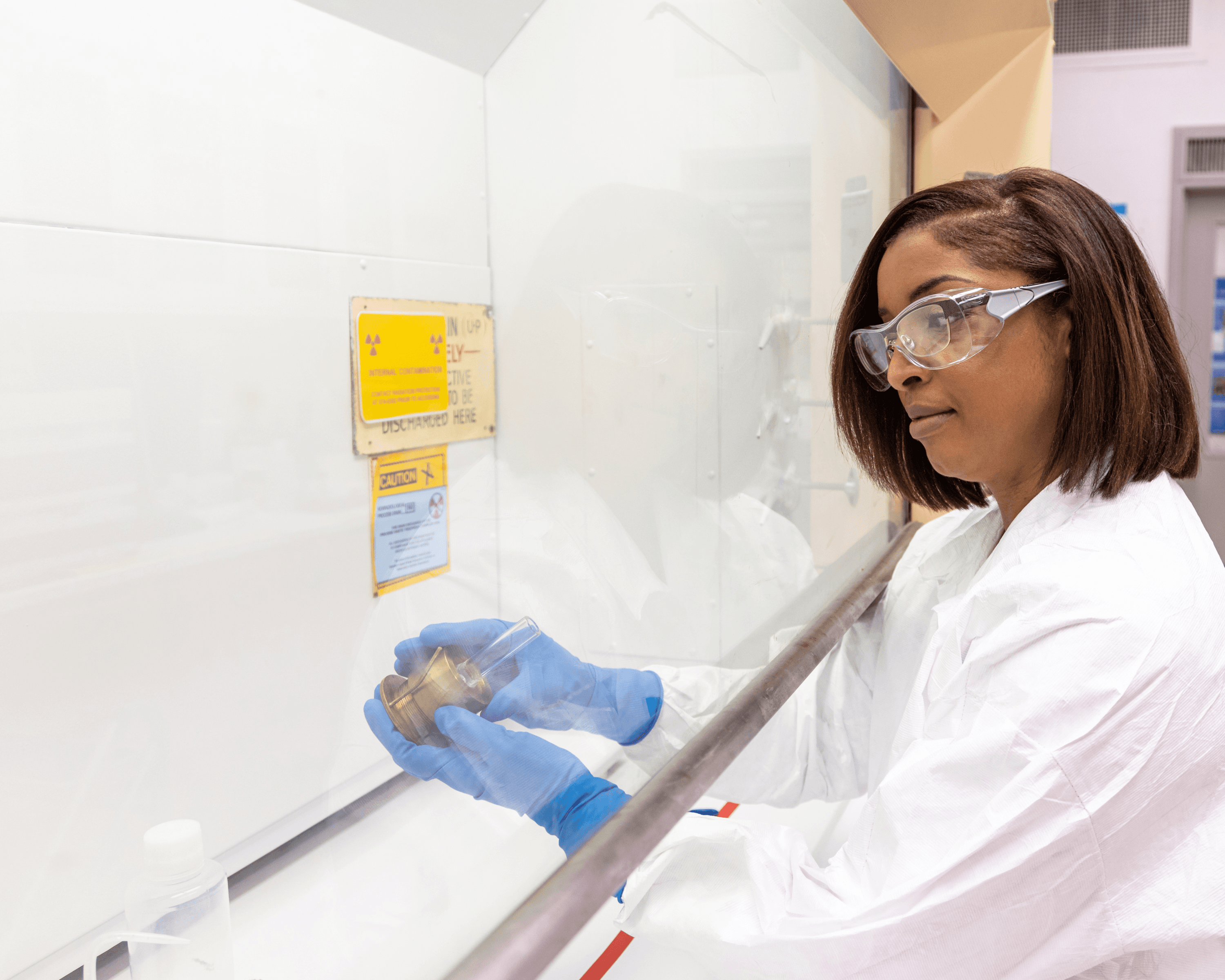
Featured photograph: Clarice Phelps at work in an Oak Ridge National Laboratory photograph. Archival image. Photo: Oak Ridge National Laboratory. CC BY 2.0 via Wikimedia Commons.

Before a new element could take its place on the periodic table, scientists needed a tiny amount of exceptionally difficult-to-prepare material.
Clarice Phelps helped make that material available. At Oak Ridge National Laboratory, she was part of the team that purified berkelium-249 for research used to confirm element 117, later named tennessine.
The International Union of Pure and Applied Chemistry recognizes her as the first Black woman involved in the discovery of an element.
Nuclear skills developed through service
Phelps earned a chemistry degree from Tennessee State University and served in the U.S. Navy's Nuclear Power Program before joining Oak Ridge in 2009.
Her work involved operating and understanding complex systems, then applying that experience to the preparation of radioactive materials.
In Oak Ridge's account of her career, Phelps emphasized collaboration. Research on demanding projects depends on people bringing different skills to a shared problem.
That is an essential part of her place in the tennessine story. Her contribution was specific, technical and part of a much larger effort.

Photo: Oak Ridge National Laboratory. CC BY 2.0 via Wikimedia Commons.

A rare material for a demanding experiment
IUPAC describes a three-month process to purify berkelium-249. Researchers combined that material with calcium-48 in experiments at the Joint Institute for Nuclear Research.
Preparing a suitable target was a necessary part of the work. A new element could not be established by an idea alone; teams needed materials, equipment, experiments and evidence.
Phelps was one of the specialists behind that preparation. Crediting her role does not require calling her the sole discoverer.
The element's name, tennessine, honors contributions from Tennessee institutions to the research.
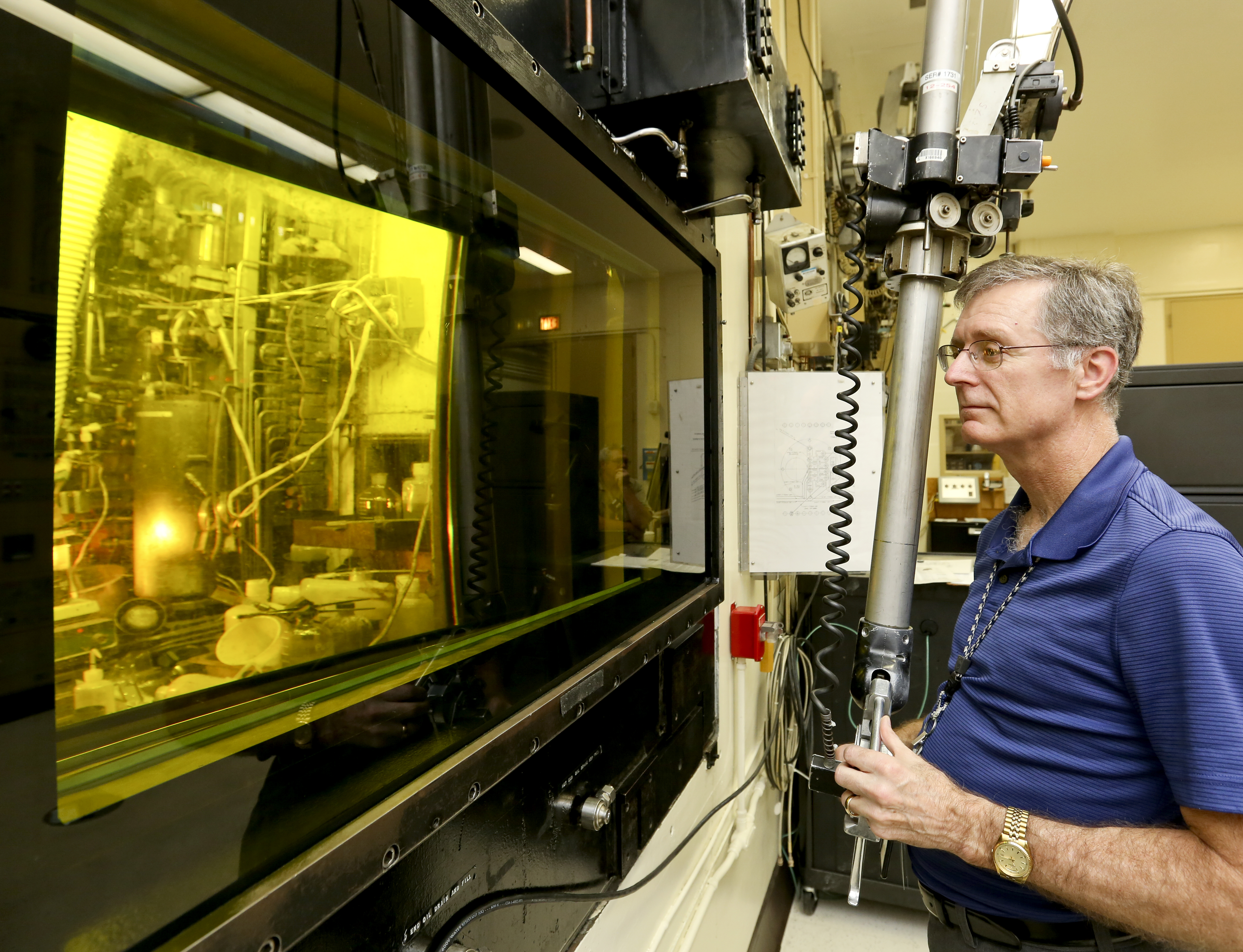
Photo: Oak Ridge National Laboratory. CC BY 2.0 via Wikimedia Commons.

Recognition also included her work with young people
In 2019, Phelps was selected for IUPAC's Periodic Table of Younger Chemists. In that commemorative project, she represented einsteinium, even though her discovery-related contribution concerned tennessine.
The honor recognized research, public engagement and advocacy for diversity in science.
Her current Oak Ridge biography lists further work on radioactive isotopes, advanced degrees and outreach. It describes projects with applications across research, industry and medicine.
Her career shows how much science depends on contributions that may not appear in a short headline. Careful preparation in one laboratory can support an experiment far away.
Phelps helped supply a piece of that chain. By explaining her work and supporting younger students, she also helps make the people behind the periodic table more visible.