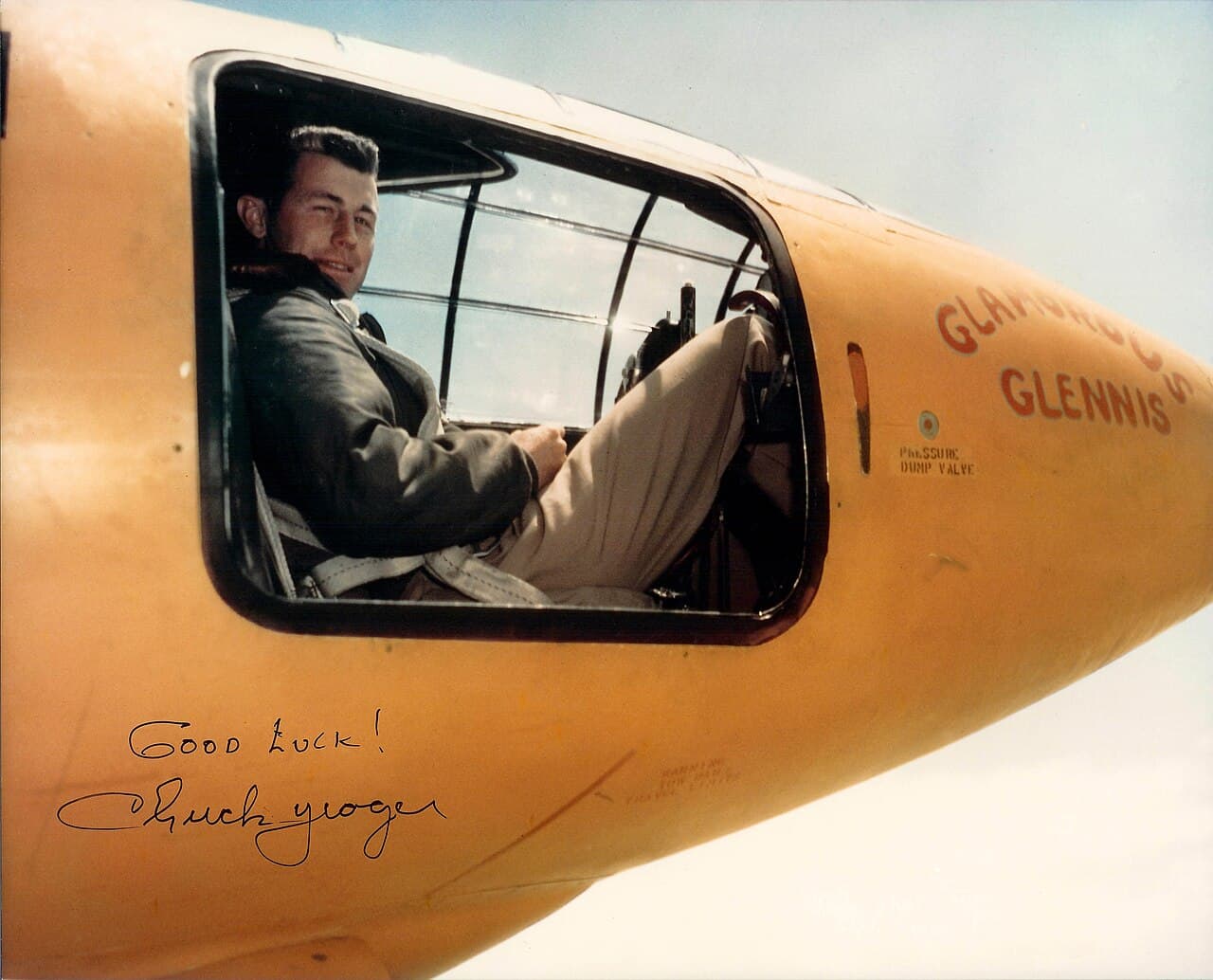
At 21, Chuck Yeager faced a German jet fighter that could outrun his propeller-driven P-51 Mustang. On November 6, 1944, he found his opening when an Me 262 slowed to land.
It was a remarkable encounter between two generations of aircraft. The young American pilot would later help aviation enter another new age, flying a rocket plane faster than sound.
From fixing aircraft to flying them
Yeager grew up in Hamlin, West Virginia. He joined the Army Air Corps in September 1941, soon after finishing high school, and initially worked as a mechanic.
Wartime demand opened a different path. An Army Air Forces program allowed enlisted men without college education to apply for pilot training. Yeager earned his wings and eventually flew Mustangs in Europe.
His combat career nearly ended in March 1944, when he was shot down over occupied France. With help from the French Resistance, he escaped to Spain and returned to England.
Escaped airmen were normally kept from further combat to protect the people who had helped them. Yeager secured permission from General Dwight Eisenhower to return. On October 12, he was credited with five victories in one engagement, including two pilots who bailed out before he fired. The National WWII Museum recounts his wartime service.
The jet had to slow down
Germany’s Messerschmitt Me 262 was among the aircraft transforming aerial warfare. The U.S. Navy’s aviation museum identifies it as the world’s first operational jet fighter. Its speed offered a major advantage over Allied propeller fighters. Read the National Naval Aviation Museum’s aircraft history.
Yeager’s November encounter was no simple race. According to the Chuck Yeager Foundation’s summary of his combat report, a chase took him away from his squadron and toward an enemy airfield.
There, he attacked an Me 262 on its final approach. Landing made the jet vulnerable: its performance advantage could not protect it in every phase of flight.
He shot it down, then escaped low and fast along the runway as the airfield’s defenses fired. The foundation preserves the encounter alongside his other wartime reports. See Yeager’s combat reports.
The episode illustrates why aircraft specifications never tell the whole story. Position, timing and the conditions of an encounter also matter.
Beyond the propeller age
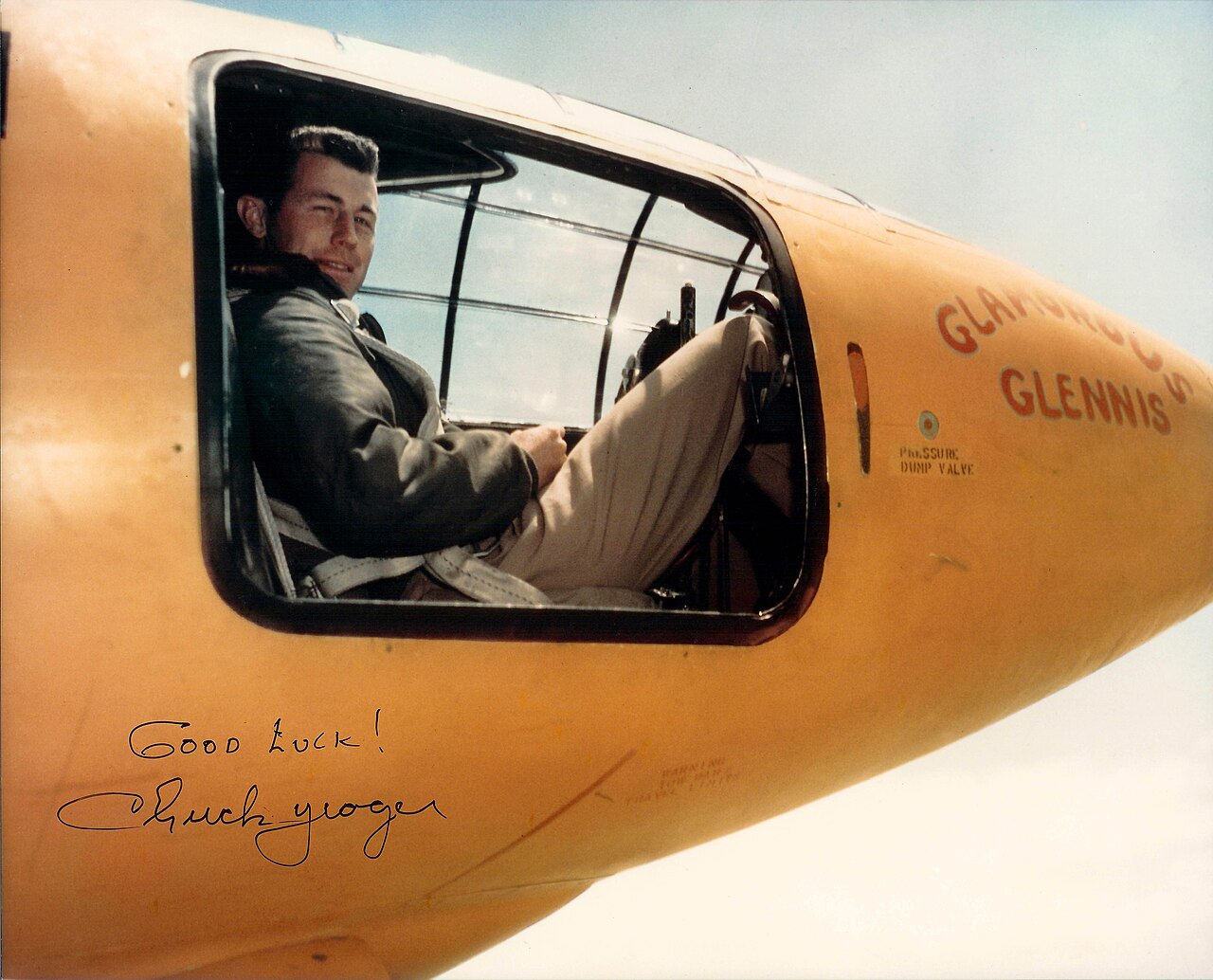
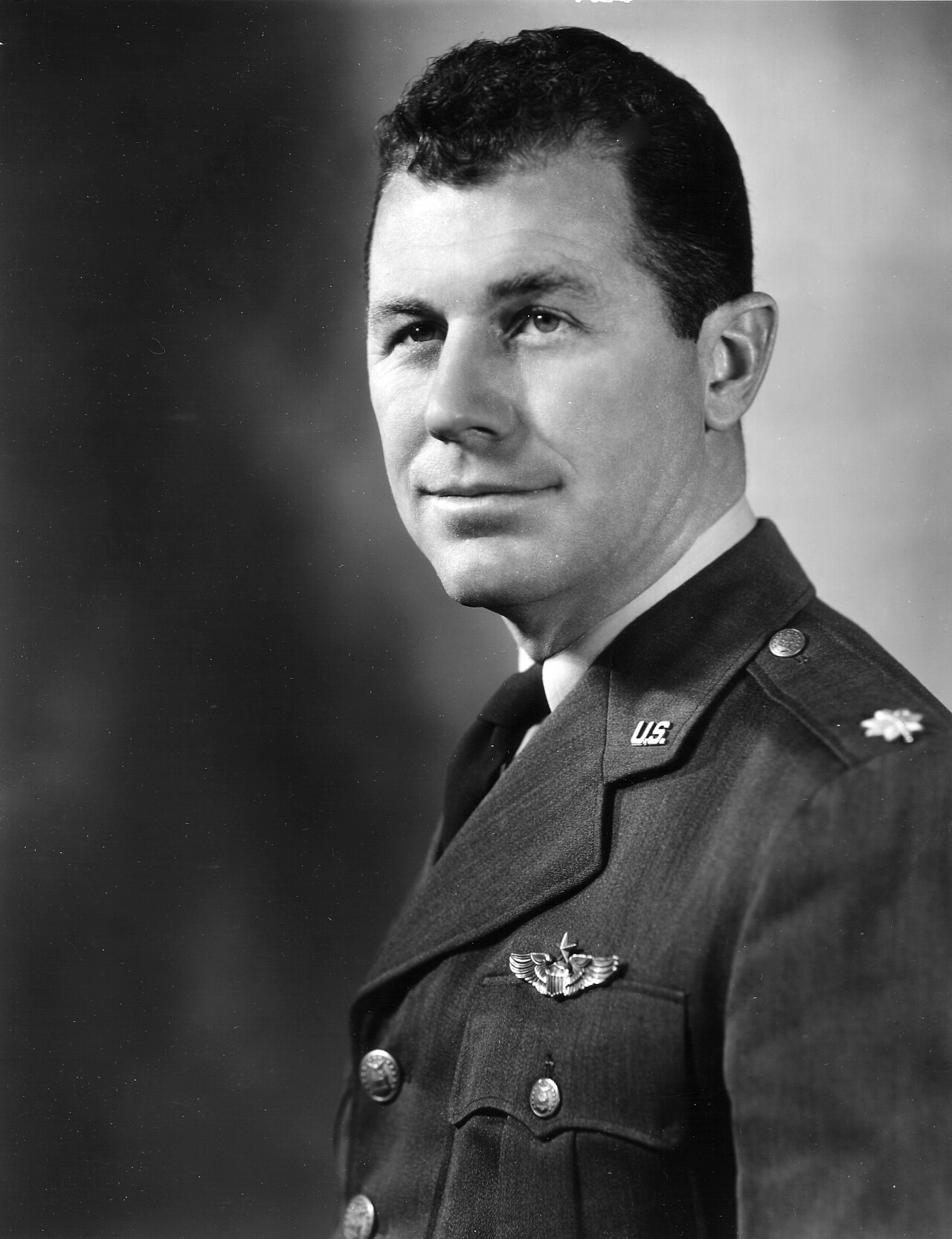
On October 14, 1947, Yeager flew the rocket-powered Bell X-1 over California and became the first person to break the sound barrier in level flight.
The mechanic who had become a fighter pilot was now helping test the limits of flight itself. He continued a long Air Force career and retired as a brigadier general. He died on December 7, 2020, aged 97. The U.S. Air Force’s tribute describes his life and achievements.
The Me 262 encounter remains a striking chapter in that life. Yeager could not make his Mustang faster than the jet. He recognized a brief opportunity—and acted on it.
Photograph credits
Both historical photographs are public domain. Original files and provenance: USAAF portrait of Chuck Yeager and Yeager in the Bell X-1 cockpit, photographed by Jack Ridley.

