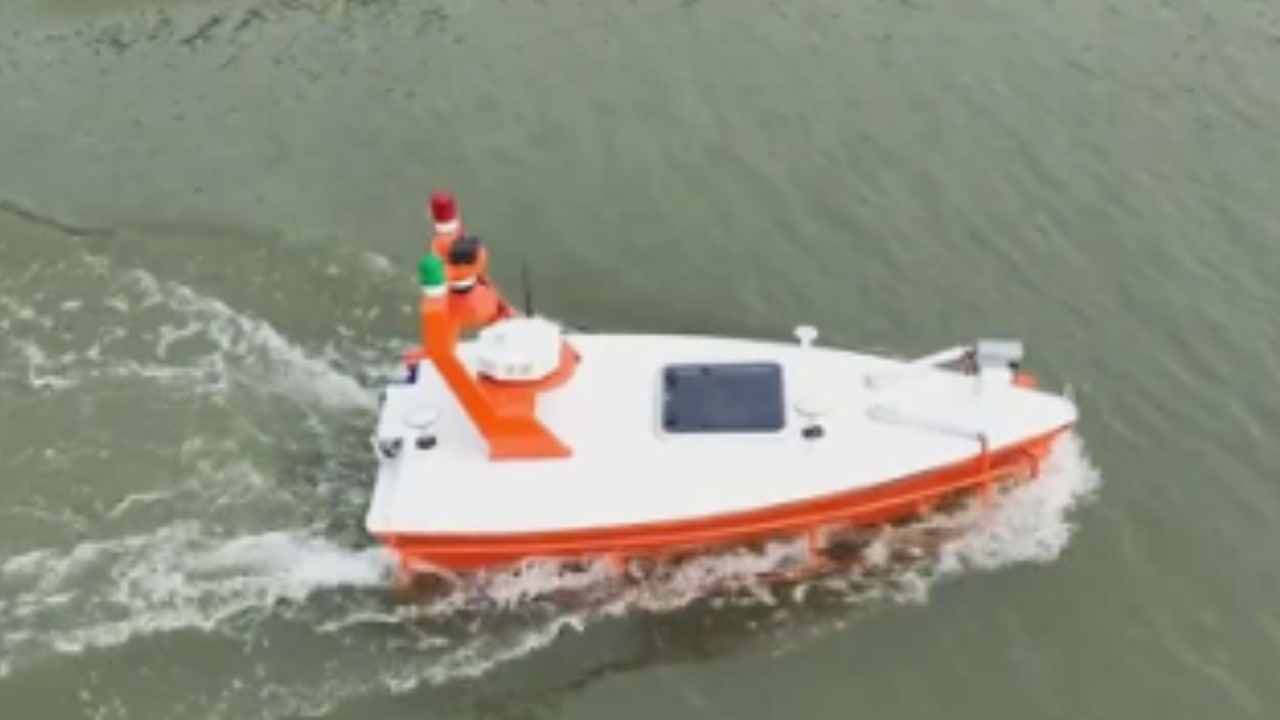
In a groundbreaking leap for artificial intelligence (AI) and public safety, China has unveiled the world’s first fully autonomous AI robot lifeguard, designed to monitor river safety 24 hours a day without any human intervention. The lifeguard, stationed at a river in Luohe City, Henan Province, is equipped with advanced technology that allows it to detect dangers and respond swiftly to potential emergencies along the waterway.

The AI-powered lifeguard, developed by scientists at the Hefei Institute of Physical Sciences, aims to enhance safety standards for riverside areas where traditional lifeguard services are often challenging to maintain. The robot’s deployment is part of a larger national initiative in China to harness AI for improving public safety and infrastructure.
Using a sophisticated network of sensors and rescue technology, the lifeguard can identify unusual activities or signs of distress in the water, triggering rapid response protocols to prevent accidents.
In addition to monitoring and immediate reaction capabilities, the AI robot lifeguard can operate continuously in harsh weather conditions, ensuring round-the-clock vigilance that human lifeguards would struggle to maintain.
The Hefei Institute of Physical Sciences, known for pioneering technological advancements in AI, led the development of the lifeguard. Their researchers tested the lifeguard robot in late October, showcasing the robot’s potential to save lives and reduce the strain on human lifeguard teams.

Unveiled at the 2024 World Artificial Intelligence Conference in Shanghai, the AI lifeguard robot exemplifies China’s leading role in AI research and development, particularly in applications that promote public welfare. The conference, an influential event in the global tech ecosystem, highlighted how the AI robot could serve as a model for other countries facing similar water safety challenges.
With the Hefei Institute’s successful deployment of this fully autonomous lifeguard, the implications extend beyond river safety. The AI lifeguard may also pave the way for integrating similar autonomous safety technologies into other public settings, revolutionizing how societies approach safety in high-risk areas. The AI’s adaptability and endurance make it a promising solution for remote and high-traffic locations where human supervision is limited.
China’s first AI robot lifeguard marks a significant milestone in the ongoing integration of artificial intelligence in real-world applications, signaling the rise of smart technology in public safety worldwide.