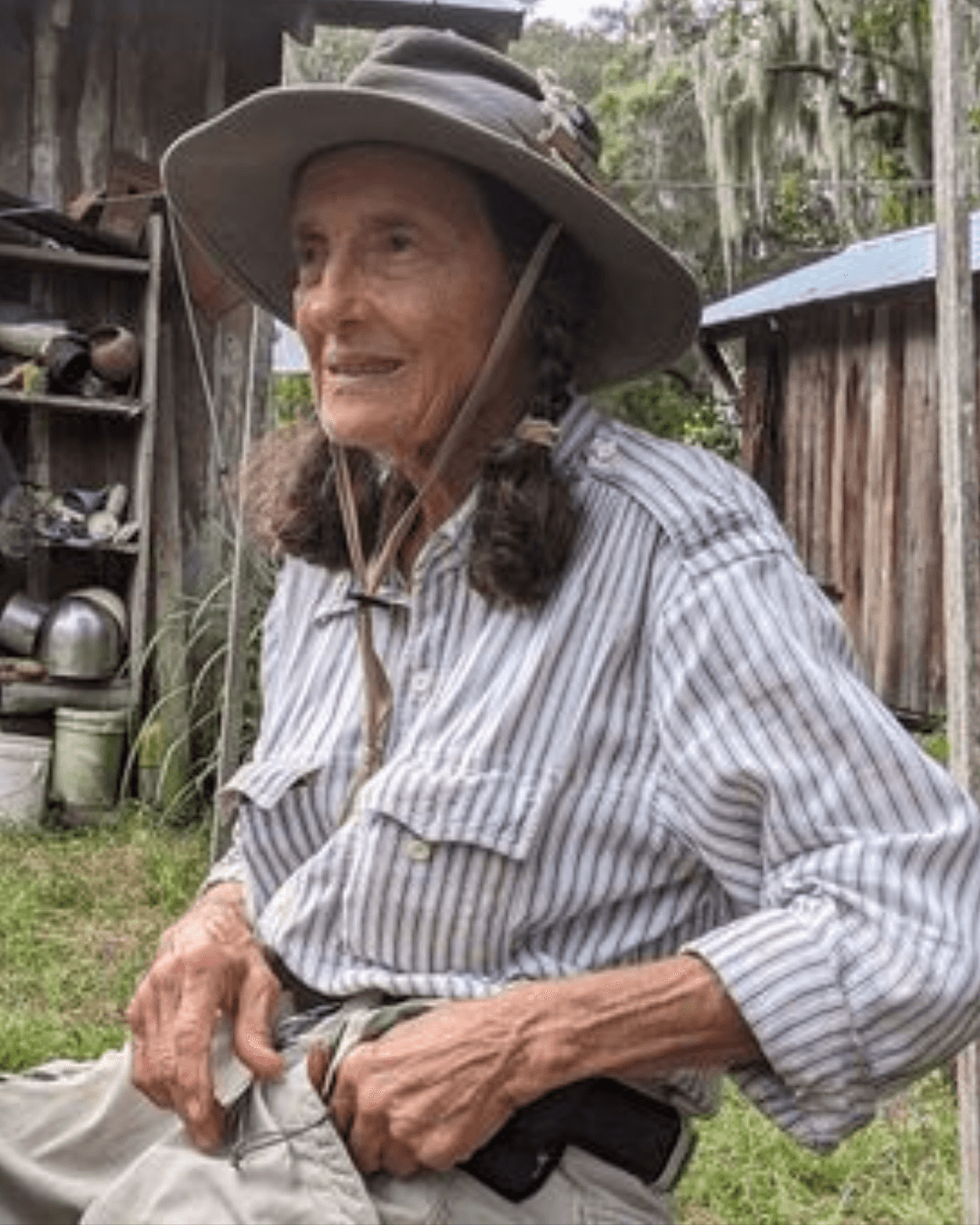
Carol Ruckdeschel gave up ordinary life to protect one of America’s last wild barrier islands.
For more than five decades, the 84 year old naturalist has lived on Cumberland Island, a remote barrier island off the coast of Georgia.
There are no paved roads on the island. There are no stores, no trash cans for tourists, and no easy way to reach it from the mainland.
But for Ruckdeschel, the isolation is not a burden. It is the reason the place is worth saving.
A Life Built Around One Wild Island
Ruckdeschel first visited Cumberland Island in 1960 while working as a biology researcher. The silence, forests, marshes, beaches, and wildlife stayed with her long after she left.
In 1973, she moved to the island full time. She later bought an old cabin on the remote north end and repaired it with driftwood and found materials.
Since then, her life has followed the rhythm of the island. She walks the beach, writes field notes, studies animal remains, grows food, collects rainwater, and watches the land change season by season.

The Island She Refused to Leave
Cumberland Island covers more than 36,000 acres and sits near the Georgia and Florida border. The National Park Service says the island has no roads or bridges connecting it to the mainland.
The island’s remote setting has helped protect beaches, dunes, forests, marshes, and wildlife. It is also home to one of Georgia’s most important loggerhead sea turtle nesting beaches.
The National Park Service says Cumberland’s 18 mile undeveloped beach can account for 25 to 30 percent of Georgia’s loggerhead sea turtle nests in a year. More details are available from the National Park Service sea turtle page.

Her Work Helped Expose a Deadly Threat
Ruckdeschel became known for her deep research on sea turtles. She studied dead turtles that washed ashore and performed necropsies to learn how they died.
Smithsonian Magazine reported that she monitored Cumberland’s long beach for turtle, bird, and marine mammal remains. Her work helped document how many sea turtles were likely dying in shrimping nets.
That research became part of a larger push for changes in fishing gear and sea turtle protection. Smithsonian’s profile of her fieldwork can be read here: Smithsonian Magazine on Carol Ruckdeschel.
Over time, she built one of the most unusual natural history collections connected to the island, including turtle skulls, shells, and other carefully catalogued remains.
Why Visitors Are Limited
Cumberland Island is protected as a National Seashore. Its management has long included a daily visitor limit to help protect its wild character.
A National Park Service biological assessment says the island’s General Management Plan limits visitation to no more than 300 people per day. The same document says the island has no paved roads and can only be reached by boat.
Ruckdeschel and other conservation advocates have raised concerns about plans that could increase access, add facilities, or allow more development pressure on the island.
To her, more access may sound harmless at first. But on a fragile barrier island, more people can also mean more disturbance for nesting turtles, shorebirds, dunes, and quiet wilderness.
A Woman Known as the Wildest in America
Ruckdeschel has been called the wildest woman in America. Others have called her the Jane Goodall of sea turtles.
Those names sound dramatic, but they reflect a life few people would choose. She has lived off the grid, studied animal bones, protected turtle nests, fought development, and stayed through storms, heat, isolation, and conflict.
Her home sits near the First African Baptist Church, the small island church where John F Kennedy Jr. and Carolyn Bessette married in 1996.
That detail adds another layer to Cumberland’s story. The island holds natural history, Black history, family legacies, old estates, wild horses, sea turtles, and one woman who has spent most of her life watching over it.
Still Fighting at 84
Even now, Ruckdeschel continues to speak out when she believes the island faces danger. She has opposed development efforts and warned against plans that could change Cumberland forever.
She once said she did not set out to become a conservation fighter. She only wanted to learn the island.
But learning the island changed her life. The more she saw, the more she believed someone had to defend it.
After 53 years, Carol Ruckdeschel’s story is not just about living alone in the wilderness. It is about what one person can protect when love for a place becomes a lifetime mission.