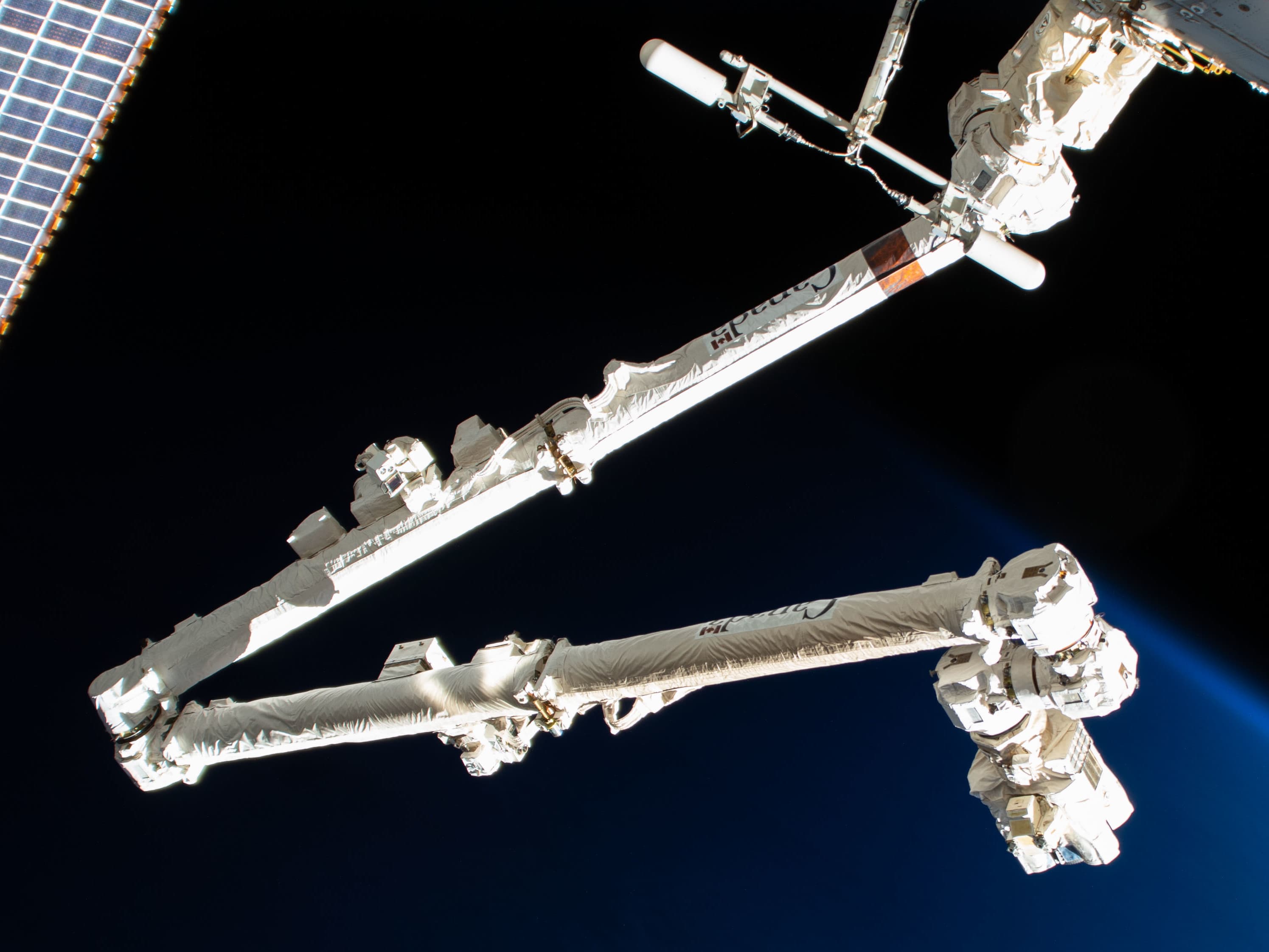
Featured photograph: Canadarm2 aboard the International Space Station. Archival space-robotics context; this is not ASTRA. Photo: NASA. Public domain via Wikimedia Commons.

A small construction step in Earth orbit has opened a new path for engineers. Caltech's ASTRA experiment assembled a new section of a structure from individual parts in space, without astronauts putting it together.
Caltech announced the result on November 5, 2026. The university and DARPA describe it as the first demonstration of autonomous construction of a structure in orbit.
The achievement was limited but important: the robot added a third bay to a truss that had launched with two sections already built.
Building with parts instead of unfolding a finished structure
Spacecraft must fit inside a rocket for launch. Engineers can fold large components or send pieces on separate missions, but those approaches have limits.
ASTRA tests another option: carry smaller structural parts and connect them where they will operate.
The project name stands for Autonomous In-Space Tensioned Reflector Assembly. Its system moves struts and joints from dispensers into position, joining them into repeating sections of a framework.
DARPA describes the approach as practical mechanical engineering, rather than a need for elaborate reasoning by an artificial intelligence system.
The robot connects composite members with custom joints while deploying reflective material. That makes the demonstration relevant to future antennas.
Photo: Ken Lund from Reno, Nevada, USA. CC BY-SA 2.0 via Wikimedia Commons.

A real result with an unfinished goal
The payload traveled aboard Momentus's Vigoride platform on SpaceX's Transporter-16 mission in March 2026. Momentus supplied services including communications, power and imaging.
The team then worked through the difficulties of controlling and monitoring a mechanism in orbit. Communication windows were short, and unexpected technical problems took time to resolve.
The complete reflector structure was not finished. Caltech reported that completing the full truss before the mission's expected December end appeared unlikely.
The newly assembled bay still supplied evidence that the proposed method could work outside the laboratory.
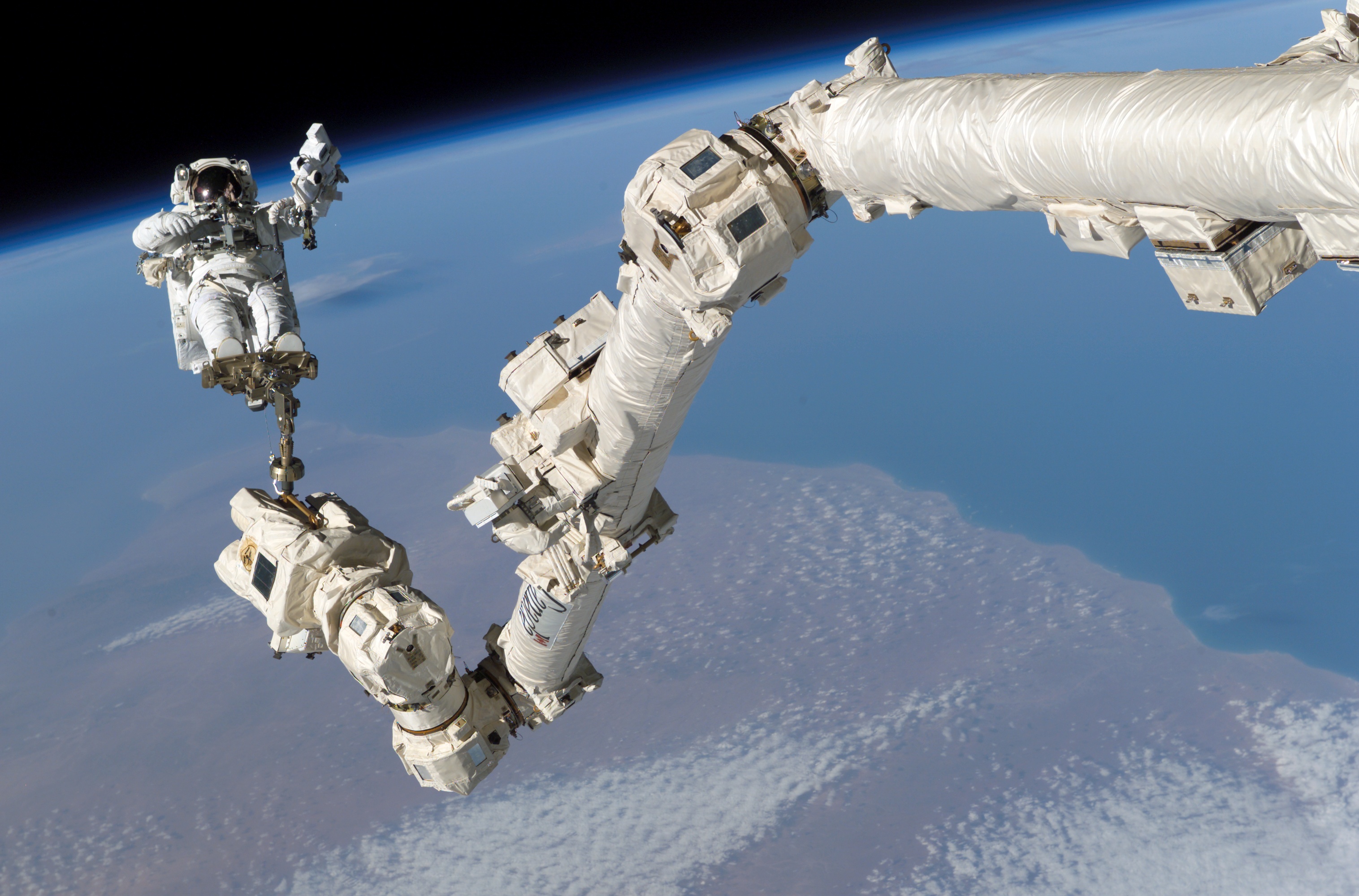
Photo: NASA. Public domain via Wikimedia Commons.

What the demonstration may make possible
Caltech sees possible uses in telescope reflectors, communications antennas and large solar arrays. Those are future applications, not structures ASTRA has already delivered.
DARPA's wider NOM4D program is investigating how to make very large, lightweight systems possible. The agency's ambition extends far beyond the scale of this initial test.
For now, the result is a working construction step and a set of engineering lessons. The experiment gave researchers something a ground demonstration could not: evidence from a mechanism that actually joined parts in orbit.