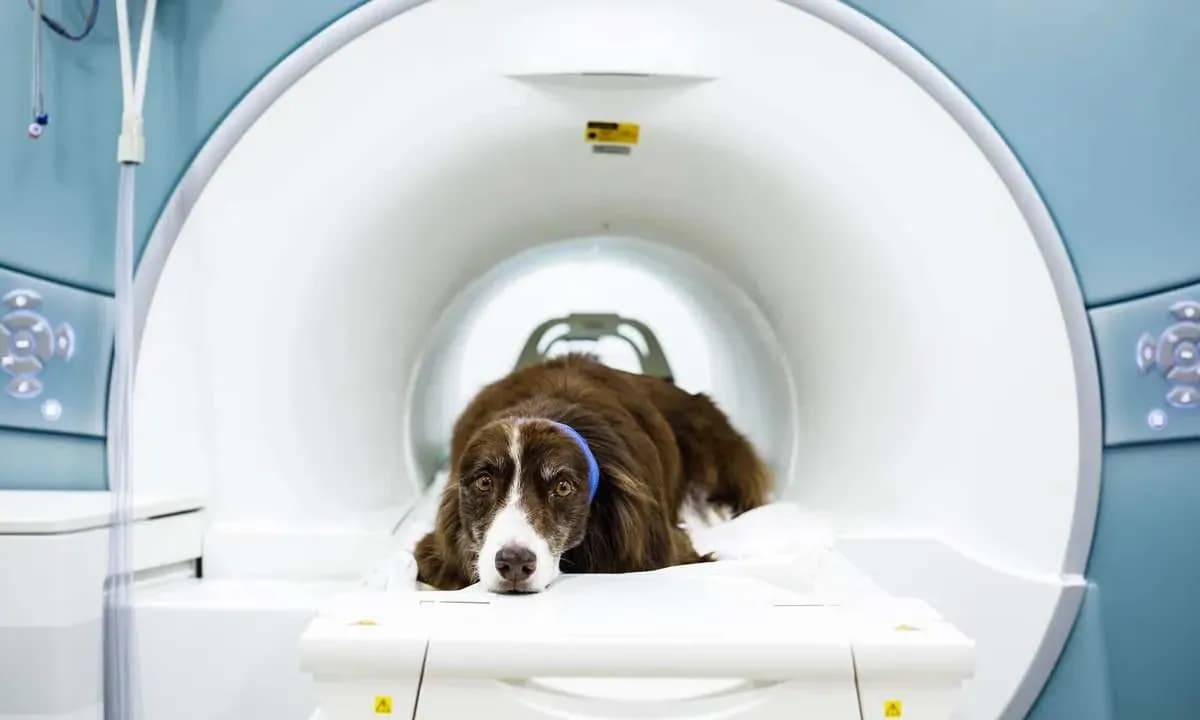
In the early 1900s, Ivan Pavlov famously showed how dogs could be conditioned to associate a stimulus with food. His experiments cemented the idea that dogs were mostly motivated by their stomachs. But over a century later, scientists began to wonder if that was the whole story. Could dogs actually value their human companions as much—or even more—than food?
They Love You More Than Treats—Give That Love Back
Keep your best friend healthy and happy with smart, vet-informed essentials. Thoughtful picks that make every tail wag a little harder.
Explore Pet EssentialsGregory Berns, a neuroscientist at Emory University, set out to find the answer. His team at the Dog Project had already achieved a remarkable feat: training dogs to walk into an fMRI scanner and lie still without any restraints or sedation. This allowed researchers to see a dog’s brain in action, wide awake and alert.
In previous work, they discovered that the ventral caudate—a key part of the brain’s reward system—lit up more when dogs smelled their owners than when they smelled unfamiliar humans or even other dogs. The next step was to go beyond scent and find out whether social interaction itself could rival the lure of food.
The new study unfolded in three experiments. In the first, 15 dogs were shown three different objects: a toy car, a toy horse, and a hairbrush. Each object was paired with a different outcome. The car predicted that the dog’s owner would appear and give praise. The horse meant a tasty hot dog slice was coming. The brush meant nothing would happen.
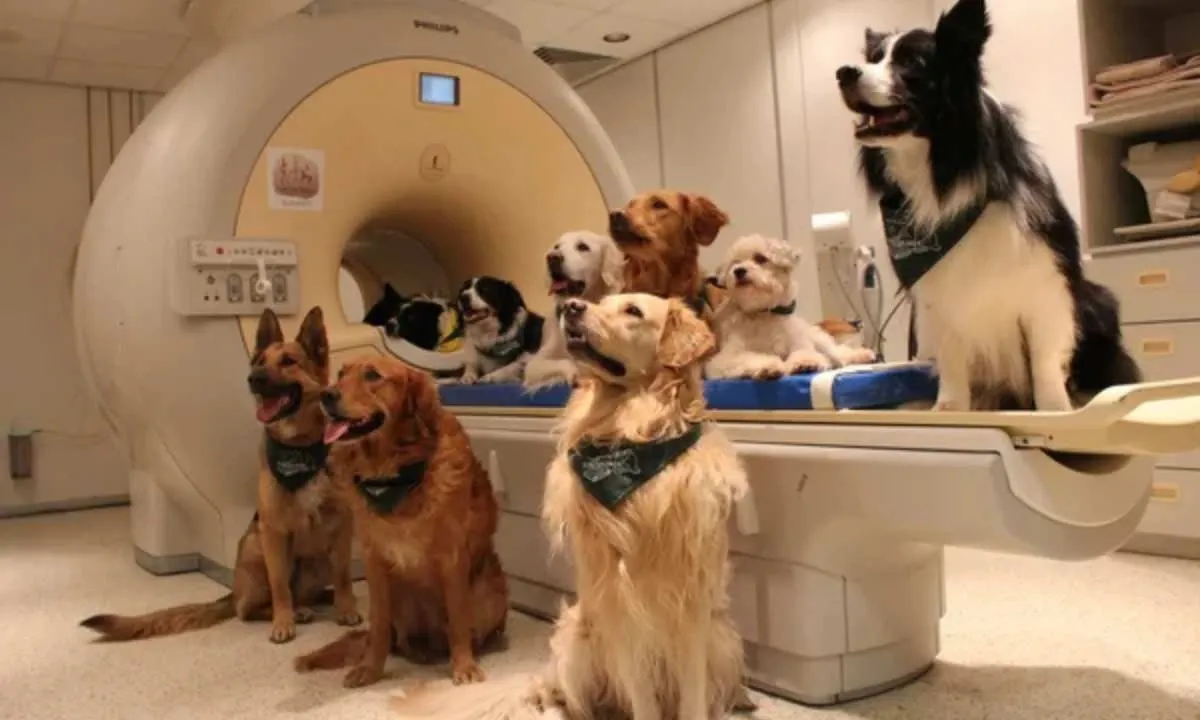
While the dogs viewed these objects in the scanner, the researchers recorded activity in the ventral caudate. Thirteen out of fifteen dogs showed equal or greater brain activation to the praise-predicting object compared to the food-predicting one. Only two dogs clearly preferred food.
The second experiment repeated the setup with one twist: sometimes the praise that was expected after the car appeared never came. This “violation of expectation” let scientists measure how much a dog’s brain reacted to the loss of anticipated social reward. Dogs whose brains had shown a stronger response to praise in the first experiment also showed stronger responses here, confirming that the preference was stable across situations.
Finally, in the third experiment, the dogs faced a real-world choice. They were placed in a Y-shaped maze, with their owner waiting at one end and a bowl of food at the other. Trial after trial, the dogs decided which to approach. The results lined up closely with the brain data: dogs whose ventral caudate favored praise tended to choose their owners most of the time, while the food-preferring dogs consistently went for the bowl. Those with no strong brain preference were more unpredictable, switching between options.
The findings were clear. Many dogs value social interaction with their humans just as much as, or more than, food. This preference is consistent and measurable, not just a quirk of the testing day. It also varies from dog to dog—some are praise-seekers, some are chowhounds, and some are situational.
From a practical standpoint, the study supports the idea that social praise can be as effective as treats in training, and possibly healthier. It also hints at applications beyond the household. Dogs with a strong social preference might be better suited for therapy or assistance roles, while food-motivated dogs might excel in independent tasks like search and rescue.
Perhaps most importantly, the research offers a scientific answer to something dog lovers have long felt. When your dog chooses you over a full bowl, it’s not just habit or hunger—it’s a genuine reward in their brain. To them, your presence is more than comfort. It’s joy. It’s bonding. It’s family.
Disclosure: We may earn a commission when you make a purchase through the ads.