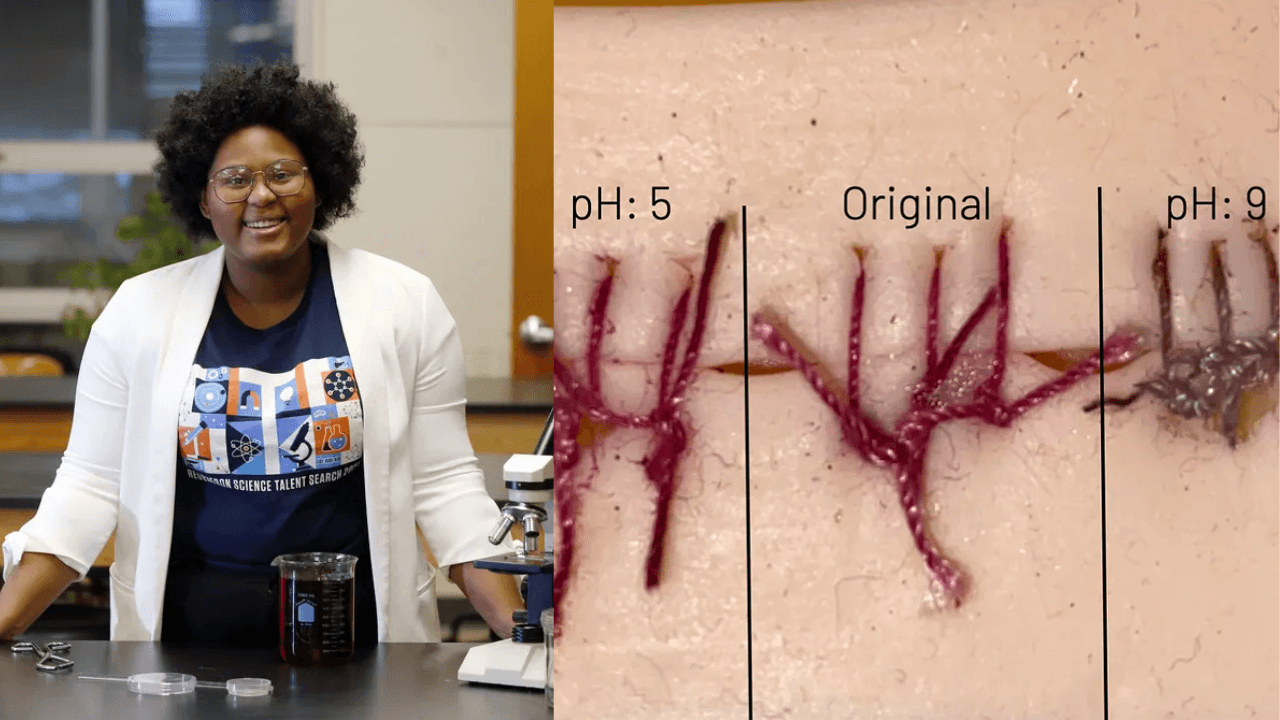
At just 17 years old, Dasia Taylor, a student from Iowa City West High School, stunned the science world with her invention: color-changing sutures. Unlike advanced medical devices that require expensive technology, her sutures are dyed with beet juice and provide a simple, visual warning if a surgical wound becomes infected.
Her inspiration came from a global problem. Infections after surgery are among the leading causes of complications, especially in countries where access to advanced healthcare tools is limited. Taylor wanted to design a solution that was affordable, accessible, and effective.
“I wanted to create something simple and effective that anyone could use,” she explained.
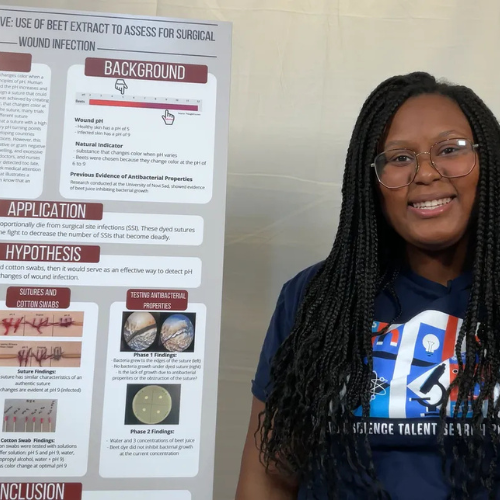
The invention is based on a clever use of chemistry. Healthy skin has a pH of about 5, which is slightly acidic. But when an infection sets in, the wound’s pH rises — often as high as 9.
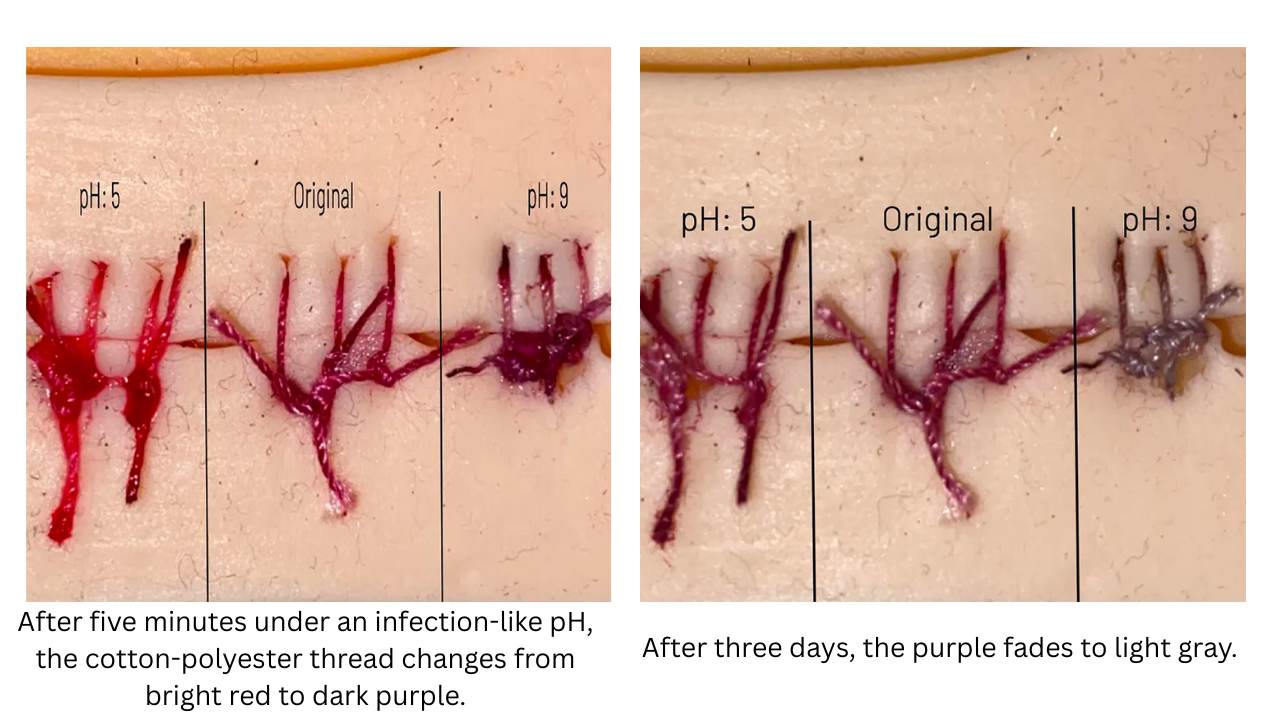
Taylor discovered that when cotton-polyester sutures are dyed with beet juice, they respond to this change in acidity. In healthy conditions, they stay bright red. When exposed to infection-like pH levels, they turn dark purple — and after several days, even fade to gray.
This visible shift gives patients and doctors an early warning sign, potentially saving lives through quicker treatment.
In 2021, Dasia Taylor was named a finalist in the Regeneron Science Talent Search, one of the nation’s most prestigious competitions for high school researchers. Her recognition highlighted not only her inventive brilliance but also the importance of diversity in STEM.
Taylor has spoken about how her work is rooted in equity. While other researchers have explored “smart sutures” with electronics or sensors, she wanted a solution that could realistically be used in low-resource settings.
Her story now inspires young women and minority students who rarely see themselves represented in science and innovation.
Creating these sutures was not easy. Taylor spent months testing different suture materials to see which could hold the beet dye while still being strong enough for surgical use. She eventually found success with a cotton-polyester blend.
She also had to carefully test how long the color change would last and whether it would remain reliable in different conditions. The work required persistence, trial and error, and countless hours in her lab.
Taylor hopes to patent her invention and further refine it so it can one day be used in hospitals worldwide. While a granted patent has not yet been confirmed, her research is already influencing how people think about infection detection.
One hospital director who reviewed her work commented: “This innovation could save lives, especially in developing areas where infection rates are unacceptably high.”
The excitement around her sutures reflects a broader truth: sometimes the simplest solutions can make the biggest difference.
Dasia Taylor’s journey is more than a story of scientific innovation. It’s a reminder that groundbreaking ideas don’t always come from universities or labs — sometimes they come from high school classrooms and kitchen experiments.
Her invention shows what’s possible when curiosity, persistence, and empathy come together. And it leaves us with an important question: how many other young minds are out there, waiting for their chance to change the world?
🌟 What Dasia Taylor Is Doing Now
- University Student: Taylor is now studying at the University of Iowa after graduating from Iowa City West High School.
- Founder of Variegate: She founded a company called Variegate, named after the idea of “changing color” and “diversity.” Its mission is to bring her color-changing sutures into real-world healthcare.
- Patent Process: She is in the process of patenting her sutures, though no granted patent has been confirmed yet.
- STEM Advocate: Beyond her invention, she spends time mentoring younger students and advocating for greater diversity in STEM fields.
Her work is still in development, but the combination of entrepreneurship, research, and advocacy shows that she’s determined to push her invention forward while inspiring the next generation of innovators.
Disclosure: We may earn a commission when you make a purchase through the ads.