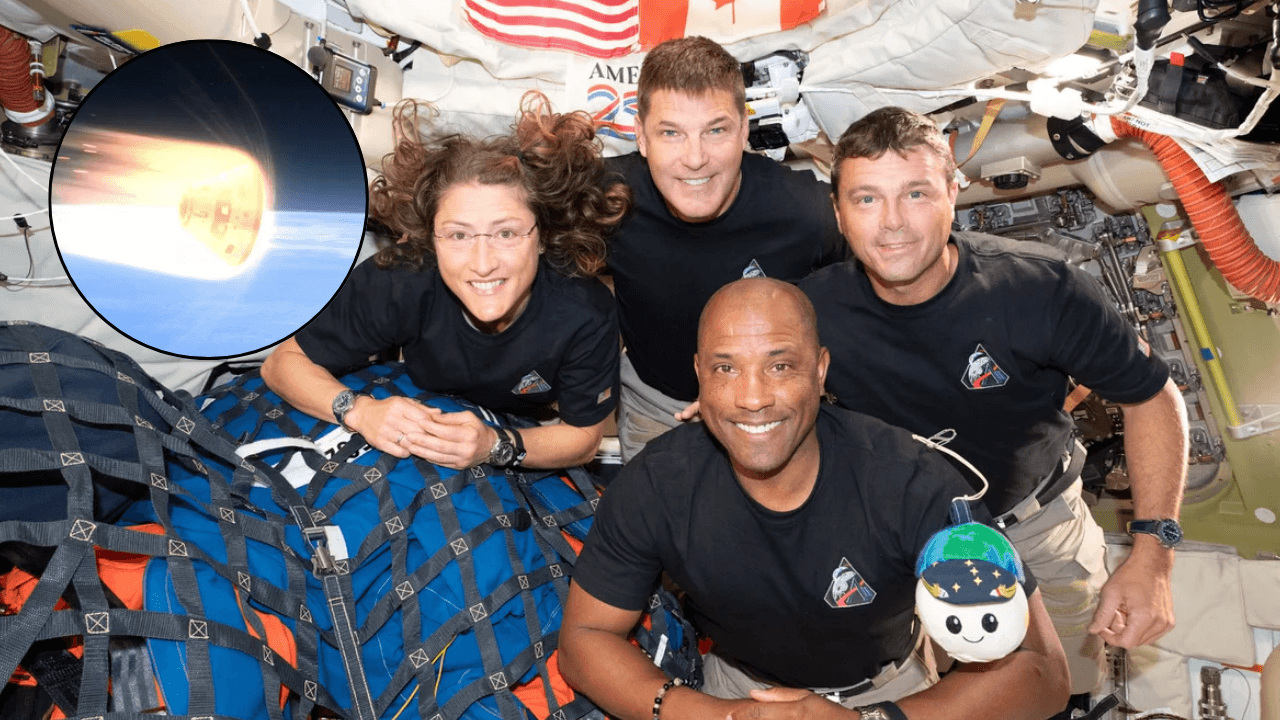
NASA’s Artemis II astronauts are heading into the most dangerous part of their mission on Friday evening, when their Orion capsule plunges back through Earth’s atmosphere and splashes down in the Pacific Ocean. The agency says the crew is scheduled to land at about 8:07 p.m. Eastern time off the coast of San Diego after a 10 day mission around the moon.
The return marks the end of the first crewed flight to the moon in more than 50 years. Reuters reported that the mission also became the farthest humans have ever traveled from Earth, making this homecoming both historic and high stakes.

Why Friday’s reentry matters so much
View this post on Instagram
Reentry is expected to take about 14 minutes, but those minutes are packed with risk. NASA says Orion will hit the upper atmosphere at nearly 24,000 miles per hour, endure extreme heating, and briefly lose communication with Mission Control as plasma builds around the capsule.
NASA says the crew will feel about 3.9 times the force of gravity during descent. That means the astronauts will be pinned hard into their seats while the capsule depends on its heat shield and parachute system to survive the plunge.
How the splashdown is expected to unfold
According to NASA, the Orion crew module will separate from its service module before reentry and then line up its heat shield for the fall back to Earth. After the plasma blackout ends, parachutes will deploy in stages to slow the spacecraft for splashdown in the Pacific.
Recovery teams will then move in quickly. NASA says helicopters and divers will help retrieve the astronauts and take them to the USS John P. Murtha, where they will receive medical checks before flying back to Houston. Readers can follow the agency’s official return coverage on NASA Live and the NASA Artemis II mission page.
The heat shield is a key concern
One of the biggest questions hanging over the return is Orion’s heat shield. Reuters reported that engineers made changes after the uncrewed Artemis I mission in 2022, when the capsule returned with unexpected heat shield damage. NASA later cleared Artemis II to fly with an updated design.
That makes Friday’s descent more than a dramatic ending. It is also a major test of whether Orion can safely bring astronauts back from deep space, which is essential for future moon missions.
A mission built for the next step back to the moon
The crew includes Reid Wiseman, Victor Glover, Christina Koch, and Canadian astronaut Jeremy Hansen. Their flight is a central part of NASA’s Artemis program, which aims to return humans to the moon and prepare for more ambitious missions later in the decade.
NASA has described Artemis II as a proving ground for the systems and people that future lunar missions will depend on. If Friday’s reentry goes as planned, the mission will close with a safe landing and a strong sign that NASA is ready to keep moving toward its next moon goals.
For the astronauts inside Orion, though, the story becomes much simpler in the final minutes. After a record setting flight around the moon, everything now comes down to one fiery descent and a safe splash into the Pacific.