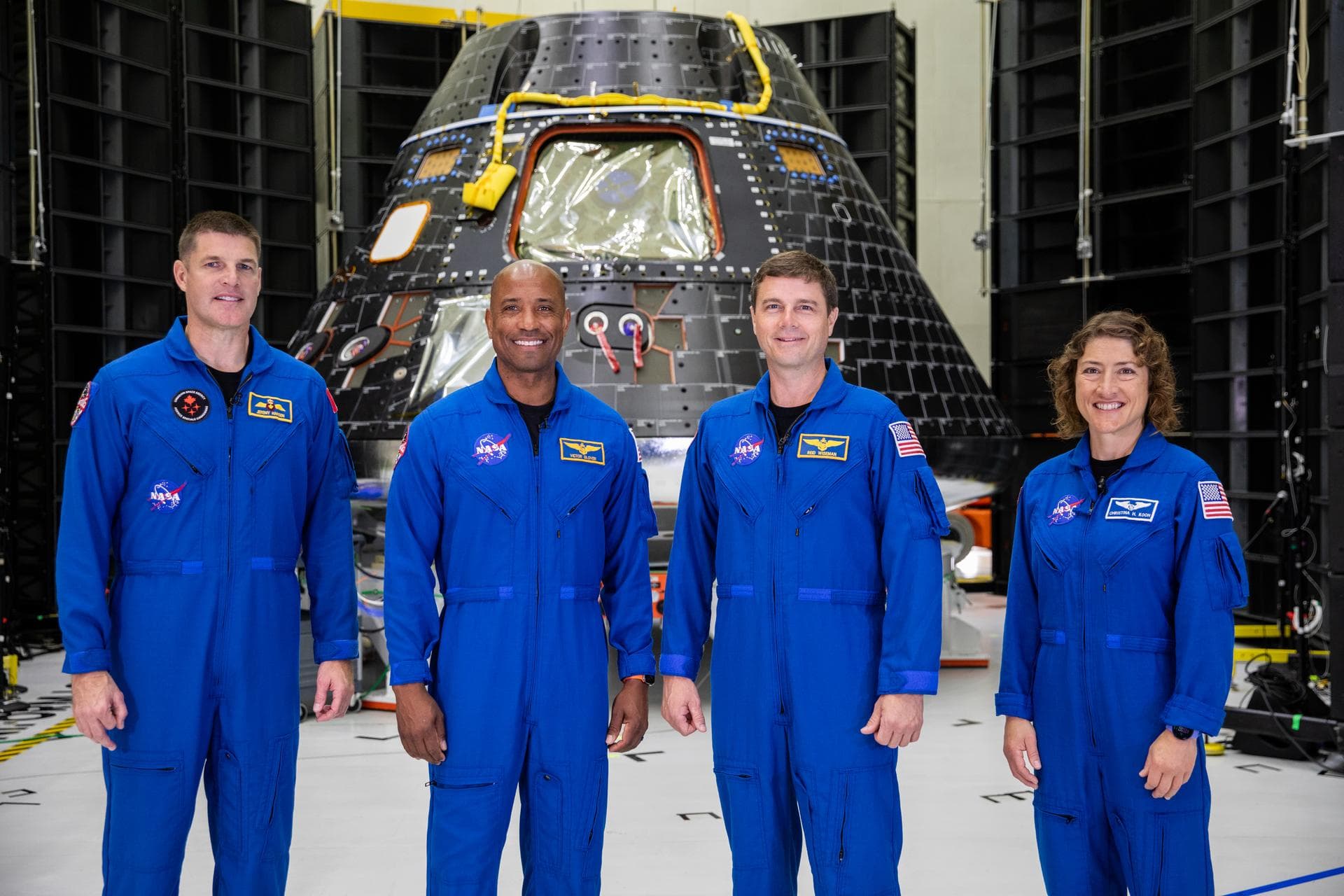
Four astronauts traveled farther from Earth than any humans before them. They watched the Moon pass beneath their spacecraft and saw their home planet from a distance no other living crew had reached.
Then they came home.
Six months after NASA's Artemis II mission, Reid Wiseman, Victor Glover, Christina Koch and Jeremy Hansen are beginning a different journey. All four are leaving active spaceflight assignments, but their work in exploration is far from over.
Their next challenge is helping other people follow the path they opened.
The Mission That Took Four Astronauts Beyond a 56-Year Record
On April 1, 2026, NASA's Space Launch System rocket lifted off from Kennedy Space Center in Florida.
Inside the Orion spacecraft were mission commander Reid Wiseman, pilot Victor Glover, mission specialist Christina Koch and Canadian mission specialist Jeremy Hansen.
They were the first people to travel around the Moon since the Apollo era.
The crew did not land on the lunar surface. Instead, Artemis II tested the spacecraft and systems needed for future missions.
On April 6, they passed the distance record set by Apollo 13 in 1970.
At their farthest point, they were 252,756 miles from Earth, according to NASA's mission report.
For a brief period, the four people aboard Orion were farther from home than anyone in human history.
They Returned With a Story Only Four People Could Tell
Their journey ended on April 10, when Orion splashed down safely in the Pacific Ocean off California.
The crew had spent nearly ten days traveling around the Moon and back.
Their flight tested navigation, life support, communications and the spacecraft's return through Earth's atmosphere.
But Artemis II was also a deeply human milestone.
Koch became the first woman to travel around the Moon. Glover became the first Black astronaut on a lunar mission. Hansen became the first Canadian and first non-American to make the journey.
The four represented different careers, countries and experiences. Together, they demonstrated what an international team could accomplish.
After returning, they received the Congressional Space Medal of Honor in August 2026.
Then came decisions about what each of them would do next.
Reid Wiseman and Victor Glover Become Emeritus Astronauts
In September, NASA announced that Wiseman and Glover would transition to emeritus status.
An emeritus astronaut is no longer assigned to active spaceflight missions but can continue sharing technical knowledge and experience.
That matters because future crews will face challenges that cannot be fully recreated in a training simulator.
Wiseman and Glover understand what it feels like to trust a spacecraft far beyond Earth's orbit. They also understand the preparation and teamwork required to return safely.
NASA said the two can support current astronauts through mentoring and training.
For Wiseman, a former NASA chief astronaut, the transition extends a career devoted to leading and preparing astronauts.
Glover has also taken on a new leadership role away from NASA.
Victor Glover Returns to Cal Poly to Help Future Generations
On September 1, Glover began a full-time administrative leadership position at California Polytechnic State University, his alma mater.
According to Cal Poly, he will advise university leaders on strategic initiatives, partnerships and opportunities for students.
The transition brings him back to the university where he studied engineering before becoming a naval aviator and astronaut.
Now his experience can help students whose own careers may take them into aerospace, engineering or fields not yet imagined.
Glover's work on Artemis II became part of spaceflight history. His new role gives him a chance to influence people who may help write its next chapters.
Jeremy Hansen Closes His Active Astronaut Career
Canadian astronaut Jeremy Hansen announced his departure from active service with the Canadian Space Agency in July.
He had spent years preparing for spaceflight before Artemis II finally carried him around the Moon.
Hansen was the first Canadian to participate in a lunar mission. His presence aboard Orion also represented Canada's growing role in human exploration beyond Earth orbit.
The Canadian Space Agency said he would pursue new professional opportunities beginning in September 2026 while continuing as a Royal Canadian Air Force reservist.
His achievements went beyond the flight itself.
Before Artemis II, Hansen had trained astronaut candidates and participated in challenging expeditions designed to prepare crews for unfamiliar environments.
His experience remains valuable to Canada's space community, even as his active astronaut career ends.
Christina Koch Is Moving Into NASA Engineering Leadership
Christina Koch's next role will keep her closely connected to the spacecraft and missions that carry humans into space.
On October 13, NASA announced that she would become its acting deputy chief engineer on November 1, 2026.
The position involves technical oversight and engineering decisions across NASA programs.
Koch has worked as an engineer as well as an astronaut, giving her experience with spacecraft from both sides: helping develop complex systems and relying on them in orbit.
Long before Artemis II, she spent 328 consecutive days aboard the International Space Station, setting a record for the longest single spaceflight by a woman.
She also participated in the first all-female spacewalks.
In her new management role, she will no longer be eligible for active spaceflight assignments.
For Koch, the transition is not a departure from exploration. It is a different way of helping future missions succeed.
Why Their Experience Matters for the Next Moon Landing
Artemis II was an important step, but NASA's larger goal is to return astronauts to the lunar surface and build a longer-term presence there.
Before that happens, engineers and astronauts must learn from the Orion mission.
They will examine what worked, what can improve and how future crews can travel more safely.
Wiseman and Glover can help train astronauts. Koch can bring the perspective of an experienced space traveler into engineering decisions. Hansen's achievements have strengthened Canada's experience in lunar exploration.
Their knowledge will help others prepare for missions that take people beyond the paths explored during Artemis II.
The record they set may not last forever. In fact, that is part of the mission's purpose.
Their Journey Didn't End When Orion Returned to Earth
In April, four astronauts looked back at a distant Earth and carried humanity's distance record beyond Apollo 13.
By October, each had begun moving into a new chapter.
Some will teach and mentor. Others will lead engineering, education or future aerospace work.
None needs another trip around the Moon for their experience to matter.
They went farther than anyone before them. Now they can help others go farther still.
This article reflects announcements available through October 19, 2026. Christina Koch's new position is scheduled to begin November 1.
Sources: NASA — Artemis II record; NASA — return to Earth; NASA — Wiseman and Glover emeritus announcement; Canadian Space Agency — Hansen career announcement; Cal Poly — Glover's new role; NASA — Koch's new role.