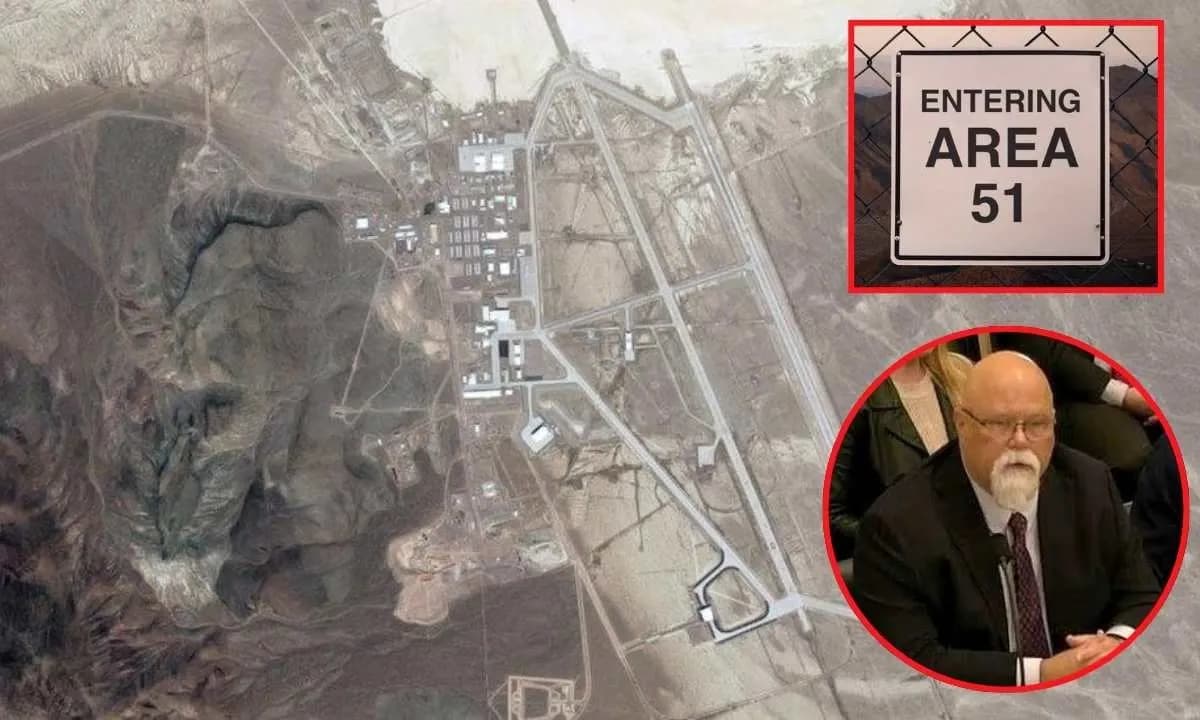
In the mid-1980s through the 1990s, a group of U.S. Air Force veterans served at one of the most secretive military sites in the world — the Nevada Test and Training Range (NTTR), home to the infamous Area 51. Their mission was so classified that they couldn’t tell their families what they did, where they worked, or even what the weather was like.
Now, decades later, many of these veterans are suffering from cancer and other serious illnesses. But here’s the twist — because their service was secret, their medical records are “Data Masked,” making it nearly impossible to get the help they need.
It all started to unravel in 2016 at a backyard reunion barbecue hosted by veteran David Crete in Las Vegas. What was supposed to be a fun catch-up with old Air Force friends turned into a shocking realization. As one of them casually mentioned having a tumor, others began to speak up too. Out of the eight men present, six had developed tumors.
One had over 20 lipomas — soft tissue growths — scattered across his body. Another had a grapefruit-sized mass removed from his back. A seventh man didn’t have tumors himself, but his son was born with one. The only thing all these men had in common? They all served at the NTTR.
What they didn’t know while serving was that the area had a long and dangerous history. From the 1950s through the early ’90s, hundreds of nuclear weapons tests had been carried out there — both above and underground.
@dailymail A group of US Air Force veterans has gone public with their story about how an 'invisible enemy' at the top-secret base Area 51 left them with cancer. The former security guards at the Nevada Test and Training Range (NTTR), a classified site that houses Area 51, have claimed that the US government betrayed them and essentially handed them a death sentence without their knowledge. Making matters worse, the US Department of Veterans Affairs has allegedly refused to cover their medical care because none of the surviving veterans can prove they were exposed to radiation at the secret facility. Read the full story at DailyMail.com. #news #area51 #health #nevada #illness #veterans ♬ original sound – Daily Mail
A 1975 report from the U.S. Energy Research & Development Administration revealed that the site had been contaminated with radioactive materials like plutonium, depleted uranium, and beryllium. Still, the report said stopping operations would be “against the national interest.” So the government continued, and these hand-picked service members were placed right in the middle of it.
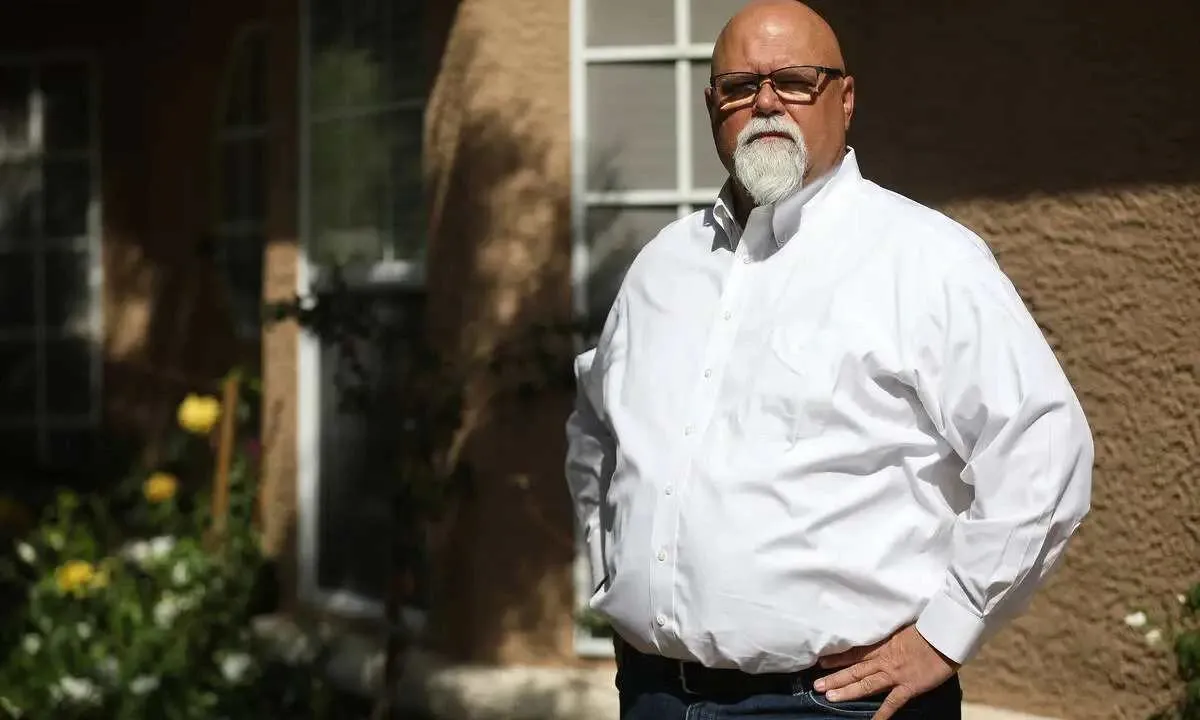
For many of them, the results were devastating. David Crete, who now runs a nonprofit called The Invisible Enemy, suffers from brain atrophy, a brain cyst, thyroid tumors, lung tumors, and more than 20 lipomas. Mike Nemcic, another veteran from the same unit, developed tumors near his eye and survived four different cancers — of the throat, salivary gland, bladder, and colon — all by age 38.
Then there’s Robert Krouse, a Department of Defense contractor who worked alongside them. He had two cancers, lost 80% of his tongue, all his teeth, and can no longer speak or eat normally. Yet he considers himself lucky compared to others who died or became paralyzed.
The hardest part for these veterans isn’t just the illness — it’s the feeling of being erased. Because their missions were so classified, their service records are “Data Masked,” which means they’re not acknowledged in the Defense Department’s database. That makes it incredibly difficult to receive help from Veterans Affairs (VA), which typically requires proof that health conditions are connected to military service. Even though Department of Energy (DOE) workers who were at the same location received compensation, these veterans haven’t.
“They understood for a long time. It’s one thing to be naive or not know. But they knew.”
Crete said.
And he isn’t alone in calling it a betrayal. “It’s like a kick in the gut,” said Nemcic. “These folks knew, and they purposefully kept it quiet.”
Despite the lack of government recognition, momentum is growing. After NewsNation aired their first story in early 2025, awareness exploded. The group’s memorial list — a record of those who have died — rose from 446 to 491 in just a few months. The exposure led to two bills being introduced in Congress: the Protect Act and the Forgotten Veterans Act. The veterans were invited to Washington, D.C., where they laid a wreath at the Tomb of the Unknown Soldier. The ribbon read “The Invisible Enemy.” For many, it was a once-in-a-lifetime — or as one vet put it, “never in a lifetime” — moment.
Dave Crete was among those who stood at Arlington National Cemetery. “I just stood there by myself for a while,” he said. “And thought about what I needed to do.”
Days later, he told their story in front of the House Veterans Committee. It was the first time any of them had a seat at the table. He spoke of the calls he gets from widows. Of the men who have already died. Of the families left behind.
“We’re not talking about making somebody rich. We’re just talking about making them not forgotten.”
Crete told lawmakers.
Congressman Mark Takano (D-Calif.), who invited them to speak after seeing the NewsNation report, said he was “pissed off.”
“Every American who saw the exposé should be angry. It should make them want to demand that our government does something.”
he said, calling for a full hearing in Congress.
Still, challenges remain. The Department of Defense refused to comment, passing the questions to the Air Force. The Air Force responded that they had “no information available” from that time. And the VA insists there’s no “presumptive exposure” for these veterans, meaning each person must somehow prove — without records — that their illness is service-related.
For now, the fight continues. The veterans are hoping the bills gain bipartisan support and bring them the care and recognition they’ve long been denied. Crete, who is now 60, knows time is running out. The average age of those on the memorial list is just 65.
“These people I served with are the greatest people I’ve ever known. To be able to do something for them is the highest honor. If pass, it means I did something that made a difference for somebody other than myself. That leaves a legacy.”
Crete said.
In a world full of secrets, these veterans are speaking out. Not just for themselves — but for everyone who served in silence, and who are now paying the price for it.