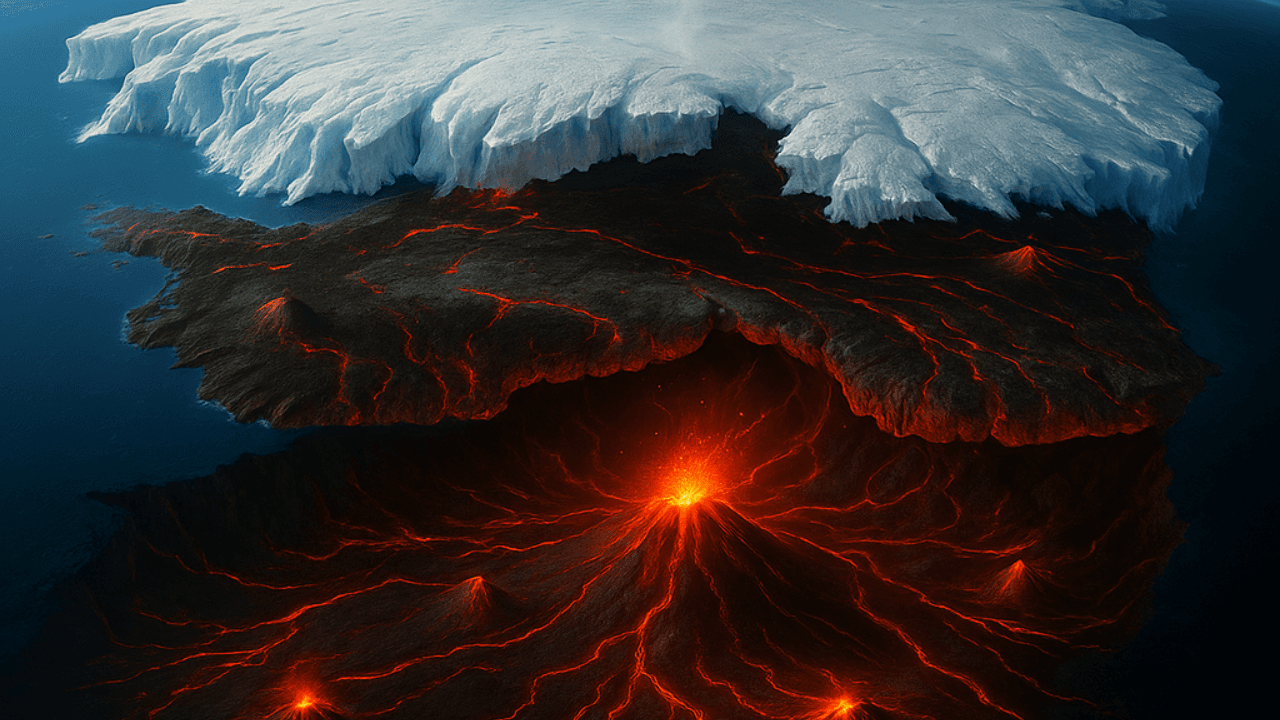
Buried under nearly four kilometers of ice, scientists have uncovered around 138 volcano-like structures in Antarctica, a finding that reshapes how we see the frozen continent. This remarkable discovery, led by a team from the University of Edinburgh, reveals that Antarctica is not just a frozen wasteland but a dynamic landscape with a fiery geological past hidden beneath the ice.
Using advanced ice-penetrating radar and satellite mapping, researchers identified 91 previously unknown volcanic formations, adding to the 47 already recognized. Some of these mountains may rise up to 3,800 meters (about 12,500 feet) from their base, comparable in scale to parts of the European Alps. These volcanoes are believed to be part of the vast West Antarctic Rift System, a tectonic zone that stretches across the continent and has been active for millions of years.
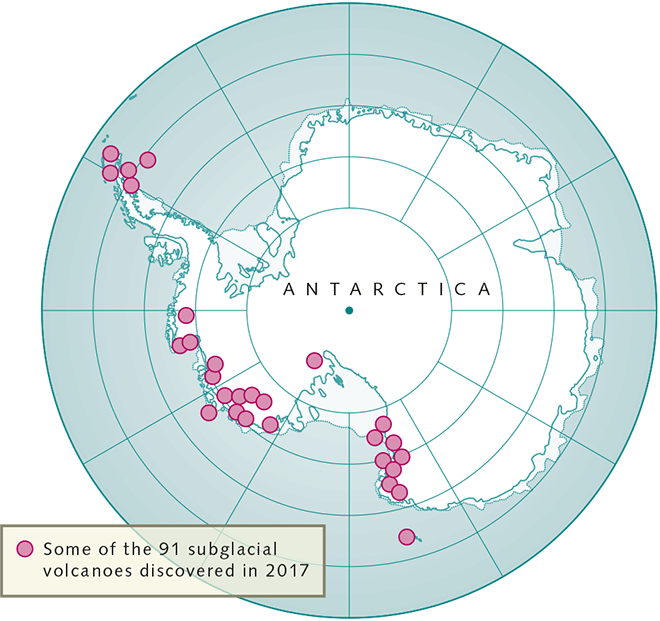
What makes this discovery particularly concerning is the potential interaction between subglacial volcanic heat and the ice sheet above. Most of Antarctica’s volcanoes are dormant, but scientists note that geothermal activity beneath the ice could accelerate the melting of glaciers in localized regions. Increased meltwater from these areas might, over time, contribute to rising sea levels. A few recent studies have even explored whether melting ice could, in theory, relieve pressure and make eruptions slightly more likely, though this remains a hypothesis rather than confirmed evidence.
According to volcanologist Dr. Sophie Williams, one of the scientists involved in the study, “A lot of these volcanoes might become active as the ice melts away, and what happens then can be unpredictable.” Her words highlight the uncertainty scientists face as they attempt to model how Antarctica’s geology and climate might influence each other.
The ice-covered surface of Antarctica hides a surprisingly dynamic world below. The findings suggest that these subglacial volcanoes could potentially reshape parts of the Antarctic landscape and subtly affect global systems, but experts emphasize that volcanic heat is not a primary driver of the continent’s current melting. Instead, climate change and warming ocean temperatures remain the main culprits behind accelerating ice loss.
Research is still underway as scientists strive to understand the full implications of these hidden volcanoes. So far, the discovery has prompted calls for enhanced monitoring of subglacial activity using satellite and seismic data to better predict potential risks.
What lies ahead is uncertain. With every tick of the climate clock, we inch closer to a future where ancient geological forces might interact with modern climate change in ways we do not yet fully understand. As our planet warms, one can only wonder: Could Antarctica’s icy veil one day reveal a fiery world beneath, and what would that mean for us all?
Disclosure: We may earn a commission when you make a purchase through the ads.