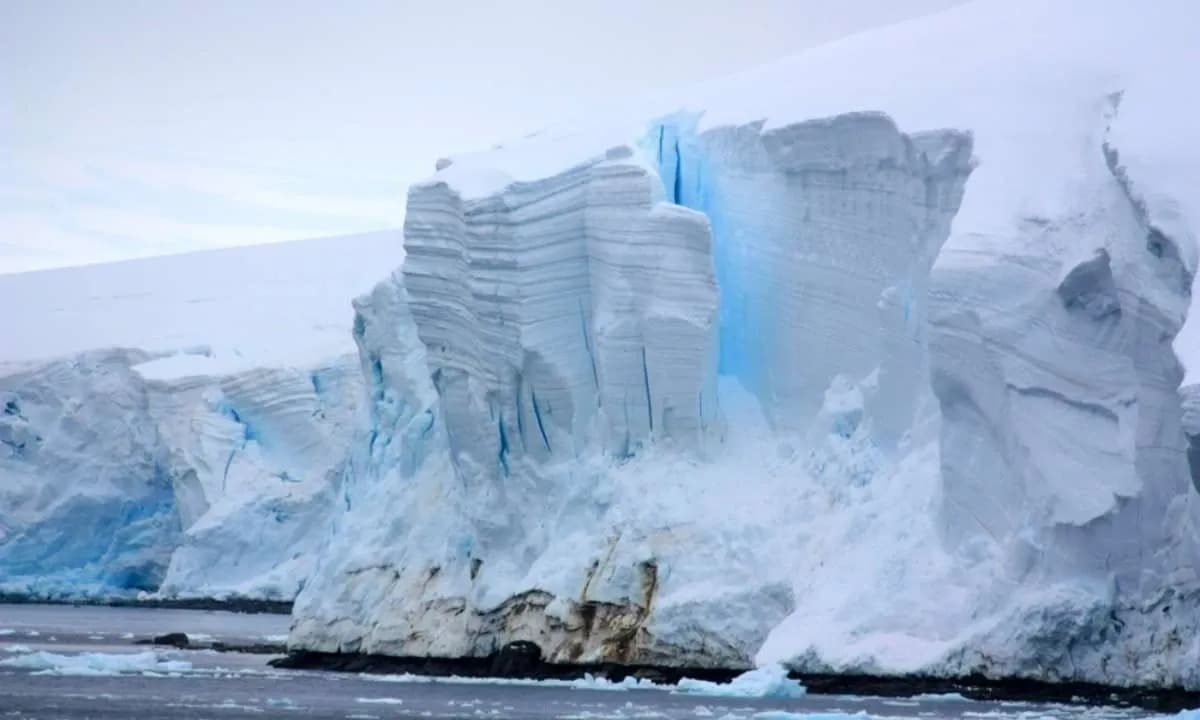
For decades, Antarctica has been a symbol of melting ice and rising seas. Year after year, satellite data showed the ice sheet shrinking, and scientists warned of accelerating losses. But then, something strange happened. Between 2021 and 2023, Antarctica flipped the script and began gaining ice—over 100 billion tons each year.
At first glance, this sounds like climate change has been canceled. Did the frozen continent just reverse decades of damage? Not quite. The story is more complicated—and more fascinating.
The discovery came from NASA’s GRACE and GRACE-FO satellites, which have been monitoring Antarctica since 2002. Researchers at Tongji University in Shanghai looked back across two decades of data and saw a clear pattern: from 2002 to 2020, the ice sheet kept shrinking.
Losses averaged around 81 billion tons per year in the 2000s and nearly doubled to 157 billion tons per year in the 2010s. But then, in the early 2020s, the line on the graph curved upward. The continent was suddenly adding mass again.
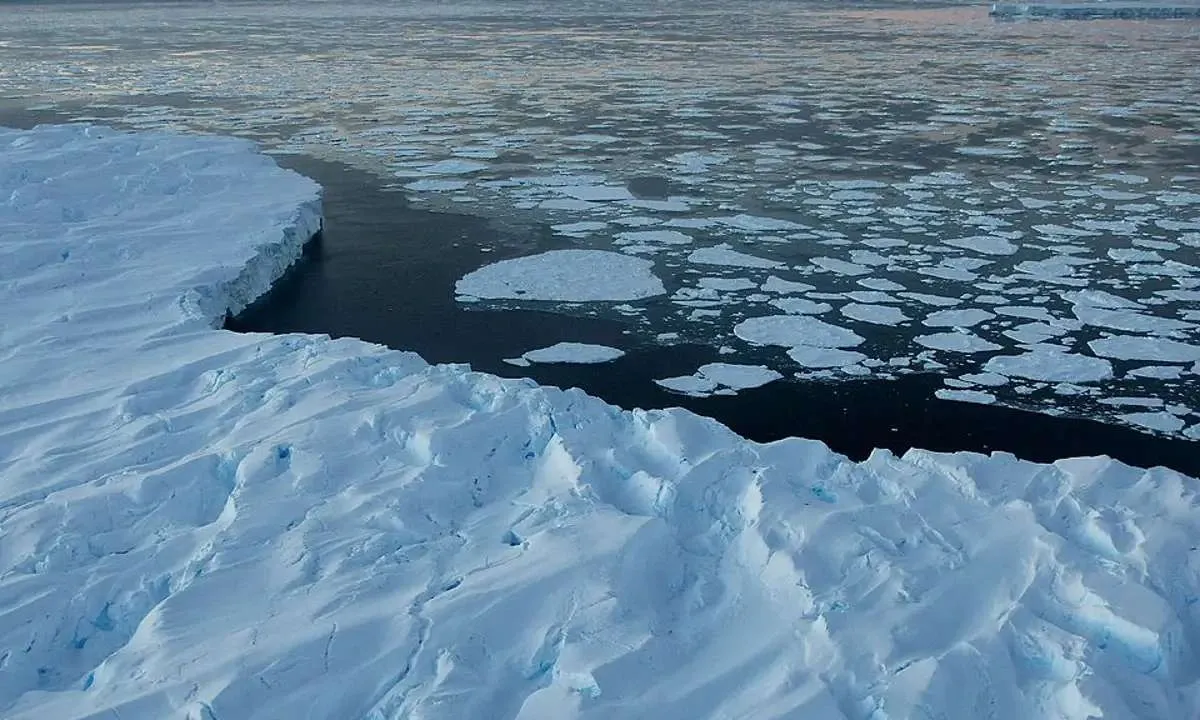
The gain was most noticeable in East Antarctica, particularly across four massive glacier basins. These regions had been losing ice, but in a surprising twist, they began piling it back on. What caused it? Scientists say the main driver was extreme snowfall. In a warmer atmosphere, air holds more moisture, which can lead to heavier precipitation. That’s exactly what happened. Storms dumped more snow than usual, which froze and added weight to the ice sheet.
For a short time, the impact was measurable on a global scale. The Antarctic gain offset sea level rise by about 0.3 millimeters per year. That might sound small, but it’s significant when talking about something as vast as the global ocean.
Still, scientists are quick to point out that this is not a permanent shift. By early 2024, the snowfall trend had already slowed, and by 2025, NASA’s latest satellite readings showed ice levels falling back to where they were in 2020. It was as if the continent had taken a brief breath before returning to its long-term decline.
“In a warmer climate the atmosphere can hold more moisture — this raises the likelihood of extreme weather such as the heavy snowfall which caused the recent mass gain in East Antarctica.”
Tom Slater, an environmental scientist at Northumbria University, explained it this way.
In other words, the same forces driving warming and ice loss can also create temporary bursts of snowfall. Nature isn’t simple; it reacts in complex and sometimes surprising ways.
Zooming out makes the picture clearer. Since 2002, Antarctica has lost around 1.85 trillion tons of ice. The gains of 2021–2023 are a bump in the record, not a reversal of the slope. Most of the continent’s long-term losses still come from West Antarctica, where warm ocean water is eating away at the base of glaciers and pushing them into the sea faster than ever. These losses are steady, structural, and not undone by a few years of snow.
Even the sea ice story is more complicated than viral posts suggest. Some have pointed to images claiming Antarctic sea ice has grown compared to the 1970s. But sea ice isn’t the same as the grounded ice sheet—it floats on the ocean’s surface and expands and retreats each year. Long-term data show that while Antarctic sea ice was fairly stable for decades, in recent years it has plunged to record lows. In 2023, it dropped to levels scientists say would be nearly impossible without climate change.
This raises an important lesson: climate change doesn’t move in a straight line. It’s more like a jagged path, with sudden dips, spikes, and strange turns. One snowy year doesn’t mean the world is cooling, just like one hot day doesn’t prove the planet is burning. What matters is the long-term direction, and the long-term trend in Antarctica is still clear—ice is vanishing.
That makes events like this all the more interesting. They reveal how climate systems can surprise us, how ice sheets can briefly rebound, and how warming itself can create conditions for heavy snowfall in the coldest place on Earth. It’s a reminder that climate science isn’t just about simple headlines but about complex forces playing out over decades and centuries.
So yes, Antarctica gained ice recently—an average of 108 billion tons per year between 2021 and 2023. It was enough to puzzle scientists, spark debates, and inspire a wave of misleading claims online. But it doesn’t change the big picture. The planet is still warming. Seas are still rising. And Antarctica, the continent that holds 60% of Earth’s freshwater, remains one of the most important signals of what lies ahead.
Disclosure: We may earn a commission when you make a purchase through the ads.