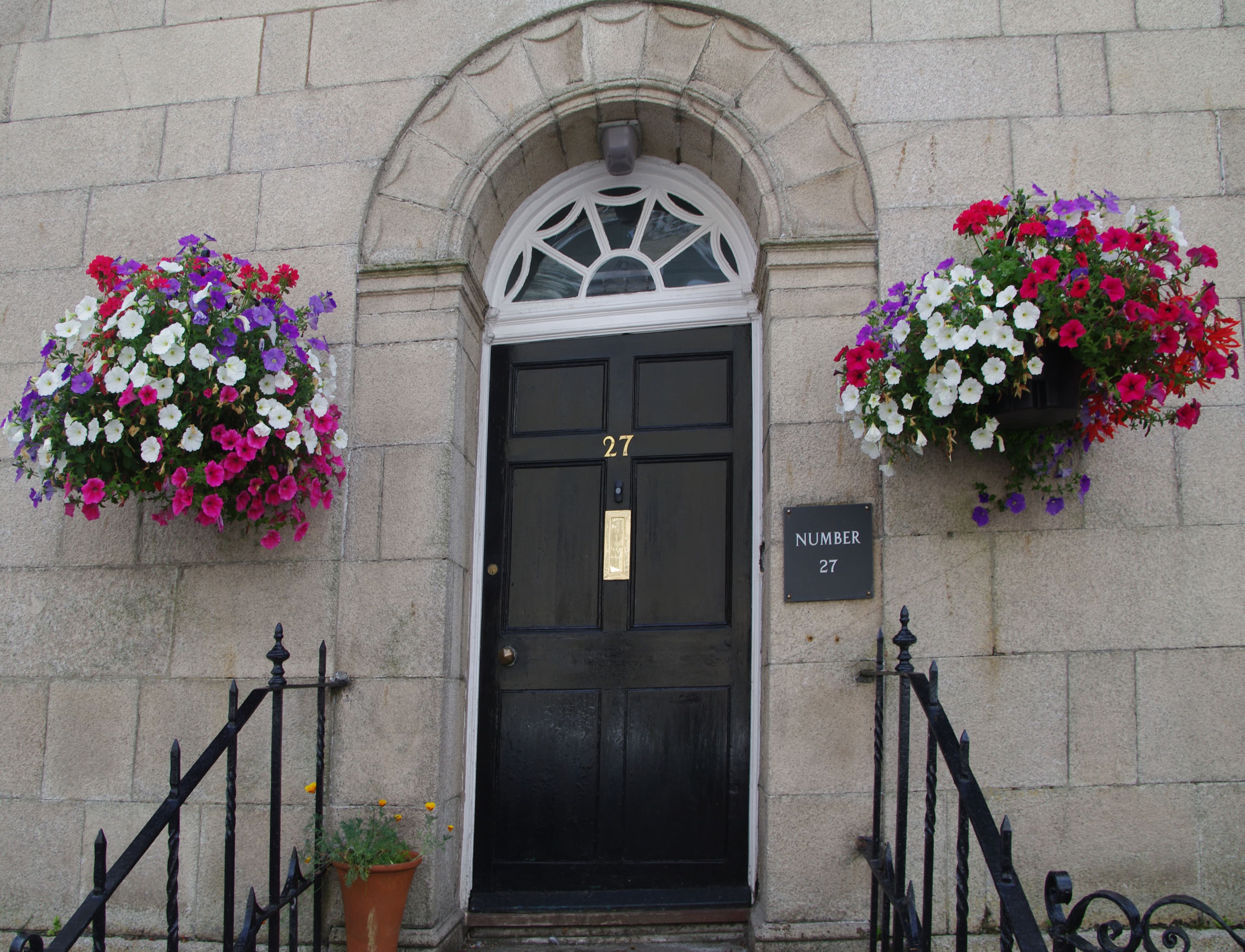
Andreas Christopheros was working from home in Cornwall when a stranger knocked on his front door.
It was December 9, 2014, just weeks before Christmas. His wife and young son were inside the house.
Andreas opened the door, expecting an ordinary visitor.
Instead, the man threw concentrated sulphuric acid into his face.
The attack permanently changed Andreas's life. But when police investigated, they uncovered a disturbing mistake: he was not the person the attacker had intended to hurt.
A Normal Day Ended at the Front Door
Andreas, then 30, lived in Truro, Cornwall, with his wife, Pia, and their toddler son.
He was working from home when he noticed an unfamiliar red van nearby.
A short time later, someone came to the door.
Andreas later recalled that the stranger acted without warning.
“This is for you, mate,” the man said, before throwing the corrosive liquid.
Andreas had no time to react.
The acid struck his face and upper body. Some splashed upward and fell onto him again.
In a later interview, he described realizing what had happened when his T-shirt began dissolving.
His Wife Rushed Downstairs to Help
Pia heard her husband screaming and rushed to help him.
She tried to get him under running water to wash away the acid.
In the process, she suffered burns to her own feet.
Their young son was upstairs while the emergency unfolded.
Andreas was taken to hospital with severe injuries to his face, eyes, arms and body.
He spent several days unconscious, and doctors warned his family that he might not survive.
The attack left him blind in one eye and with impaired vision in the other.
He would need extensive reconstructive surgery and ongoing medical care.
The Attacker Had Driven 300 Miles for Revenge
Police eventually identified the attacker as David Phillips, a painter and decorator from Hastings, East Sussex.
Phillips had traveled more than 300 miles to Cornwall.
Investigators said he believed someone had harmed a member of his family and had planned a revenge attack.
But he went to the wrong house.
Andreas had no connection to the allegation that motivated Phillips.
Police described the assault as a case of mistaken identity.
The revelation left Andreas facing an even harder question: why had a stranger destroyed his health and appearance when he had done nothing to provoke him?
The Injuries Continued Long After the Attack
Surviving the first few days was only the beginning of Andreas's recovery.
He underwent repeated operations and skin grafts.
The scarring affected his face and eyelids, making everyday activities painful and difficult.
In later interviews, he described how losing normal eyelid function affected his ability to close his eyes and sleep.
He also wore a protective pressure mask during recovery.
The effects extended beyond his injuries.
Andreas had to adjust to a changed appearance, ongoing medical appointments and uncertainty about his working life.
But one of his deepest worries concerned his son.
He Feared His Little Boy Would Be Afraid of Him
In a January 2016 interview with ITV's This Morning, Andreas said he had worried that his young son would see him differently after the attack.
He waited about two months before letting the child see his injured face.
When they finally reunited, his son initially turned toward Pia.
Then he reached out to his father and hugged him.
Andreas later described the embrace as one of the most important moments of his recovery.
The reaction helped reassure him that his relationship with his son had not been destroyed by what had happened.
David Phillips Was Jailed, Then His Sentence Changed
Phillips admitted causing grievous bodily harm with intent in September 2015.
The following month, a court sentenced him to life imprisonment, with a minimum term of more than seven years.
But in April 2016, the Court of Appeal overturned the life sentence.
Judges said the evidence did not justify treating Phillips as someone who posed an ongoing danger to the wider public.
They replaced the life sentence with a fixed 16-year prison term.
The ruling did not excuse the attack or change his conviction.
Andreas later criticized the sentencing decision and argued for tougher penalties for acid violence.
In 2020, he spoke publicly again after learning Phillips had been moved to an open prison.
He Spoke Out About the Lasting Damage of Acid Attacks
Andreas became an advocate for stronger laws and greater awareness of the long-term effects of corrosive attacks.
In a 2017 interview with ITV, he said he would rather have suffered a gunshot or stab wound than the permanent injuries caused by acid.
He was describing the continuing impact of disfigurement and repeated operations, not minimizing other forms of violence.
He also challenged the idea that an acid attack ends when the victim leaves the hospital.
For survivors, treatment and recovery may continue for years.
In a later ITV appearance, Andreas discussed moving beyond his fear of leaving home and using his experience to help other burn survivors.
He Refused to Let the Attack Define His Entire Life
The assault changed Andreas's appearance, health and daily routine.
It also changed his family's life.
Yet he has repeatedly said that he does not want the crime to become his entire identity.
He has spoken about the importance of his wife and children, the value of time and the work of rebuilding his future.
His story is not one of a simple recovery. The injuries are permanent, and the effects remain part of his life.
It is a story of surviving an attack that was never meant for him and continuing to make choices about the life that followed.
Andreas opened his front door to a stranger who had come looking for revenge. More than a decade later, he continues to speak about survival, family and the consequences of a mistake that could never be undone.
Editor's note: The attack occurred on December 9, 2014. Some early news articles mistakenly printed 2015 as the attack year. Phillips was convicted after pleading guilty; his sentence was changed on appeal in 2016. This article does not assume that Andreas has forgiven his attacker.
Sources: ITV News — Andreas recounts the attack and his son's response, January 2016; ITV News — Appeal court replaces life sentence, April 2016; ITV News — Andreas calls for tougher sentences, August 2017; Sky News — Survivor responds to prison transfer, September 2020; ITV This Morning — Andreas discusses life after the attack.