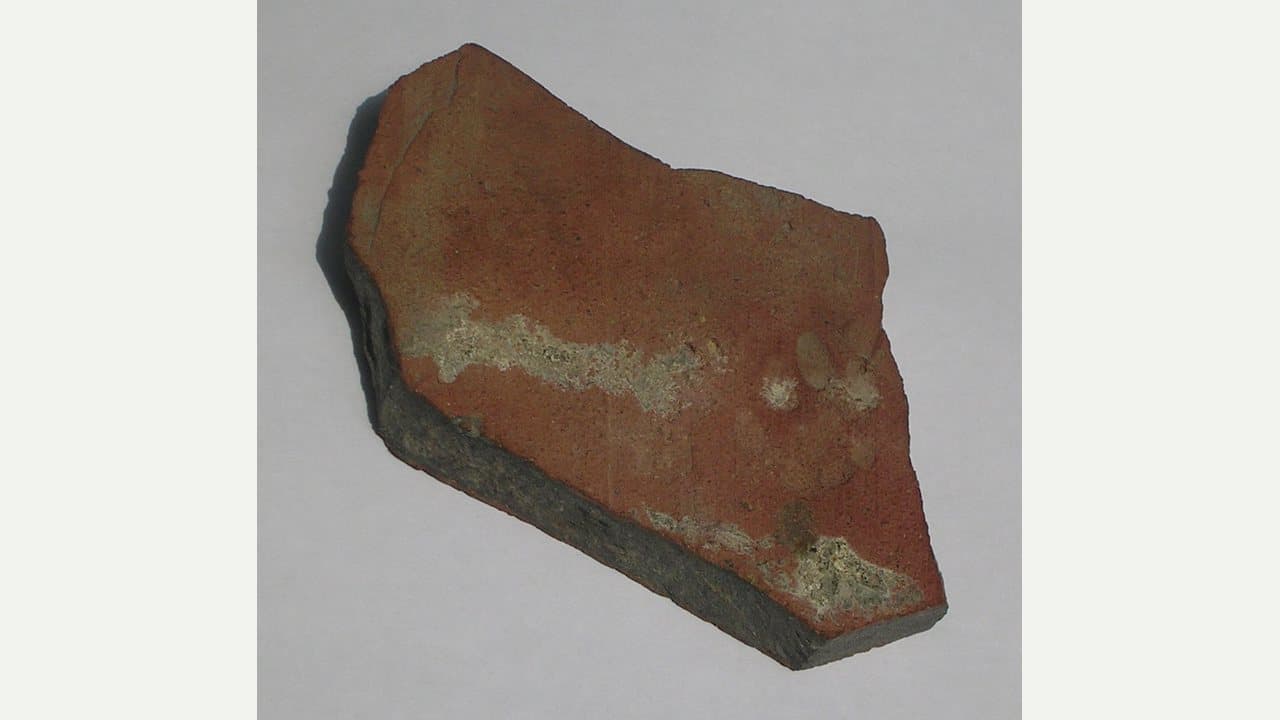
A Roman roof tile in Gloucester preserves something its maker probably had no reason to celebrate: a small animal's footprint pressed into the clay. Roughly two thousand years later, the mark has become the detail people stop to examine.
Cat paw prints on tiles and manuscripts bring an unusually familiar scale to history. They record an encounter between an animal and an object while that object was still part of everyday work.
A mark noticed long after excavation
The Museum of Gloucester's account of its tile dates the object to around 100 CE. It was excavated in Berkeley Street in 1969, but the cat paw impression was only noticed in 2015.
Roman tile makers left wet clay to dry before firing. An animal stepping onto that surface could leave an impression that survived the manufacturing process and centuries underground.
The museum suggests the small size is consistent with a domestic cat. Whether that individual was a pet or an animal living around a working port is not something the footprint can establish.
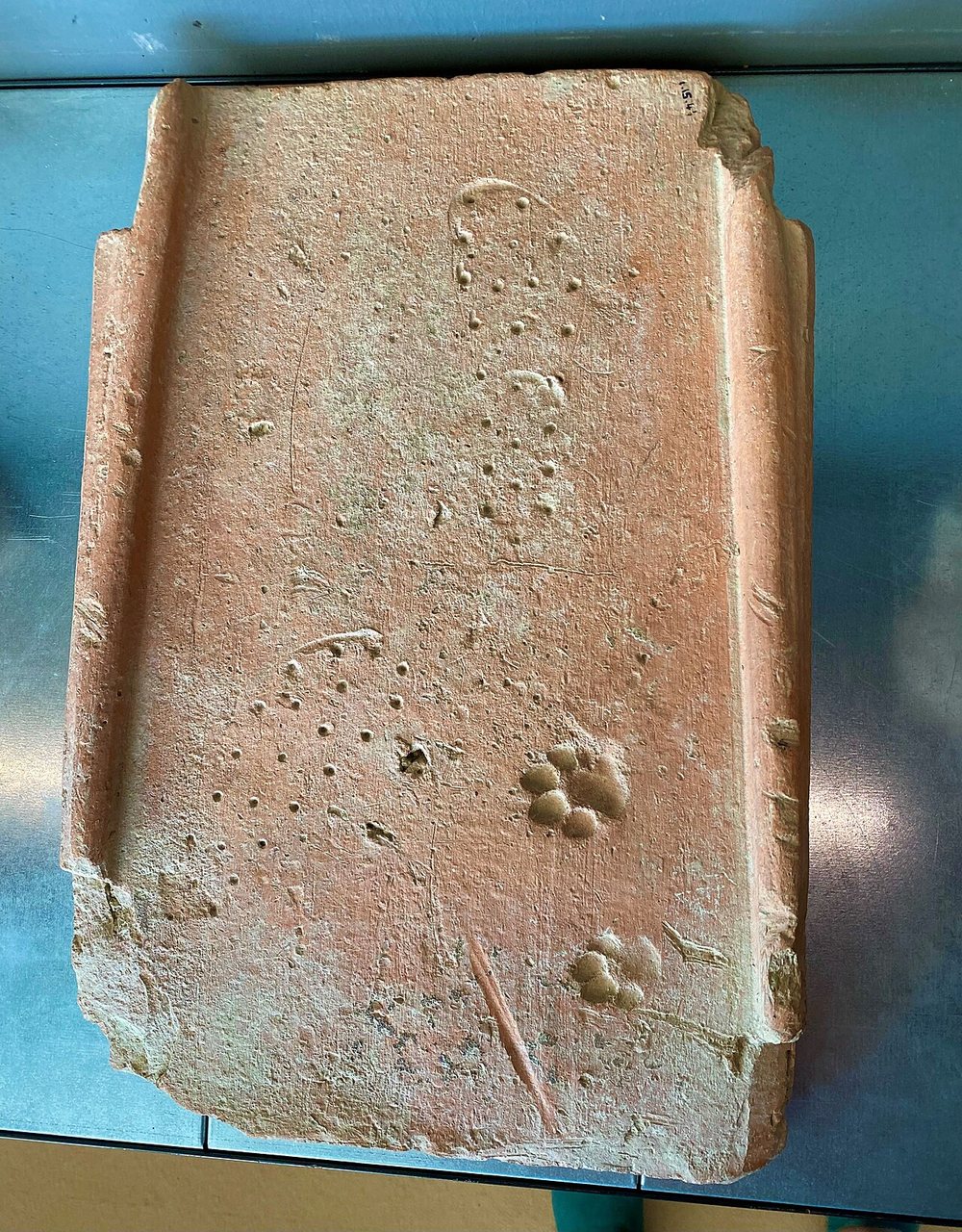
Roman tile at Alba-la-Romaine, France, with cat paw and child sandal impressions. This is a separate artifact from the Gloucester example. Photo: Waltercolor, CC BY-SA 4.0. Resized; JPEG conversion. Image adaptation shared under the same CC BY-SA 4.0 license.

Archaeologists look closely at ordinary traces
A study of cats in Roman Britain by Janet Webster discusses paw impressions from several sites. It also notes a practical difficulty: lightly impressed or smudged marks can be hard to identify confidently.
The Kent Archaeological Society's account of a tile fragment from Lympne illustrates the value of reviewing finds after excavation. A curator spotted the impression while sorting material from an excavation archive.
These are separate finds from different locations, showing how similar traces can survive across a broad archaeological record.
Illustrative modern cat photograph. This is not evidence identifying the animals that made the ancient paw prints. Photo: SaltyStarCat, CC BY 4.0. Resized; JPEG conversion.

Similar interruptions survived in books
Paw marks also appear in later written material. Medievalists.net describes prints in a fifteenth-century manuscript from Dubrovnik, an example that became widely known after a historian shared it.
Tile and manuscript marks involve different materials and periods, but both preserve contact that their makers did not plan as a historical message.
They do not reveal a cat's name or intentions. Their appeal is simpler: among the surviving records of buildings, trade and writing, there is room for the trace of an animal walking through someone's day.
Featured image: Roman tile fragment with a kitten paw print, found in York around 1987. This is not the Gloucester tile. Photo: Nortonius, CC BY 3.0. Resized and placed on a plain 16:9 canvas without cropping the subject.
