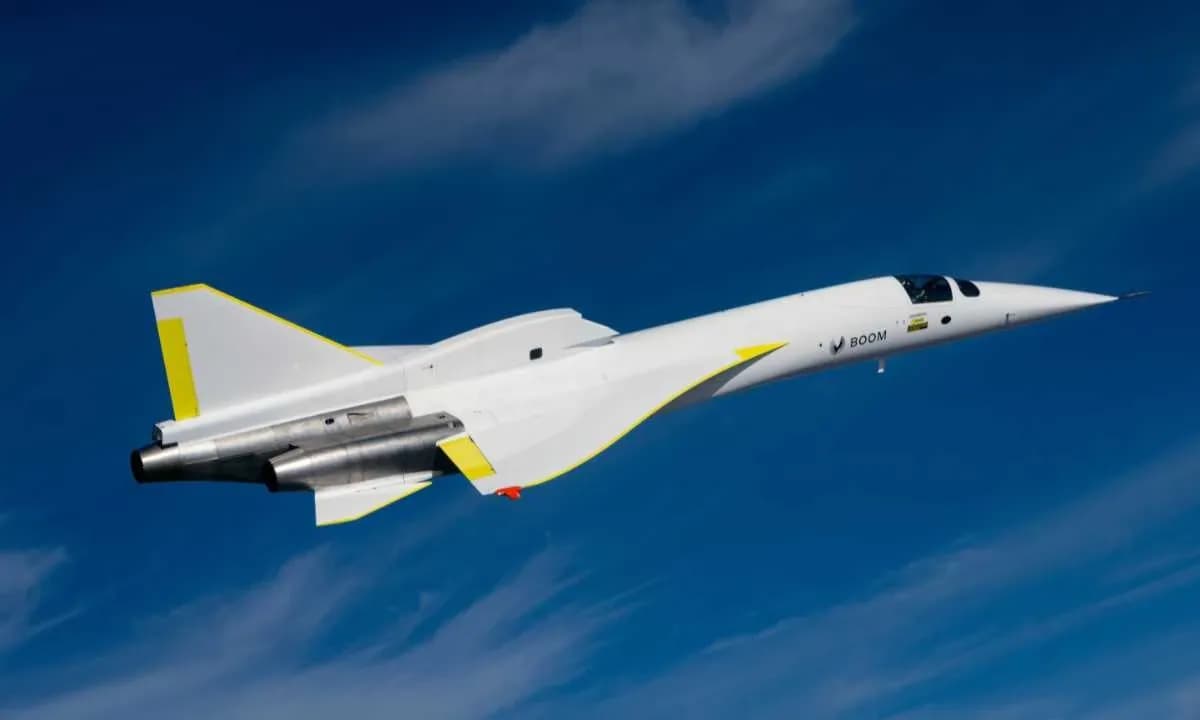
For the first time in over two decades, a civilian aircraft has broken the sound barrier. Boom Supersonic’s XB-1, a prototype passenger jet, reached supersonic speeds on January 28, 2024. It marks a major step toward bringing back commercial supersonic travel.
This test flight, conducted in the Mojave Desert, California, was historic. It is not just because it reached Mach 1.1. It was also because it was the first time an independently developed jet achieved this milestone.
Unlike Concorde, which was backed by government funding, Boom Supersonic is a private company aiming to make high-speed air travel accessible to everyone. The flight is expected to take people anywhere across the world in just 4 hours and with just $100. Let’s have a closer look.
A Historic Test Flight
On January 28, Boom Supersonic’s XB-1 jet climbed to 35,000 feet before reaching Mach 1.1, just over the speed of sound. The aircraft completed three high-speed runs over 35 minutes in the same airspace where legendary pilot Chuck Yeager first broke the sound barrier in 1947.
This wasn’t just a technological achievement—it was a symbolic moment in aviation history. For the first time since Concorde’s retirement in 2003, a non-government aircraft demonstrated that supersonic travel is possible.
Flight Details: Breaking Mach 1.1
- Location: Mojave Desert, California
- Altitude Reached: 35,000 feet
- Maximum Speed: Mach 1.122 (750 mph)
- Total Flight Duration: 35 minutes
- Previous Flight Record: Mach 0.95 on January 10, 2024
This flight was carefully monitored by a team of 25 engineers, who reviewed live data in real-time to ensure safety and accuracy.
Pilot and Team Behind the Flight
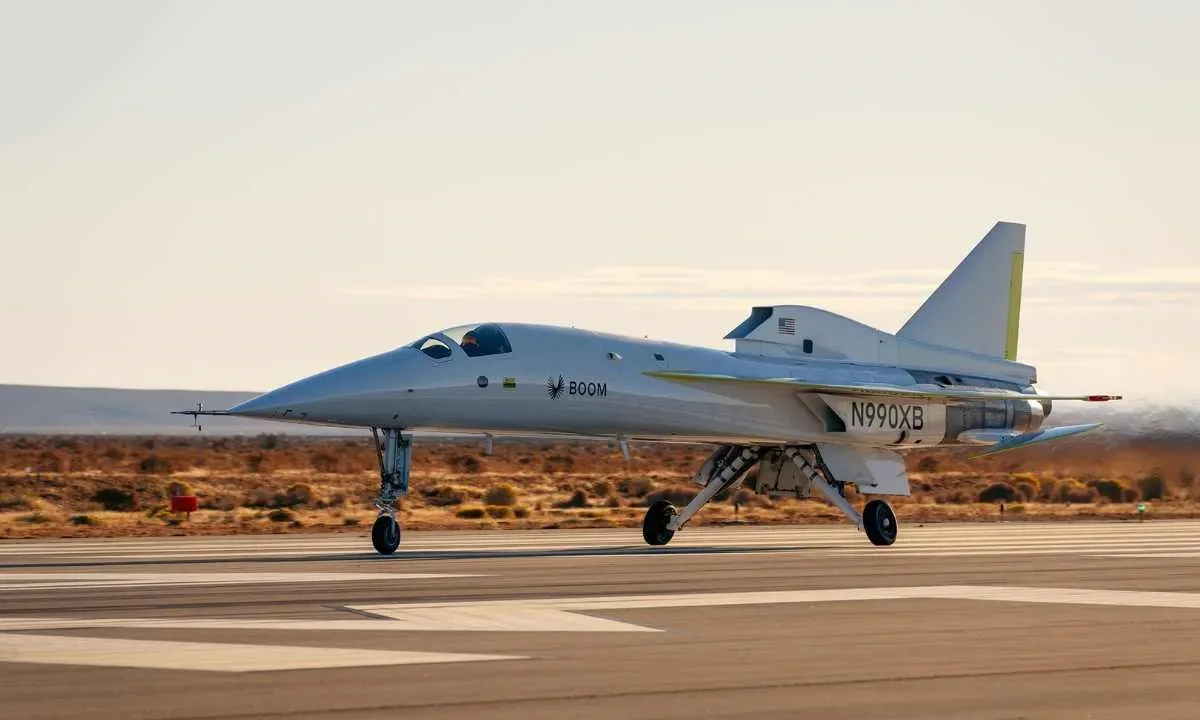
The XB-1 was piloted by Tristan “Geppetto” Brandenburg, Boom’s chief test pilot. Speaking about the experience, Brandenburg said:
“I still get nervous before a flight in XB-1, but I think that’s healthy. If I weren’t nervous, it would indicate I wasn’t taking it seriously enough or was ignoring the risks.”
Brandenburg also spoke about his personal connection to flying, adding:
“I always say a prayer at the base of the ladder to remind myself of those things and to give credit where credit is due.”
His words reflect the gravity of this achievement—not just for Boom Supersonic but for aviation as a whole.
The XB-1: A Step Toward the Future
The XB-1 is designed as a smaller-scale test model for Boom’s planned commercial airliner, Overture. Some key innovations in the XB-1 include:
- Carbon Fiber Construction: Lighter and stronger than traditional aircraft materials.
- Augmented Reality Vision System: Replaces Concorde’s droop nose, allowing pilots to see past the aircraft’s long nose for takeoff and landing.
- Digital Wind Tunnel Testing: Instead of physical wind tunnels, Boom uses computational fluid dynamics, which allows them to simulate hundreds of tests overnight.
The Slow Return of Supersonic Travel: Why It Took So Long
The world hasn’t seen a commercial supersonic jet since Concorde was retired in 2003. Why did it take so long for a new one to emerge?
The End of Concorde (2003)
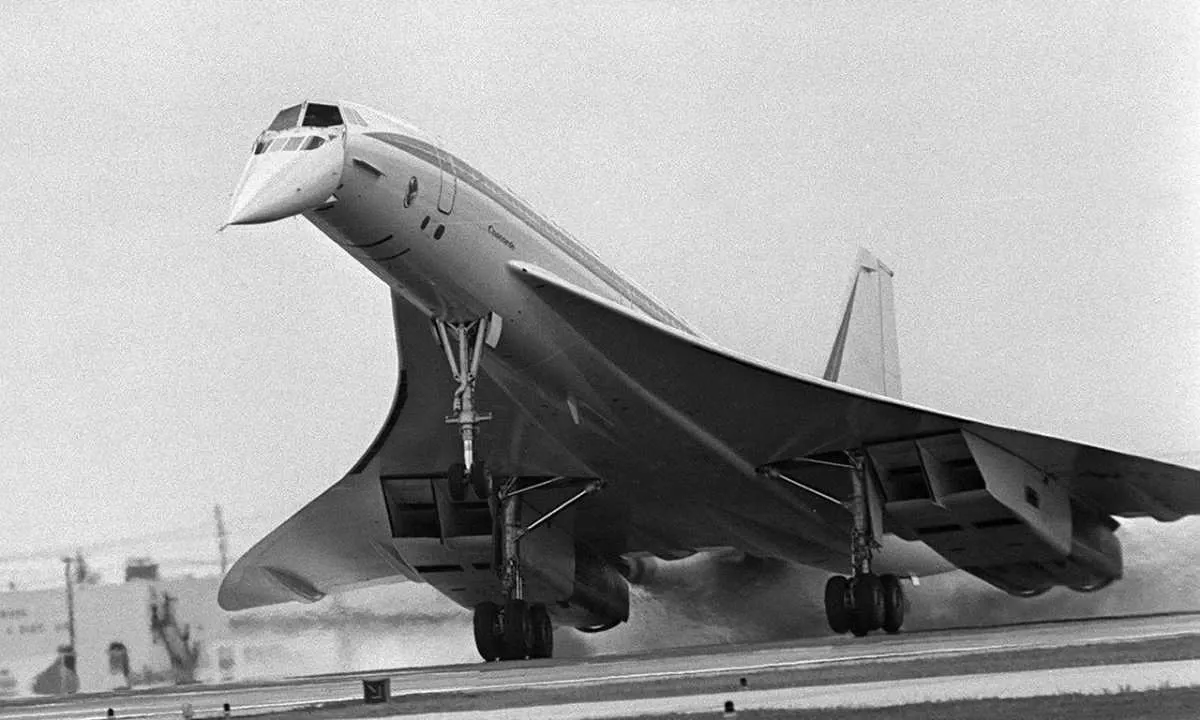
Concorde was an engineering marvel, but its high costs, environmental concerns, and limited routes made it unsustainable. The sonic boom it produced also led to strict regulations that restricted where it could fly. After the Air France Flight 4590 crash in 2000 and the decline in passenger numbers, Concorde was retired in 2003.
Challenges in Supersonic Innovation
Even with today’s advanced technology, building a supersonic jet is difficult. Some major obstacles include:
- Fuel Efficiency: Supersonic jets consume more fuel than subsonic planes.
- Noise Pollution: Sonic booms can disrupt communities, leading to strict aviation laws.
- Material Constraints: The aircraft must withstand extreme temperatures and pressure changes.
Boom Supersonic’s Vision: Faster Travel for Everyone
Despite these challenges, Boom Supersonic’s CEO Blake Scholl remains optimistic. He envisions a future where supersonic air travel becomes the norm, stating:
“I very much believe in the return of supersonic air travel, and ultimately to bring it to every passenger on every route.”
His long-term goal?
“Fly anywhere in the world in four hours for $100.”
Boom’s planned commercial airliner, Overture, aims to carry 64-80 passengers at Mach 1.7—twice as fast as today’s airliners. The company already has 130 pre-orders from major airlines, including American Airlines, United Airlines, and Japan Airlines.
Sustainable Aviation Goals
Boom Supersonic is also focused on making supersonic flight environmentally sustainable. Overture is designed to run on 100% sustainable aviation fuel (SAF), which could help reduce aviation’s carbon footprint. However, Scholl acknowledges the challenges:
“There’s not enough of it, and it costs too much, but it is scaling.”
He believes that as SAF technology improves, it will become the standard for long-haul travel.
The Next Step: Overture’s Commercial Future
Boom has already completed construction on its Overture Superfactory in Greensboro, North Carolina. The facility is designed to produce 66 Overture aircraft per year, with a target for commercial flights before the end of the decade.
The First Supersonic Flight in 1947
The XB-1’s flight took place in the same historic airspace where Chuck Yeager became the first person to break the sound barrier on October 14, 1947. Yeager piloted the Bell X-1, a government-funded aircraft, over the Mojave Desert, California.
Unlike Yeager’s flight, which was a military achievement, the XB-1 represents the first privately developed supersonic jet, marking a shift from government-led aviation to private-sector innovation.
How Supersonic Flight Works
Supersonic speed is measured using Mach numbers, where Mach 1 = the speed of sound (~767 mph at sea level).
When an aircraft surpasses this speed, it creates a sonic boom—a loud shockwave caused by air pressure differences. This is one of the biggest challenges for commercial supersonic travel, as regulations currently restrict these flights over land.
Conclusion
The XB-1’s success is a major milestone in aviation. It proves that privately developed supersonic jets are possible and brings us one step closer to the return of commercial supersonic travel.
However, challenges remain—cost, regulations, and sustainability will determine whether Boom Supersonic’s vision becomes reality.
Will supersonic air travel finally go mainstream, or will it remain a luxury like Concorde? Either way, the race for the future of flight has begun.
Also read,