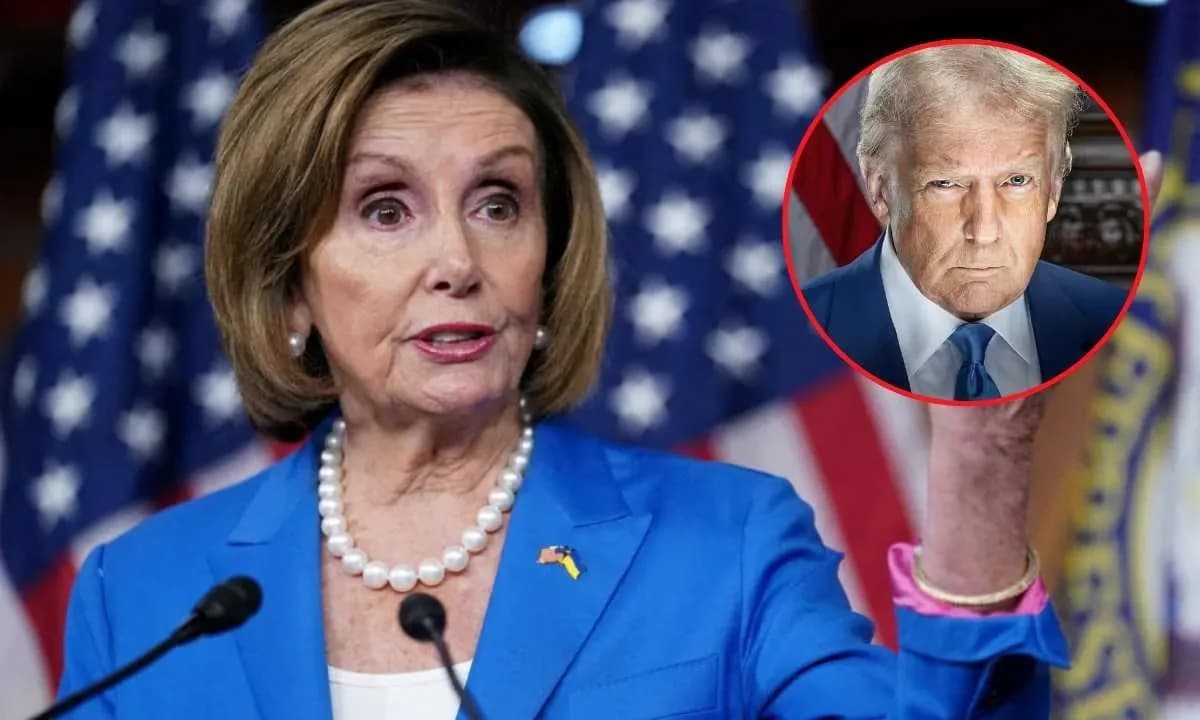
In 1996, Nancy Pelosi stood at the House floor delivering a speech that would surprise many today. She fiercely opposed granting China Most Favored Nation (MFN) trade status. But what’s shocking is how her stance back then echoes arguments often made by Donald Trump decades later. Pelosi’s speech was filled with concerns about unfair trade practices, a massive trade deficit, and the loss of American jobs to China.
Pelosi questioned the fairness of the trade relationship, asking, “Is this reciprocal?” She pointed out the striking imbalance between what the U.S. was giving and what it was getting in return. Her speech highlighted a massive $34 billion trade deficit with China that had grown from $3.5 billion during the Tiananmen Square massacre. The number was expected to exceed $40 billion by the end of 1996. This was far from balanced, and Pelosi’s frustration was clear.
The economic impact of this trade imbalance wasn’t just about numbers. Pelosi argued that America was losing jobs at a staggering rate while China was gaining them. She stated that the U.S.-China trade relationship was supporting at least 10 million Chinese jobs but only 170,000 American jobs. According to Pelosi, this was a “job loser” for America, a claim many would recognize from Trump’s future speeches. It was a one-sided deal where the benefits flowed to China.
Pelosi didn’t stop there. She revealed the shocking fact that U.S. tariffs on Chinese imports averaged 2%, while China’s tariffs on American goods were a staggering 35%. This was another lopsided arrangement, with the U.S. seemingly giving more than it got. To her, the lack of reciprocity was unacceptable. “Is this reciprocal?” she repeated, emphasizing her frustration with the situation.
Beyond economics, Pelosi also brought human rights into the discussion. She condemned China’s use of “slave labor” and noted that American companies were profiting from it. Intellectual property theft and forced technology transfers were also on her list of grievances. She argued that the U.S. was compromising its values for the sake of trade deals that were not mutually beneficial.
Pelosi’s opposition to free trade with China went beyond simple complaints. She believed the U.S. was making itself vulnerable to exploitation. The loss of jobs, combined with intellectual property theft and unfair tariffs, painted a grim picture. For her, this was a trade relationship where America kept giving and China kept taking.
What’s fascinating is how Pelosi’s words mirror many of Trump’s speeches on China decades later. The complaints about unfair tariffs, lost jobs, and intellectual property theft sound strikingly familiar. In a way, Pelosi was making Trump’s case long before Trump ever ran for office.
Pelosi’s speech leaves many wondering what would have happened if her warnings were taken seriously back then. The numbers she presented were alarming, but the broader implications were even more concerning. The United States was losing jobs, handing over technology, and making deals that seemed one-sided.
This speech also raises questions about whether history is repeating itself. Could her words from 1996 provide insight into the ongoing U.S.-China trade battles today? And why did her stance change so dramatically over the years?
Pelosi’s fiery speech in 1996 serves as a reminder that trade relationships can have far-reaching consequences. It also shows how arguments that once seemed isolated to one politician or one party can resurface years later, voiced by someone else.