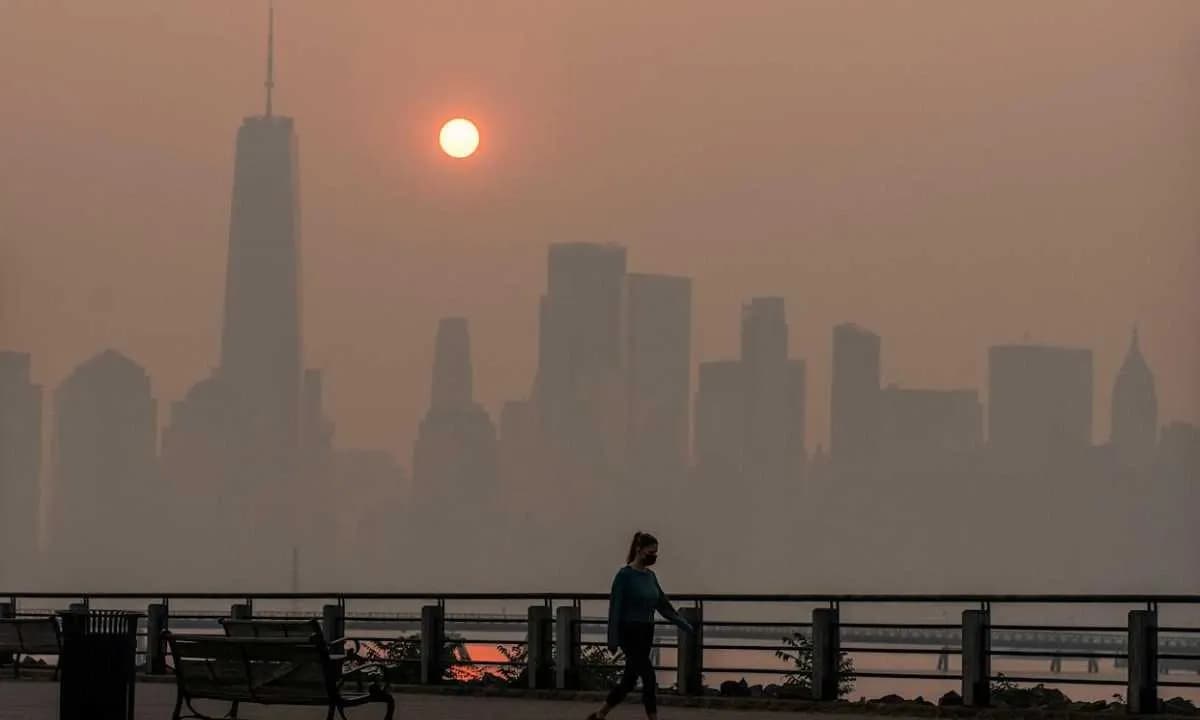
More than 158 million Americans — nearly half the country — are breathing air that can make them sick. The latest report from the American Lung Association says air quality has gotten worse in many parts of the U.S., especially in cities. For millions, the air they inhale every day is filled with dangerous levels of ozone and particle pollution.
The most shocking part? Some of the worst places aren’t where you’d expect. The 2025 “State of the Air” report found high pollution levels not just in major urban areas but also in parts of California’s Central Valley, Arizona, and even Nevada. Despite improvements in emissions from vehicles and power plants, climate change is making the problem worse, mainly by triggering more wildfires and extreme heat, which both drive pollution higher.
The impact of this isn’t just about breathing discomfort — it’s life-threatening. More than 123 million people are exposed to harmful ozone levels, which can lead to asthma attacks, heart issues, and even early death.
Around 64 million people live in counties where year-round particle pollution is at dangerous levels, and 90 million are exposed to short-term spikes. The report links these pollutants to heart attacks, lung cancer, and strokes. Communities of color are 2.3 times more likely to live in areas with high air pollution.
Here’s something you might not know — over the last five years, more than 11.7 million acres burned in wildfires across the U.S. That smoke doesn’t just affect nearby towns. It travels across states and even across the country, adding to long-term pollution levels. According to the report, Western states like California, Oregon, and Washington are now among the most polluted in the nation, with cities like Bakersfield, Fresno, and Sacramento topping the list for worst air.
Many cities that were once improving are now moving backward.
“Climate change is undercutting decades of progress,”
said Paul Billings, national senior vice president of public policy at the American Lung Association.
He explained that rising heat is making ozone pollution worse, and wildfire smoke is pushing up particle levels in places that didn’t use to have this problem.
There’s another big concern: kids and older adults are the most at risk. Their lungs are more sensitive, and exposure can lead to lifelong health problems. The report warns that the health of millions of people in the U.S. depends on cleaning up the air — and fast.
“We are seeing these impacts now, not in some distant future,”
Billings emphasized.
Some of the cleanest air in the country is now found in cities like Bangor, Maine; Honolulu, Hawaii; and Wilmington, North Carolina. But those clean air bubbles are shrinking. Scientists say stricter environmental laws, cleaner energy, and reducing emissions from cars and industry are urgent steps. The Environmental Protection Agency (EPA) has proposed tougher limits on soot, but those changes are still under review.
If this trend continues, it could affect not just health, but the economy too. More hospital visits, more lost workdays, and rising healthcare costs will become everyday problems. Poor air quality already leads to thousands of premature deaths each year and costs the U.S. economy billions of dollars.
The American Lung Association’s interactive map lets you check your own county’s air quality — and it might shock you. Some places that look clean aren’t. The worst-hit areas often have the least resources to fight back, leading to a growing gap in environmental safety.
Is your hometown safe to breathe in anymore? The answer could lie in what’s floating in the air right outside your window. Keep reading to find out which U.S. cities are most affected and what’s being done — or not — to fix it.