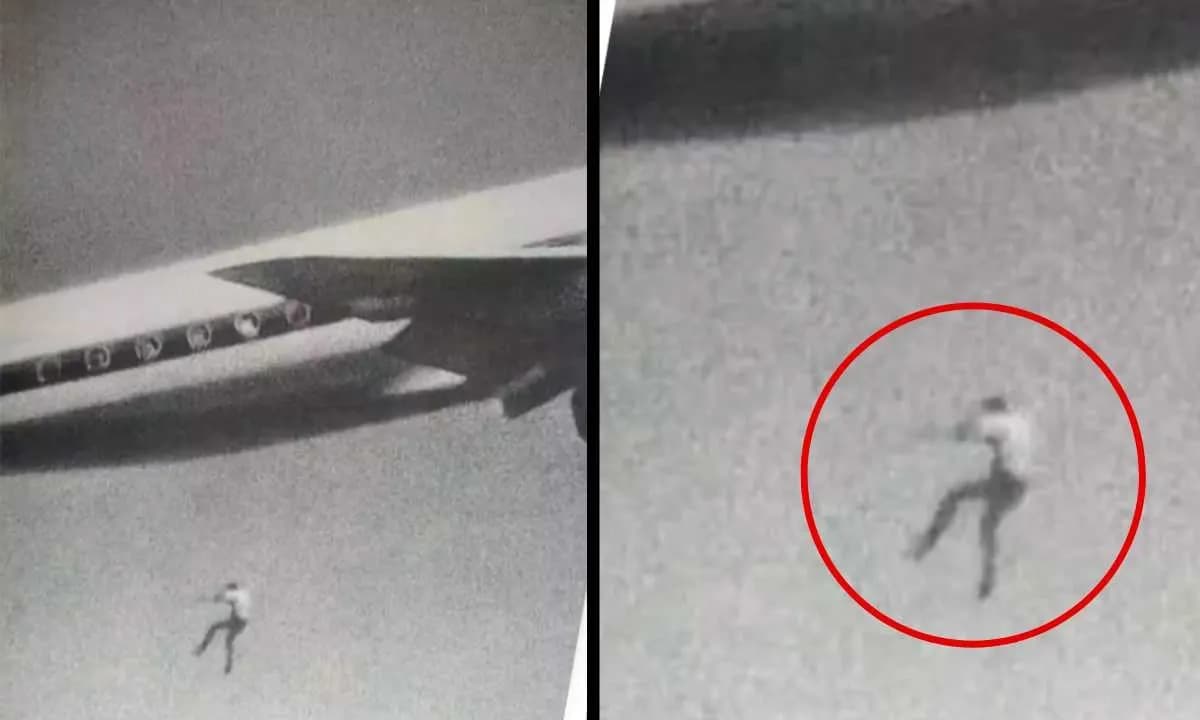
On February 22, 1970, a tragic event shocked the world. Keith Sapsford, a 14-year-old boy from Sydney, fell to his death from the wheelwell of a Tokyo-bound plane just after takeoff. An amateur photographer, John Gilpin, unintentionally captured the heart-wrenching moment in a photograph that became infamous. The image, paired with the events leading up to Keith’s fall, serves as a haunting reminder of the risks tied to youthful desperation and the dangers of stowing away.
“All my son wanted to do was to see the world,” Keith’s father, Charles Sapsford, reflected. But his son’s longing for adventure ended in a tragedy that would echo through time.
Keith Sapsford: The Teenager Who Dreamed of Seeing the World!
Keith Sapsford was born in 1956 in Randwick, a suburb of Sydney, Australia. His father, Charles, was a university lecturer in mechanical and industrial engineering, who described his son as having “itchy feet.” Keith was a curious and restless child, constantly eager to explore the world beyond his home.
To channel his adventurous spirit, the Sapsford family embarked on an overseas trip. However, when they returned to Sydney, Keith became even more restless, struggling to adapt to everyday life. His parents decided that discipline and structure might help him settle down, enrolling him at Boys’ Town, a Catholic institution in southern Sydney designed to help troubled children.
Unfortunately, Keith’s desire to explore proved too strong. Just weeks after arriving at Boys’ Town, he escaped. His destination? Sydney Airport, where he made a fatal decision to stow away in the wheel well of a plane bound for Tokyo.
A Fatal Decision: Climbing Into the Wheel Well
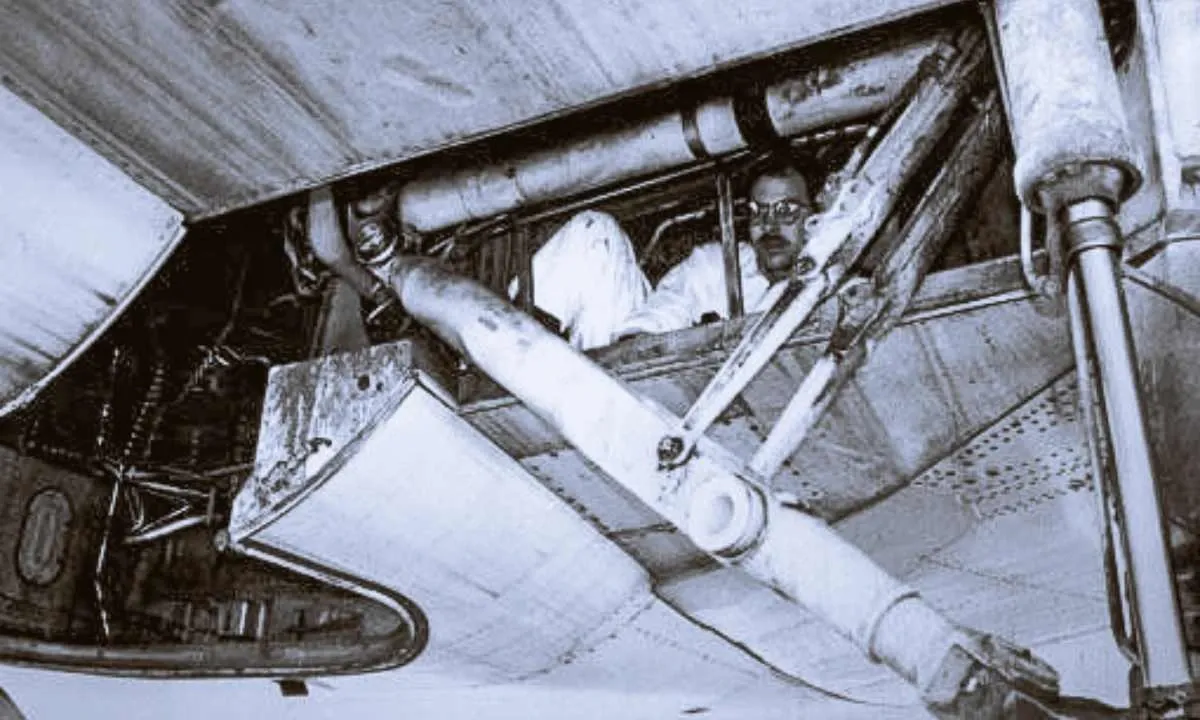
Once at Sydney Airport, Keith managed to sneak onto the tarmac, which was not as secure in 1970 as it is today. Spotting a Douglas DC-8 preparing for departure, he climbed into its wheel well, unaware of the deadly risks he was taking.
When the plane took off, Keith stayed in the wheel compartment for some time. However, once the wheels began to retract, the compartment reopened, and he fell 200 feet to the ground. Tragically, even if Keith hadn’t fallen, experts say he likely wouldn’t have survived the journey due to the freezing temperatures and lack of oxygen at high altitudes. He wore only a short-sleeved shirt and shorts, ill-equipped for the conditions inside the wheel well.
Keith’s father later lamented, “His determination to see how the rest of the world lives has cost him his life.”
The Photographer’s Unintended Role
Amateur photographer John Gilpin was at Sydney Airport that day, casually taking pictures of planes and the bustling tarmac. He had no idea that his camera would capture such a grim moment.
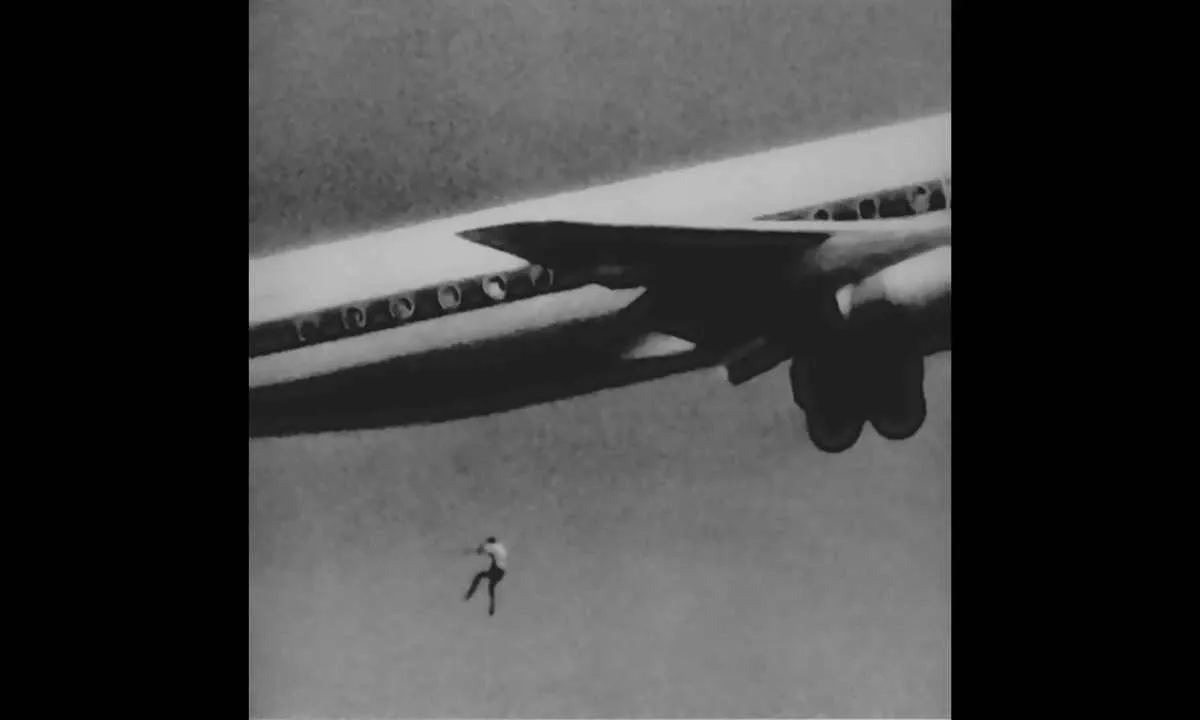
It wasn’t until a week later, as he developed the film, that Gilpin realized he had photographed Keith’s fall. The haunting image shows the silhouette of the boy in mid-air, arms outstretched in what seems to be a futile attempt to hold on. The photo became infamous, a chilling reminder of the tragic consequences of youthful recklessness.
The Aftermath: An Infamous Photo and Lessons Learned
The image of Keith Sapsford’s fall became a stark symbol of desperation and the dangers of stowing away. Aviation experts have since highlighted how slim the odds are for wheel-well stowaways to survive such journeys.
Retired pilot Les Abend commented, “One thing never ceased to amaze me: that people will actually stow away inside the landing gear well of a commercial airliner and expect to survive.” The Federal Aviation Administration (FAA) released research in 2015 revealing that only 25% of stowaways survive, and those who do typically endure short flights at lower altitudes.
Keith’s case was not unique, but it was among the most tragic. Between 1947 and 2012, there were 96 recorded attempts by stowaways hiding in wheel compartments, with 73 resulting in death. Survivors often suffer severe hypothermia or other life-threatening conditions.
For the Sapsford family, the pain of losing Keith was compounded by the realization that his plan was doomed from the start. His father believed that even if Keith had avoided falling, he might have been crushed by the retracting wheels.
Conclusion
Keith Sapsford’s story is a sobering reminder of the dangers tied to impulsive decisions and youthful recklessness. His desire to see the world ended in a tragedy immortalized by an accidental photograph.
This story encourages reflection on how we guide restless youth and emphasizes the importance of understanding risks before pursuing dreams. For Keith, a boy with an innocent thirst for adventure, the price of fulfilling that dream was far too high.
Also read,