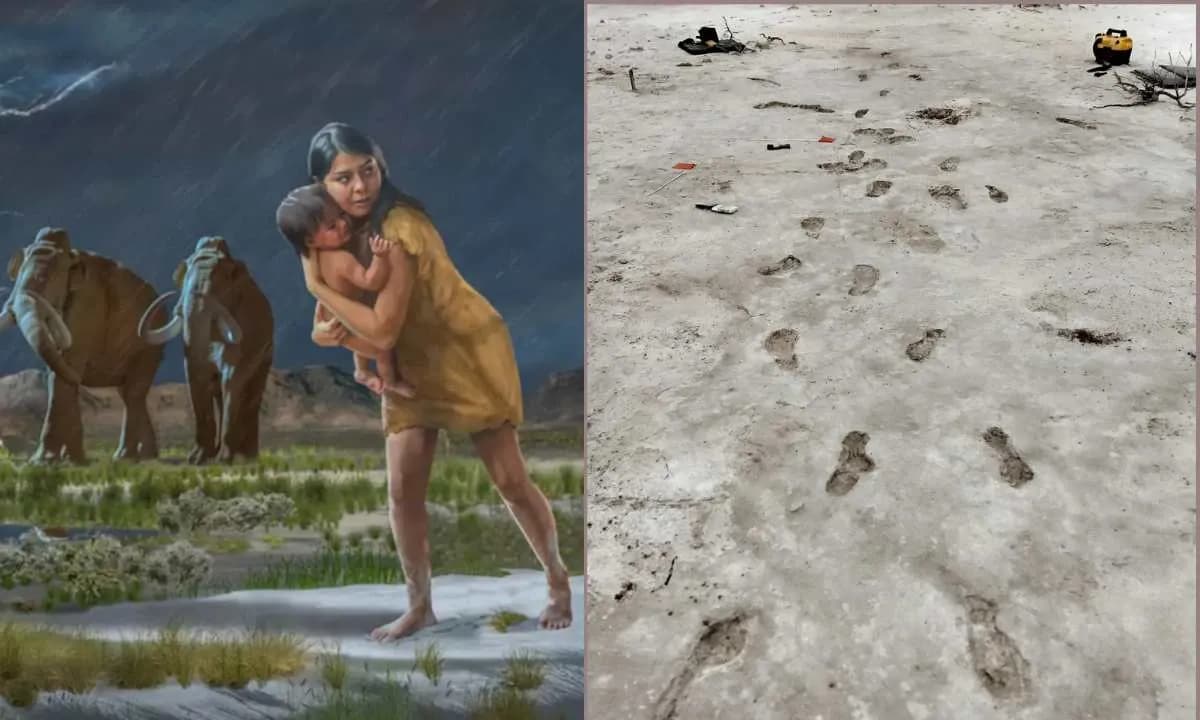
More than 13,000 years ago, long before highways, strollers, or even villages, someone walked across the wet, muddy ground in what is now White Sands National Park in New Mexico. They weren’t walking alone. They were carrying a toddler. That person—probably a young woman or teenage boy—left behind something extraordinary: a trail of footprints stretching 1.5 kilometers, or nearly a mile. And those footprints just helped scientists piece together a powerful story of survival, care, and life in the Ice Age.
The fossilized footprints were found in a dried-up lakebed known as Lake Otero. During the Ice Age, this area wasn’t the dry, white desert it is today. It was a lush wetland with grasses and water that attracted many animals—giant sloths, mammoths, camels, dire wolves, saber-toothed cats, and early humans. Over time, thousands of footprints—both human and animal—became trapped in the mud, dried out, and eventually fossilized. But among all those tracks, one set stood out to researchers.
The human footprints were small, likely made by a female or adolescent. What made them remarkable wasn’t just their length, but the way they were shaped and spaced. The person was walking quickly—about 1.7 meters per second (5.6 feet per second), which is faster than a typical walking pace. They were moving with urgency, possibly trying to reach a destination before nightfall or danger.
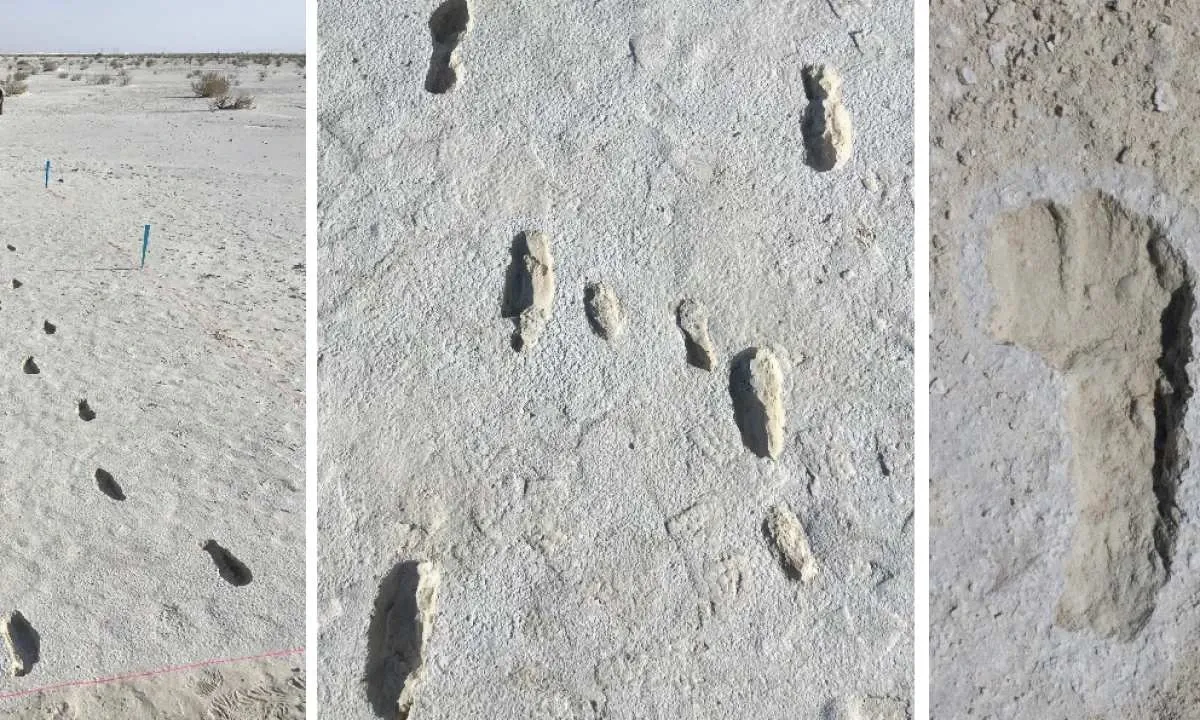
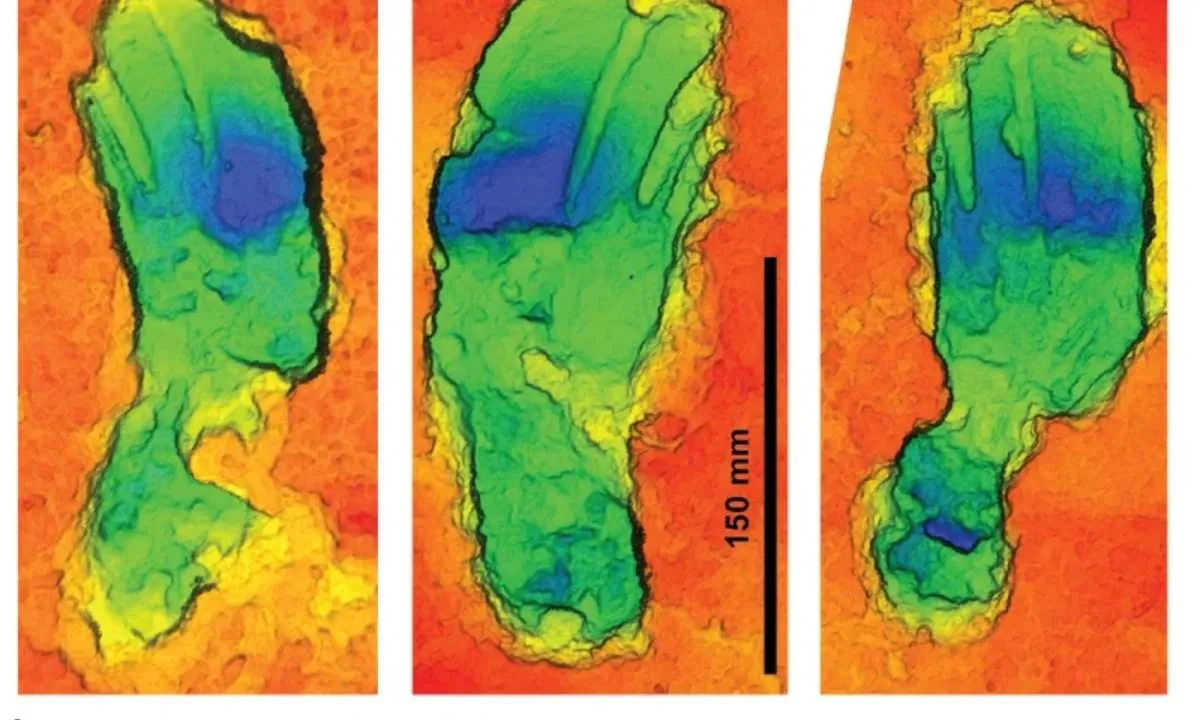
What made this even more impressive was that the traveler was carrying a child. Researchers could tell because of the unusual shape of the footprints. They were broader and curved outward, forming what scientists call a “banana shape.”
This happened because the extra weight of the child caused the foot to slip and twist slightly in the muddy surface. The toddler’s own tiny footprints sometimes appear next to the adult’s, as if they were set down for short rests or readjustments. Based on their size, the child was likely under two years old.
Hours later, a second set of human footprints followed the same path in reverse. This time, the adult wasn’t carrying the child. The prints were narrower and more even, showing a steadier walk. It’s unknown exactly what happened to the child—there’s no way for footprints to tell us that. Some wonder if the child was dropped off with family, or if something more serious occurred. But one thing is clear: this wasn’t just a one-way trip.
While the human was making these journeys, other creatures were active too. A mammoth later crossed over the human tracks, showing no sign that it noticed the human’s presence. But the giant ground sloth reacted very differently. Its tracks suggest it paused, stood up on its hind legs to sniff the air—perhaps sensing that a human had passed through. Then it stepped onto and over the human path, possibly trying to erase or inspect it. That behavior hints that even back then, sloths might have understood the danger humans posed.
This journey likely took place during the late Pleistocene Epoch—between 11,550 and 13,000 years ago. However, recent studies in the same region have pushed back the date for human presence in North America even further. Radiocarbon dating of ancient grass seeds surrounding other footprints in White Sands shows that humans were in the area as far back as 23,000 years ago.
White Sands National Park now holds the world’s largest collection of Ice Age human and animal tracks. But it wasn’t until 2006 that scientists noticed dark spots across the lakebed and began serious excavations. By 2009, they confirmed those dark patches were footprints, and by 2018, they uncovered the incredible story of the adult and child’s journey.
What makes this discovery so powerful is how human it feels. In the fossil record, we often find bones or tools, but here we find movement—real-time decisions, physical struggle, and care. Scientists believe most of the footprints come from teenagers and children, which supports the idea that in Ice Age communities, younger members may have handled simple but important tasks like carrying or fetching. Adults likely focused on more skilled work, like tool-making or hunting.
In fact, other footprint scenes at White Sands tell stories too—children jumping between mammoth tracks, people stalking sloths, and entire families moving through the muddy landscape. Each footprint becomes a time capsule, offering a glimpse into lives that were lived tens of thousands of years ago.
Even though the original trail is no longer visible to visitors, new exhibits at the White Sands visitor center now let people see casted versions of the footprints and learn more about this and other ancient journeys. The park continues to protect and study these fragile remains as erosion and time threaten to wash them away forever.
The story behind the 1.5-kilometer trackway is still incomplete. We may never know exactly who that person was, why they were in a hurry, or what happened to the child. But through footprints alone, scientists—and all of us—can step into a moment frozen in time. It’s a reminder that long before written history, the ground beneath our feet was already holding stories.