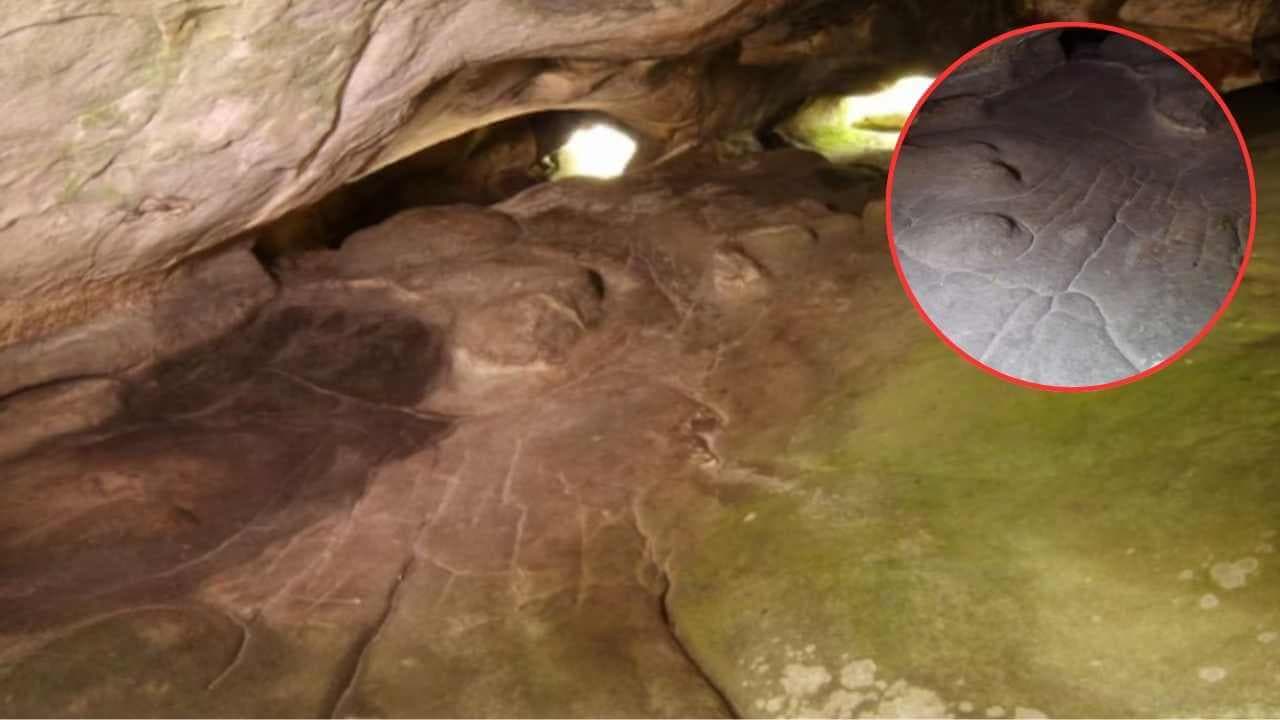
Researchers have identified what may be the world’s oldest 3D map, etched into a sandstone megaclast over 13,000 years ago. Found in the Ségognole 3 cave in the Paris Basin, France, this Paleolithic artifact highlights the ingenuity of early humans and their ability to comprehend and represent their environment in unprecedented ways.
The Discovery and Its Significance
The quartzitic sandstone artifact, uncovered during an extensive archaeological study, features intricate carvings believed to represent a scaled-down depiction of the surrounding landscape. Researchers suggest the map includes details such as water flows, terrain features, and possibly areas of vital resources. This finding not only demonstrates an advanced spatial awareness but also marks one of the earliest known examples of cartographic representation.
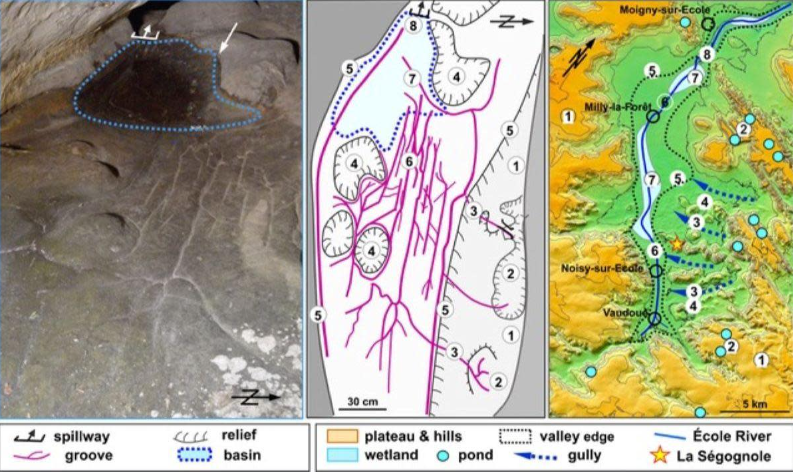
The discovery site, the Paris Basin, has long been recognized for its historical significance. The engraved sandstone was part of a larger excavation aimed at understanding the daily lives of Paleolithic societies. This map adds a new dimension to these studies, shedding light on how early humans interacted with and navigated their environments.
Decoding the Map
Experts have meticulously analyzed the engravings, noting their resemblance to the natural geography of the area. The carvings align with known watercourses and geological features, leading researchers to conclude that the artifact served as a functional map. The map’s creators likely used it to navigate or demarcate territorial boundaries, emphasizing its practical significance.
Notably, the engravings also reveal an artistic sensibility. Certain carvings, such as those depicting symbolic features, suggest that the artifact may have held cultural or spiritual meaning for its creators.
Implications for Human History
This discovery challenges long-standing assumptions about the cognitive capabilities of Paleolithic societies. The creation of a 3D map indicates a sophisticated understanding of geography, planning, and abstraction. It underscores the adaptability and intelligence of early humans, who used such tools to manage resources and navigate complex landscapes.
Furthermore, the map connects with broader archaeological findings, linking early cartographic efforts to other Paleolithic innovations such as cave art and toolmaking. It offers a glimpse into a world where practicality and creativity converged to address survival challenges.
Conclusion
The world’s oldest 3D map is more than just a remarkable artifact, it is a testament to human ingenuity and the early development of complex thought processes. As researchers continue to study the sandstone megaclast, it promises to unlock further insights into the lives of our ancestors and the evolutionary roots of cartography.