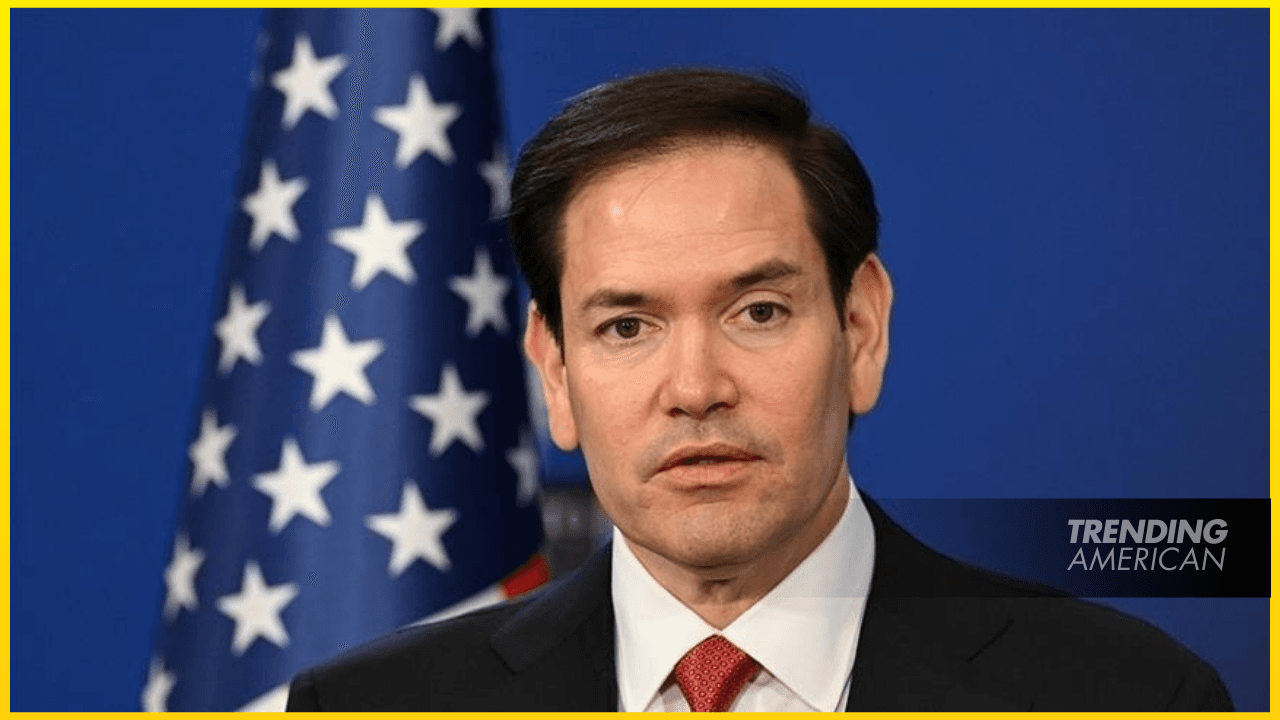
In Washington, D.C., at a State Department briefing room, U.S. Secretary of State Marco Rubio stated that the current relationship with Nicolás Maduro’s government in Venezuela—the so-called “status quo”—is intolerable to the United States. Rubio, speaking on behalf of the Trump-era administration, framed Maduro’s regime as illegitimate and said Washington would not accept the existing dynamic, signaling a sustained and evolving strategy designed to change the regime’s calculus.
Rubio described a multi-faceted pressure campaign aimed at constraining Maduro’s government through a combination of sanctions, financial isolation, and coercive economic tools. Among the measures cited or implied were intensified sanctions that target not only the Maduro regime’s revenues but also the broader economic ecosystem that sustains its leadership. He also referenced the possibility of more aggressive actions, including a blockade on oil tankers delivering crude from Venezuela, to choke the regime’s access to global markets and hard currency.
The remarks, which come amid concerns about narcotics trafficking and regional security, place Maduro’s government at the center of a broader U.S. effort to reassert influence in the Western Hemisphere and to realign regional security architecture in a way that limits the regime’s leverage. Rubio argued that the regime’s illegitimacy underpins the United States’ rationale for applying economic and political pressure, with the aim of bringing about a political transition that aligns Caracas with American policy priorities.
Analysts and observers noted that the talk of sanctions and economic coercion signals a continuation of a hardline stance associated with the Trump-era approach. While the administration did not present a formal, step-by-step plan for military intervention, the emphasis remained on leveraging non-military tools—sanctions, financial restrictions, and energy-related pressure—as the primary means to alter Maduro’s calculus. The possibility of more aggressive measures suggests a willingness to escalate if Maduro persists in policies or actions that Washington deems unacceptable.
The policy stance outlined by Rubio also reflects concerns over narcotics trafficking routes, illicit finance, and the potential destabilizing effects of Maduro’s governance on neighboring states. Washington’s objective is to constrain Maduro financially and politically, with the ultimate aim of reforming U.S. policy toward Venezuela and curbing what the administration views as Maduro’s ability to threaten regional security and law-and-order in the hemisphere.
Coverage of Rubio’s briefing and the administration’s framing appeared across several outlets, highlighting the unity of the message: the status quo in Venezuela is unacceptable, and the United States intends to pursue changes through economic pressure and diplomatic isolation. Reports from Washington Examiner, CNN, Bloomberg, Denver Gazette, and other outlets noted the absence of an explicit plan for a military operation, while underscoring that the administration’s emphasis remained on sanctions and other coercive tools, and that regime-change rhetoric signals a potential strategic recalibration rather than an immediate, unilateral military action.
Disclosure: We may earn a commission when you make a purchase through the ads.