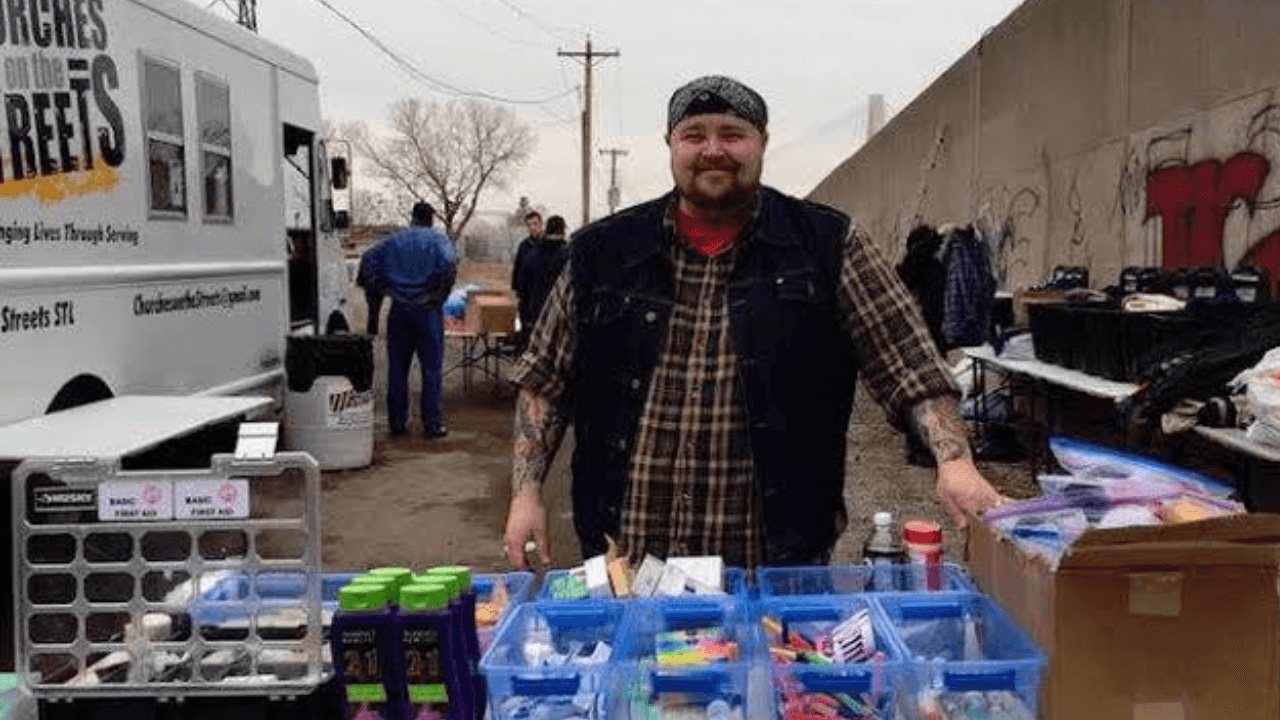
A man living on the streets of St. Louis thanked Jake Austin for a bar of soap. Then he asked a question Austin could not forget.
Where was he supposed to use it?
Austin had spent years helping people experiencing homelessness. He distributed food, clothes and hygiene supplies, but that question revealed a problem he had overlooked.
Without access to a safe, private shower, even a simple bar of soap could be difficult to use.
So Austin decided to bring showers directly to the people who needed them.
The Question That Changed Everything
In 2014, Austin was volunteering with people experiencing homelessness in St. Louis, Missouri.
He handed out basic supplies, including soap and shampoo.
One day, a man thanked him for the toiletries but explained that he had no convenient place to bathe.
Austin realized the difficulty was not simply a lack of hygiene products.
People living outside often struggled to find places where they could shower safely, wash their hair or change into clean clothes.
Some shelters offered showers only to residents. Others had limited facilities or hours.
Austin began thinking about a way to make hygiene services mobile.
A $5,000 Truck Became the Beginning
Austin found a used 1998 GMC box truck and raised approximately $5,000 through online donations to purchase it.
The vehicle was old, but it offered enough space for an unusual idea.
He wanted to transform it into a mobile bathroom.
Volunteers and local businesses helped with the conversion.
A pipefitters union assisted with plumbing, an RV business contributed work, and other supporters provided supplies.
The completed vehicle included two private shower stalls, sinks, mirrors and areas for changing clothes.
It connected to fire hydrants for water and used a generator to heat the water.
The project became known as Shower to the People.
The First Showers Began in 2016
The mobile shower service began operating in St. Louis in May 2016.
Instead of requiring people to travel across the city to a shelter, the truck visited neighborhoods where people experiencing homelessness already gathered.
The team provided hot showers, clean towels, soap, shampoo and other hygiene essentials.
The service was free.
Within months, dozens of people were using the truck during its regular stops.
In an August 2016 report, Austin said that a typical five-hour session could serve up to 50 people.
For many visitors, the chance to shower privately was something they had been missing for weeks or months.
Why a Hot Shower Could Mean So Much
For people with stable housing, taking a shower can feel like an ordinary daily routine.
For someone sleeping outside, it can be a major challenge.
Access to hygiene facilities affects comfort, health and the ability to participate in everyday activities.
Austin also saw a connection between hygiene and employment.
People looking for jobs may struggle to attend interviews or maintain clean clothing when they have nowhere to wash.
He believed that regular access to showers could help people feel more confident and better prepared to pursue opportunities.
But the project was about more than appearance.
It was also about giving people a private space where they could feel comfortable and respected.
The Team Wanted to Offer More Than Showers
Austin and co-founder Jon Hiltz worked with FOCUS North America, a nonprofit organization connected to housing and support services.
Their goal was to build relationships with people who visited the truck.
While guests waited, volunteers could speak with them, learn about their circumstances and connect them with useful resources.
Austin said the team had helped some people access temporary housing and replace identification documents needed for jobs and benefits.
The truck's two shower stalls were part of that approach.
Rather than rushing everyone through, the team wanted time to listen.
One Woman's Reaction Stayed With Austin
During an early evening of service, a woman arrived after the team had nearly finished for the day.
She had not showered in two months and was worried that she would not have enough time.
Austin told her she could use the shower without rushing.
He stepped away to give her privacy.
When he returned about 20 minutes later, he heard her singing inside.
The moment stayed with him.
It reminded him that the project could offer something difficult to measure: a little peace in the middle of a challenging life.
A Second Project Created Work Opportunities
The team also developed an initiative called Raise the Bar.
It produced soap and provided part-time work opportunities for people who had experienced homelessness.
Some of the soap was distributed through the mobile shower program.
The idea connected hygiene services with practical employment support.
Austin and his colleagues hoped the two projects could help people gain confidence, earn money and move toward more stable circumstances.
A Small Idea With a Larger Purpose
The St. Louis shower truck drew attention across the United States in 2016.
Austin discussed hopes of expanding the concept to other cities.
The project's early success showed how a relatively modest investment, combined with volunteers and community support, could address a basic need that was often overlooked.
It did not solve homelessness on its own.
People still needed housing, healthcare, income and long-term support.
But for those who stepped into the truck, a hot shower offered comfort and dignity.
It began with a man asking where he could use a bar of soap. The answer became a truck that brought hot water, privacy and a little hope to people who needed them.
Historical note: This article describes the origins and early operations of Shower to the People in 2014–2016. It does not imply that all reported services or expansion plans remain unchanged today.
Sources: Good News Network — April 2016 report; Univision / CityLab — August 2016 detailed reporting; Univision — mobile shower and Raise the Bar.